

The Folk Horror Chain
The following is a rough transcript of a paper delivered at the A Fiend in the Furrows conference, held at Queens University, Belfast on the 20th of September, 2014.
Introduction
Folk horror is a strange form of media. There’s an unusual craving for defining and canonising in spite of being a sub-genre which seems inherently intuitive. This unusual combination of shared thematic and aesthetic tendencies with a subjective, almost race-memory recollection in its reception, perhaps explains why it has taken so long to define what it is that makes a Folk Horror.
The aim here to put forward a thematic litmus test, built in order to help define what exactly the sub-genre of Folk Horror is and how we can apply that to its appearances in cinema with the intention of eventually building a canon of work.
What exactly is a Folk Horror film then? Several ideas often come to mind. The first is something possessing a narrative link with a folk tale, a folkloric idea, or even the fake creation of something aesthetically folkloric (olde world-isms, woodcut tales). It’s a logical idea that justifies some of Folk Horror’s most obvious examples but not all encompassing enough to include all of its themes and ideas; and certainly not all of the media that now appears under the umbrella term.
Another idea of Folk Horror is one that often crops up when initially looking at the genre from a musical angle; that the films in question have aesthetic links to uses of folk music. The idea, somewhat of a hang-up from emphasis on British films from the late 1960s counter culture, seems another take on the sub-genre’s general relationship with folklore and covers even fewer potential films.
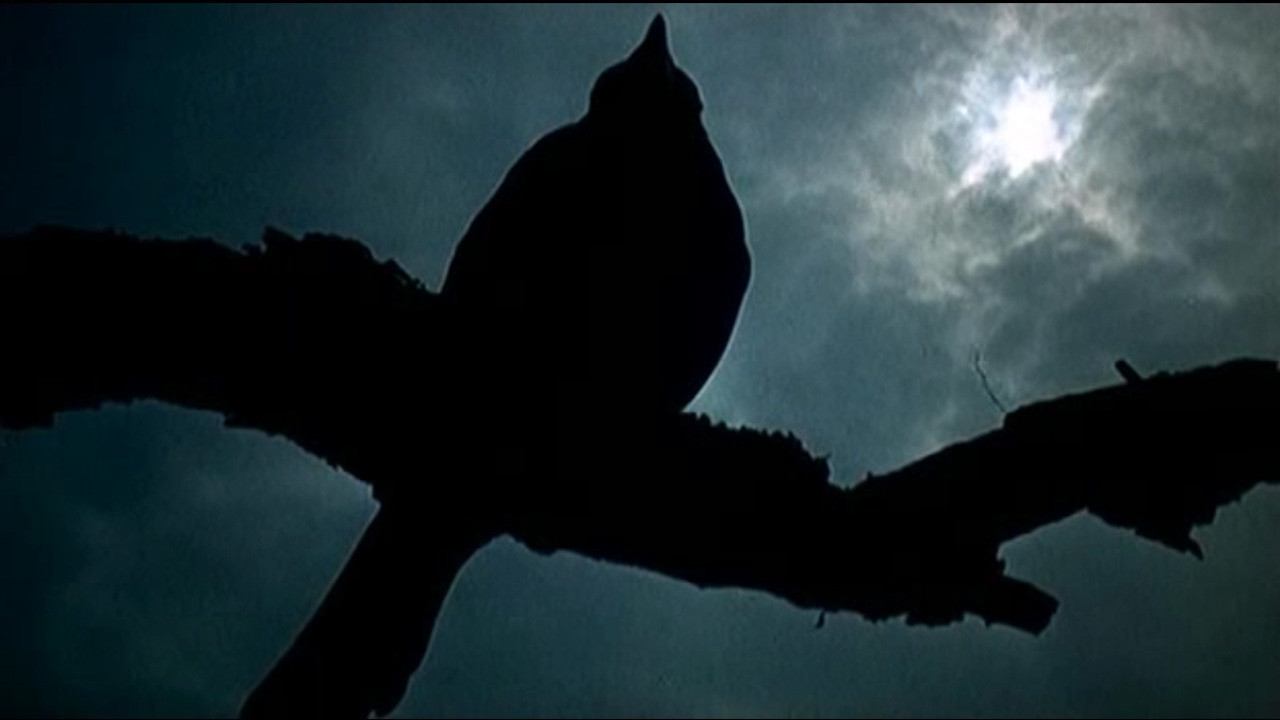
The test that I wish to use is what, in previous attempts to analyse Folk Horror cinema, I have called the Folk Horror Chain; a linking series of potential cause-to-effect narrative, aesthetic, and thematic aspects that can add to together to essentially form Folk Horror. When a film has a number of these traits or links from the chain, this is when I believe we can call it a Folk Horror film. The best way to introduce the idea is to revisit literature and look at a brief quote from Seamus Heaney’s translation of Beowulf (1999). In his translation, the following line occurs:
Grendel was the name of this grim demon, haunting the marches, marauding round the heath and the desolate fens; he had dwelt for a time in misery among the banished monsters, Cain’s clan, whom the creator had outlawed and condemned as outcasts.
For me, this sums up the Folk Horror Chain and all of its separate strands; strands that are eventually traceable in the medium of film many years later.
The Chain
The first link in this chain is the use of the landscape and the environment. In the Heaney quote, the landscape is used as the hunting ground for Grendel, and in Folk Horror is used for a number of narrative reasons. Apart from setting a strong aesthetic theme for the films, often moving out of studios and using the visuals of the rural environment, the landscape explicitly isolates the characters and communities within them.
Isolation forms the next part of the chain and leads to communities that develop skewed morality and belief systems. This can form into a variety of different outlets but often manifests in pulp versions of Paganism, Occultism, or even the simple abuse of Christianity. There’s little doubt that Folk Horror and its happenings rely on events being located outside of general society in both a physical and sociological way.
These belief systems eventually lead to the final link in the chain; the manifestation due to said belief systems. This can range from summoning up something that is genuinely supernatural such as a demon or a ghost, or lead to some form of violent act such as possession, sacrifice or something else that leads to violence and eventually killing.
For so long, the three films, all British and from the same period, have dominated the Folk Horror. My own first experience of the term came from the back of one of their VHS covers and has only in recent years actually come to the attention of cineastes as a genuine descriptor of genre and of film.
Suffice to say, all three films explicitly follow the narrative route of the Folk Horror Chain. These three films are Robin Hardy’s The Wicker Man (1973), Piers Haggard’s The Blood On Satan’s Claw (1971), and Michael Reeves’ Witchfinder General (1968). With the ideas of a thematic chain linking all the traits associated with the sub-genre, I’d like to expand upon this trilogy and get away from an increasingly prevalent method of thinking in Folk Horror: where everything else is overshadowed by these brilliant but overly considered films.
With the use of the chain, Folk Horror can become a far broader cinematic topic, ranging from films of many different eras and countries. By applying this idea, the canon of Folk Horror can evolve into something that’s more flexible and encompassing rather than reactionary and generic.
The Unholy Trinity
The application of the chain on the main three Folk Horror films can act as a spring board to expanding the sub-genre. While I wish to move away from these films in one sense, using them to help define and solidify the effectiveness of the Folk Horror Chain is still inescapably essential.
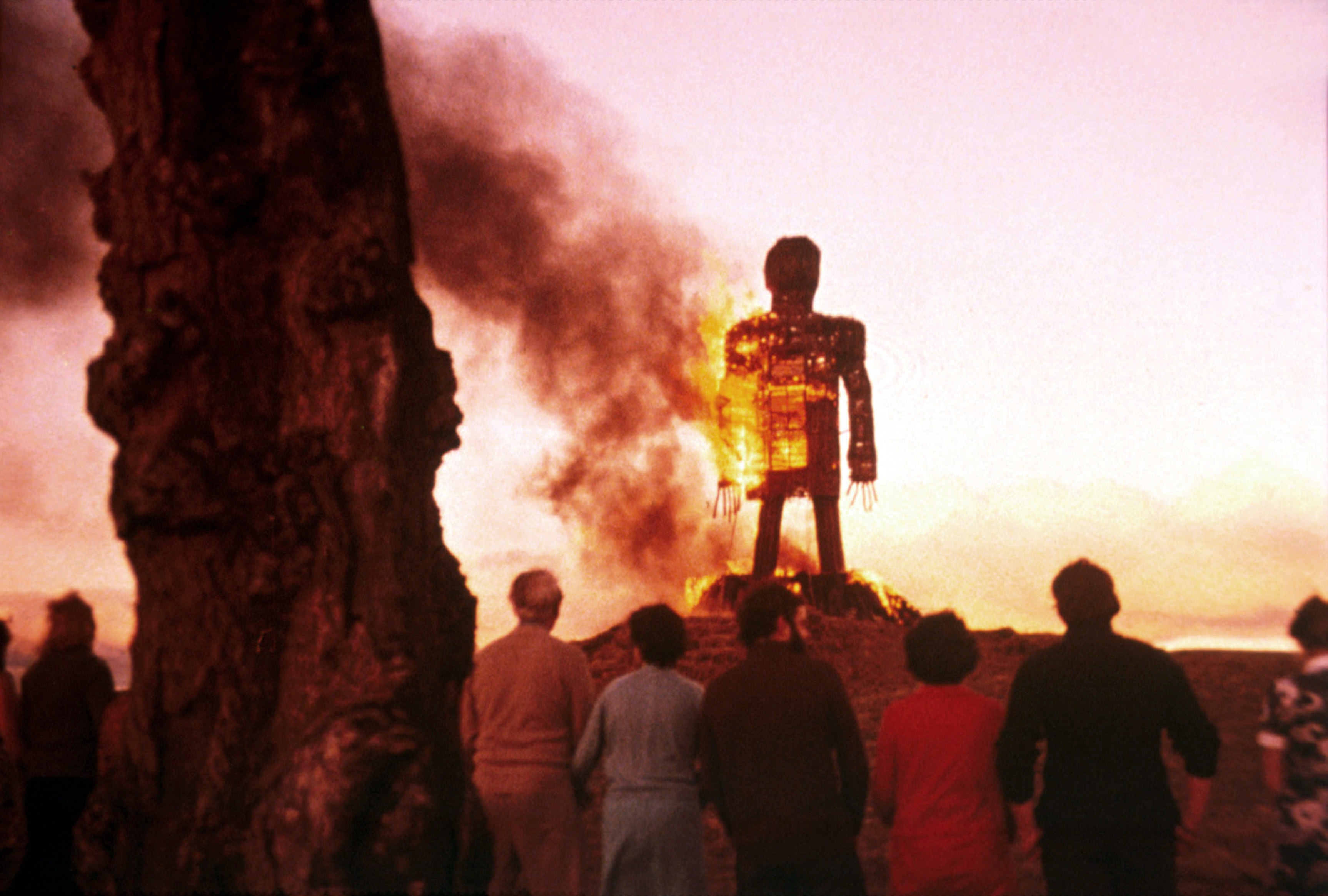
All three films arguably begin in the landscape. The Wicker Man‘s opening (at least in the cut before the recent re-emergence of previously lost material) begins in Sgt. Howie’s (Edward Woodward) plane flight over the rural isles of Scotland and eventually over the landscape of Summerisle. The fact that Summerisle is an island greatly enhances its sense of isolation, perhaps explaining why it’s such an effective opening; probably the most famous of folk horror films. The Blood on Satan’s Claw also explicitly begins in the landscape, putting emphasis on the ground as it’s the unearthing of a Jamesian cursed object (or Inorganic Demon as they are sometimes labelled in academia) from the soil that instigates the horror. Witchfinder General begins in the isolated Norfolk landscape, with Matthew Hopkins’ violence and witch-hunt only really being possible in small communities isolated by the vast East Anglian broads.
The three films also offer up a variety of potentials in terms the moral structures and conclusions that this isolation creates. The Wicker Man eventually leads to a pagan sacrifice; Blood eventually leads to the manifestation of a demonic creature (supposedly the devil himself); and Witchfinder leads to series of violent murders in the name of Christianity. With the chain having a clear presence in all three films, it’s easy to argue that it can at least be applied to the most discussed examples of the sub-genre. But what of the lesser discussed examples and even films that are ignored within the sub-genre?
Britain
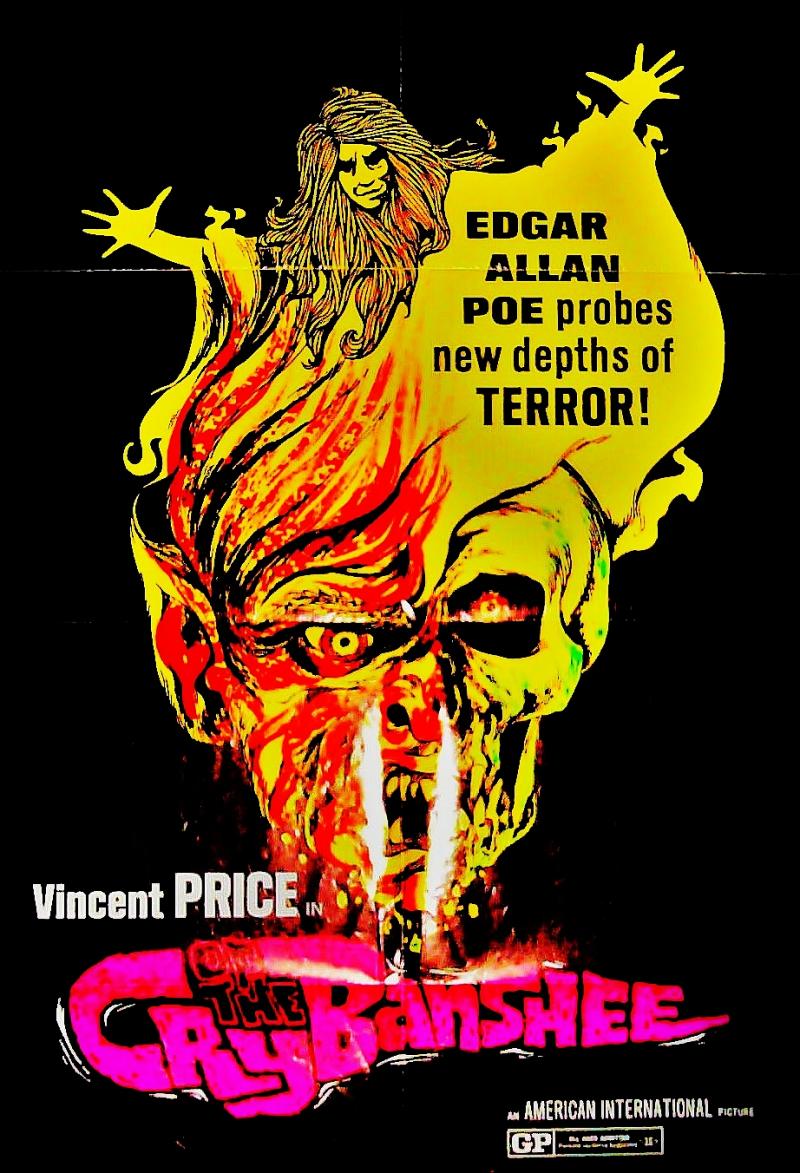
Gordon Hessler’s Cry of the Banshee (1970) is a surprisingly little-discussed example of British Folk Horror, perhaps because its qualities don’t quite match that of the trilogy. Yet the film exhibits almost all of the traits of the more famous Folk Horror films. Starring Vincent Price as a Lord battling against a coven of witches, Hessler’s film blends the stark realism of Witchfinder with Blood’s supernatural elements; again stemming from a rural isolation creating a skewed belief system. The only difference is that the final summoning is a mixture of both the supernatural and humanity’s evil (i.e. torture and murder).
David Gladwell’s Requiem for a Village (1975), on the other hand, is an entirely different Folk Horror proposition yet still conforms to the chain. Its narrative is loose and doesn’t follow the Folk Horror Chain in a strict cause-to-effect scenario. It does, however, show an isolated rural community whose way of life is under attack from the modern industrialisation of the mid seventies. Its clash between the archaic and the modern leads to people walking out of their graves and culminates with a sexual assault at the hands of a motorbike gang, again a mixture of supernatural and the natural evil of man all in a still-isolated rural vista.
Cyril Frankel’s The Witches (1966) is one of a number of Hammer Studios’ films that has elements of Folk Horror. It’s again set in a modern rural village and follows a teacher (Joan Fontaine) who uncovers a coven of Black Magic, building to an attempted sacrifice. It makes interesting use of the picture-postcard English rural village, used in the film and by the characters for the masking of esoteric beliefs. Who could suspect such skulduggery under chocolate box Englishness? For Folk Horror, the common wall of silence, especially towards outsiders, is often a tool used against them; though instead of it hiding a group of murderers as in, for example, Agatha Christie’s Murder on the Orient Express, it hides a group of skewed belief practices and rites.
The idea of the Folk Horror Chain opens up the sub-genre to more than just British films of the era of the counter-culture such as these. It can enhance the understanding of previously ignored films as well as see better known films in a new light.
America
Some of the following choices may at first seem controversial in the discussion of Folk Horror, specifically because of their presence in other sub-genres (film noir, slasher, found footage etc.), but applying the Folk Horror Chain highlights how much their narratives in particular fall very much in line with the more traditional Folk Horror films.
Charles Laughton’s The Night of the Hunter (1955) is a film about a religious convict (Robert Mitchum) chasing two children for money that their father stole, and is very much in the Folk Horror tradition in spite of often being labelled as southern gothic and film noir. The rural location, the fairy-tale aesthetics, and the beliefs of the community blinding them to Harry Powell’s true nature all builds to make up a thematic folk horror.
Tobe Hooper’s The Texas Chainsaw Massacre (1974) is equally as isolated by its rural location, only the community living in it have instead taken to cannibalism rather than Paganism. Hooper makes just as much use of the rural landscape of Texas as Hardy does of Summerisle, while the main antagonist, Leatherface (Gunner Hansen), has something supernatural and demonic about his nature. The final shot of the film in particular seems highly ritualistic, almost invoking some summer solstice type release as Leatherface swings his chainsaw with the sun rising behind him. Of all of the films that come under the banner of “pre-slasher”, this is just one of a number that also exhibit elements of Folk Horror.
Eduardo Sánchez and Daniel Myrick’s The Blair Witch Project (1999) plays on the idea of getting lost in the woods; another very typical Folk Horror trope. The supposed antagonists are witches, it is entirely set in the shadow of a local folkloric legend of the Maryland Blair Witch, and is filmed predominantly in a rural forest location (which explicitly and knowingly cuts off its characters from the main town). Most tellingly is that the company formed to make the film was named after another, much earlier Folk Horror classic by Benjamin Christensen…

Global
Trying to cover the Folk Horror practices of the rest of the world is a huge task (and arguably requires a fluency in a huge variety of global cultural and folklore that no one critic or academic with ever likely possess). However, there’s time to show the Folk Horror Chain at work in several other cinematic cultures from Europe and Asia.
It could be argued that Christensen’s Haxan (1922) is arguably the first true Folk Horror film (though not the first fantasy film to be based on folklore – Paul Wegener’s Der Golem (1920) holds that position, at least in terms of surviving feature films). Though it masquerades as a documentary, the imagery and narratives it suggests are a perfect embodiment of the Folk Horror Chain. The film presents witches in rural locations summoning up demons and devils, though ultimately suggests more psychological conclusions. Either way, the resulting mania/demonic visitations are the result of people isolated by rural landscapes (and eventually leads to their isolation within the nightmarish padded cells of early psychiatric healthcare).
Staying in Scandinavia, Ingmar Bergman’s Hour of the Wolf (1968) is one of a number of his films littered with elements of Folk Horror (the other two obvious examples being The Seventh Seal (1957) and The Virgin Spring (1960)). It follows an artist (Max von Sydow) living on an isolated island who is plagued and haunted by visions and characters who are supposedly spirits. This is our first example that doesn’t use all of the elements of the Folk Horror Chain; a type of film that is perhaps more subjectively Folk Horror-esque than quintessentially part of the genre (a problem plaguing the canonisation of any sub-genre and one that will no doubt continue as more and more people try to box off this elusive genre with their own particular methods, biases and sheer bloody-minded desire to stamp their own name upon it).
Japan also has a strong tradition of Folk Horror though the aesthetics of its folklore perhaps make its films strange visual bed-fellows of, say, the British Folk Horror tradition. Films by Kaneto Shindo such as Onibaba (1964) and Kuroneko (1968) are strong examples of the Folk Horror Chain, with groups of people isolated in landscapes summoning or even becoming something demonic. The former shows two women kill wandering samurai in marshland, while the latter follows two women who become reincarnated as cat demons that haunt a local forest after being killed by local warriors. Even films such as Masaki Kobayashi’s Kwaidan (1964) present the Folk Horror Chain in various forms. Based on Japan’s answer to M.R. James, Lafcadio Hearn, it shows four different stories all surrounding isolated rural communities with supernatural beings and isolated moral belief systems at their core.

Conclusions
With the idea of the Folk Horror Chain, I want the emerging of the sub-genre of Folk Horror to be easily defined but also layered and not too rigid as to discount films based on when and where they are made. To conclude, the ideas of the Folk Horror Chain can also be shown to explain associations with other cinematic trends outside of the horror genre entirely.
The folk horror chain consists of four aspects:
Rural Location
Isolated Groups
Skewed Moral and Belief Systems
Supernatural or Violent Happenings
If a film were to take just one or two of these aspects rather than all of them, as some of the best examples sometimes do, it could perhaps explain why certain films are present in the discussions of Folk Horror in spite of not being from the Horror genre at all.
Films such as Andrew Mollo and Kevin Brownlow’s Winstanley (1976), Ken Hughes’ Cromwell (1970) and John Gilling’s The Crimson Blade (1963) all tend to pop up in discussions of Folk Horror in its various guises. All of the films deal with aspects of the Folk Horror Chain and exhibit an intriguing inversion in the third part of the chain; the supposed belief systems that are skewed being far from simplistically bad or morally unscrupulous to the current status quo. The fight for their recognition replaces the more commonly esoteric belief systems of the typical Folk Horror in these films. It’s more than simply their historical window dressings that link these films with the sub-genre.
Other films exhibiting vague semblances to the chain are Roman Polanski’s Cul-De-Sac (1966), Sidney Hayers’ Night of the Eagle (1962), John Llewellyn Moxey’s The City of the Dead (1960), Terence Fisher’s The Devil Rides Out (1968), and countless others from a variety of different eras and countries. All have ties to the Folk Horror Chain, whether it only uses one or two aspects of it or uses the entire domino effect of the chain build its thematic narrative.
My main points then:
- Though initially intuitive, Folk Horror has formed as a sub-genre because of a group of shared thematic and aesthetic traits.
- These traits can be formed into the theory of the Folk Horror Chain: Landscape – Isolation – Skewed Moral Beliefs – Happening/Summoning.
- Through relating a film and its narrative arc to the structure of this chain, we may define a film as Folk Horror and also gauge just how much of a Folk Horror film it is.
- By doing this, a canon of cinema can be built that is both easily defined and recognisable but also not limited to one particular country or era of cinema.

 Celluloid Wicker Man
Although it’s a novel and tv miniseries, Harvest Home / Dark Secret of Harvest Home is a good example of folk horror.