Ritual And Identity in Penda’s Fen (1974) – Alan Clarke.

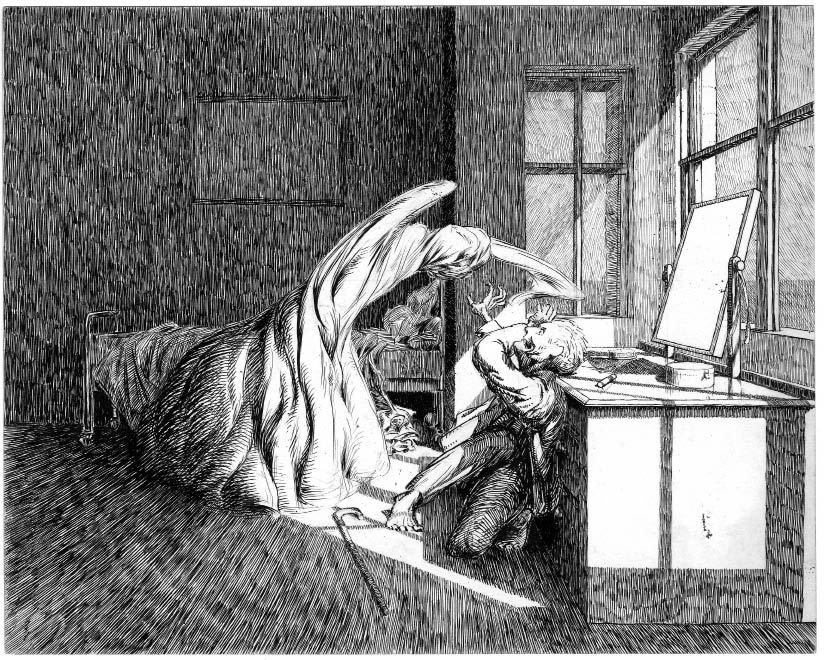
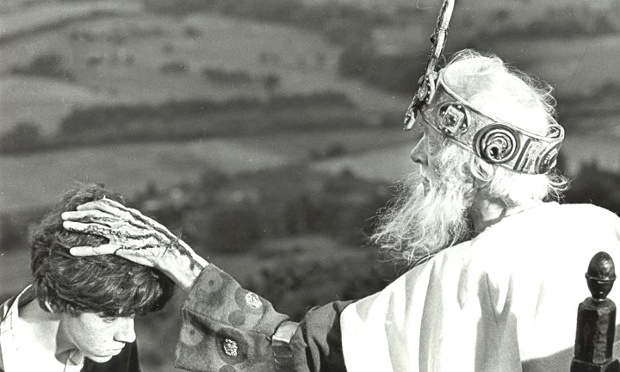
The relationship between myth and ritual has been often debated within anthropology ever since its Victoriana days of enlightened scientific thinking through the prism of evolution and the birth of mechanisation and industrial blight.  The idea of returning to the “primacy of ritual”, where whole belief systems stem as a result from repeated actions or events, is a common theme of exploration in Folk Horror as … Continue reading Ritual And Identity in Penda’s Fen (1974) – Alan Clarke.

Uncanny Portals And Standing Stones (Children Of The Stones and Barbara Hepworth)- Part 1.

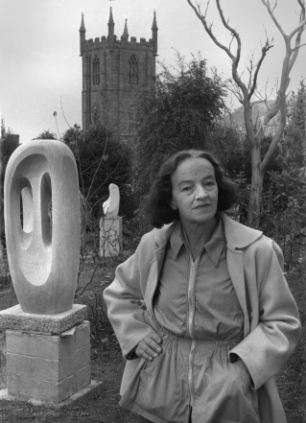
Introduction. The building of form within the space of landscape has become a common occurrence in sculpture for a number of years now.  The moving of artistic forms out-of-doors provides so many new potential contexts that it seems almost puerile to suggest so.  One aspect of particular interest is when these new forms of Earthologistic sculpture come into contact, perhaps even competition, with older forms of … Continue reading Uncanny Portals And Standing Stones (Children Of The Stones and Barbara Hepworth)- Part 1.

Philip Larkin’s Spirit in Requiem For A Village (1976)

I thought it would last my time – The sense that, beyond the town, There would always be fields and farms, Where the village louts could climb Such trees as were not cut down; I knew there’d be false alarms – Going, Going, Philip Larkin. Above is the opening stanza of Philip Larkin’s 1972 poem, Going, Going. The poem captures the sense of a world being lost. The … Continue reading Philip Larkin’s Spirit in Requiem For A Village (1976)

Interview With Jeremy Burnham (Children Of The Stones, 1977).

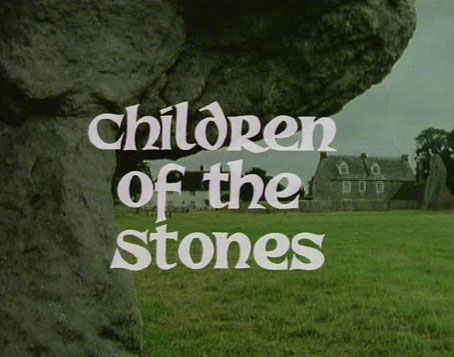
Alongside Trevor Ray, Jeremy Burnham co-created the fantastical Folk Horror drama, Children Of The Stones (1977). Now considered a key text in 1970s Folk Horror and possibly one of the scariest programs ever conceived for children, I caught up with Jeremy to ask him about the ideas behind the show, the process of filming it and its subsequent novelisation. Where did the initial ideas for … Continue reading Interview With Jeremy Burnham (Children Of The Stones, 1977).

The Ritual Of Craft In Folk Horror.

With the ideas of the Folk Horror Chain starting to seem incomplete as the sub-genre grows in popularity and is more analysed, it’s about time further facets, themes, ideas and traits were added to the conversation.  This will be the first in a number of pieces about other traits not accounted for or addressed in the initial idea of the chain (which itself was only … Continue reading The Ritual Of Craft In Folk Horror.

The Aural Aesthetics Of Ghosts in BBC Ghost Stories – Part 9 (Conclusions).

Part 1. Part 2. Part 3. Part 4. Part 5. Part 6. Part 7. Part 8. Conclusions. “If its central characteristics remained immune to change, the ghost story did keep pace with the times through progressive modernization of settings and language.” – Cox (xix, 1991). From analysis of the BBC Ghost Stories, it is clear that the narrative function of the supernatural has a natural … Continue reading The Aural Aesthetics Of Ghosts in BBC Ghost Stories – Part 9 (Conclusions).

The Aural Aesthetics Of Ghosts In BBC Ghost Stories – Part 8 (The Signalman).

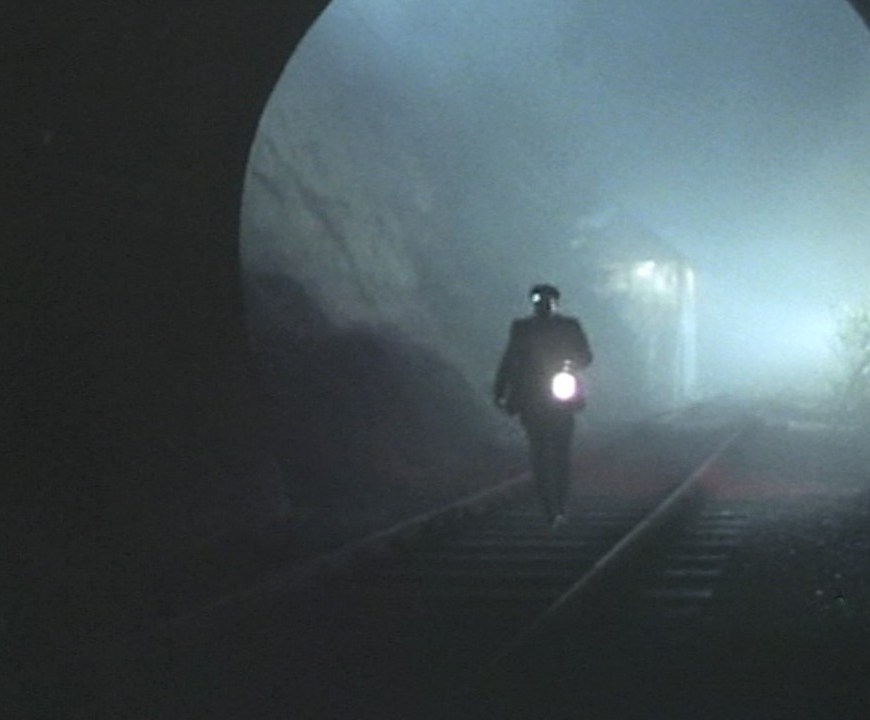
Part 1. Part 2. Part 3.Part 4. Part 5. Part 6. Part 7. The Signalman And Aural Paranoia Over Dickensian Technology. “For those who look back on it, the Victorian age seems to be invested with a peculiar quality of difference – heightened by its relative proximity in time – that is reflected in its ghosts.  It was an age shaped, perhaps more than any … Continue reading The Aural Aesthetics Of Ghosts In BBC Ghost Stories – Part 8 (The Signalman).

The Folk Horror Chain

The Folk Horror Chain The following is a rough transcript of a paper delivered at the A Fiend in the Furrows conference, held at Queens University, Belfast on the 20th of September, 2014. Introduction Folk horror is a strange form of media. There’s an unusual craving for defining and canonising in spite of being a sub-genre which seems inherently intuitive. This unusual combination of shared thematic … Continue reading The Folk Horror Chain

The Music of Folk Horror – Part 3 (The Wicker Man’s Folk Aesthetics).

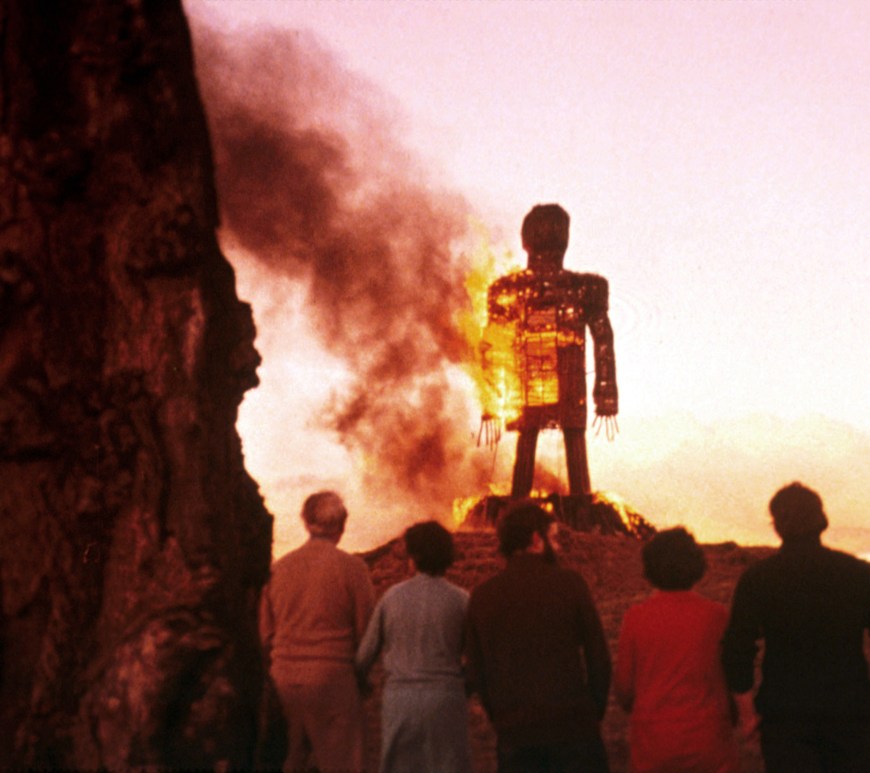
Part 1. Part 2. Tradition Through Folk Aesthetics in the Music of The Wicker Man (1973). The first case study film for this essay is Robin Hardy’s 1973 film, The Wicker Man.  Though it is the latest of the films to be looked at, it has the most complex relationship with its music, formed entirely of its own accord rather than on folk horror practices … Continue reading The Music of Folk Horror – Part 3 (The Wicker Man’s Folk Aesthetics).

Cry Of The Banshee – Gordon Hessler (1970)

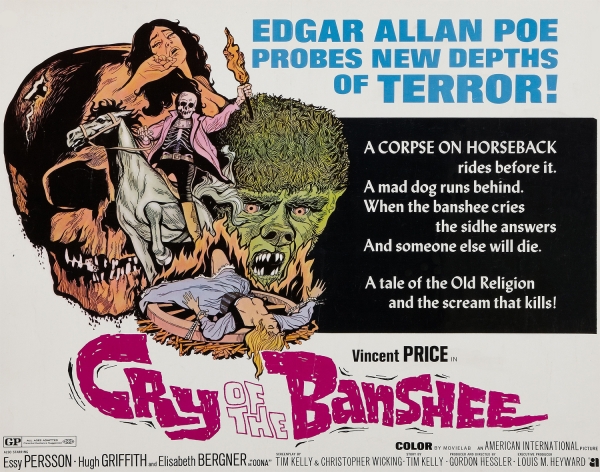
Cry of the Banshee (1970) makes no qualms as to what its aims are.  Looking at its promotional poster, it would be natural to associate it with Roger Corman’s Poe films; it’s emblazoned with Edgar Allen Poe references, its main star is Vincent Price and its design is a technocolour nightmare.  The film itself is about as far from Corman’s dreamlike fantasies as possible in … Continue reading Cry Of The Banshee – Gordon Hessler (1970)