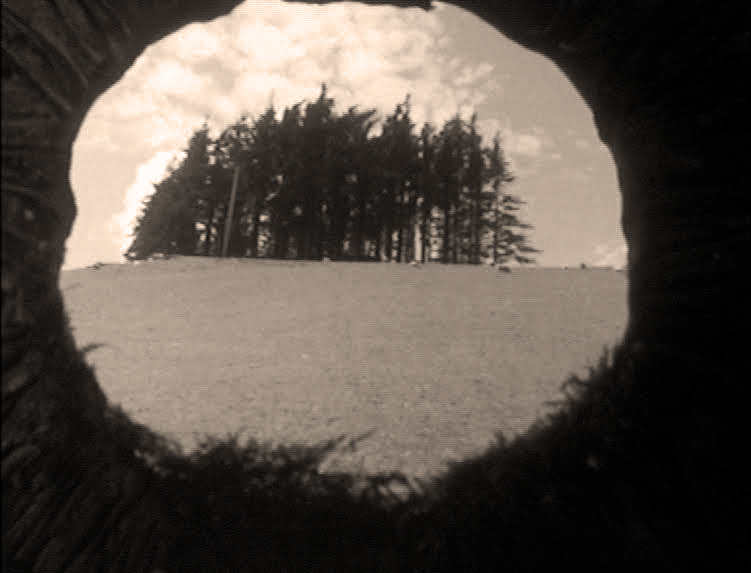
Uncanny Portals And Standing Stones (Children Of The Stones, The Owl Service and Barbara Hepworth)- Part 2.

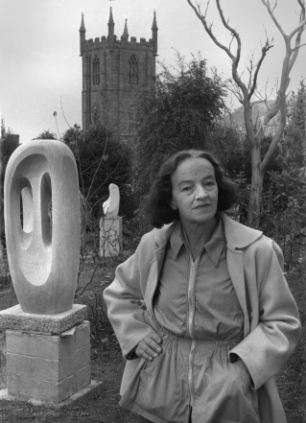
Part 1. Portals, Dimensions and Time. For Barbara Hepworth the process actually began in Yorkshire, and Cornwall is the second and last English phase of a basic topographical emotion which is no longer a matter of geography but one of the mind and creation. Neither is it any longer a matter of feeling for landscape in the narrow sense but one of the relation of … Continue reading Uncanny Portals And Standing Stones (Children Of The Stones, The Owl Service and Barbara Hepworth)- Part 2.
Uncanny Portals And Standing Stones (Children Of The Stones and Barbara Hepworth)- Part 1.

Introduction. The building of form within the space of landscape has become a common occurrence in sculpture for a number of years now.  The moving of artistic forms out-of-doors provides so many new potential contexts that it seems almost puerile to suggest so.  One aspect of particular interest is when these new forms of Earthologistic sculpture come into contact, perhaps even competition, with older forms of … Continue reading Uncanny Portals And Standing Stones (Children Of The Stones and Barbara Hepworth)- Part 1.

Cinematic Identity Crises And Francis Bacon – Part 3 (Herostratus).

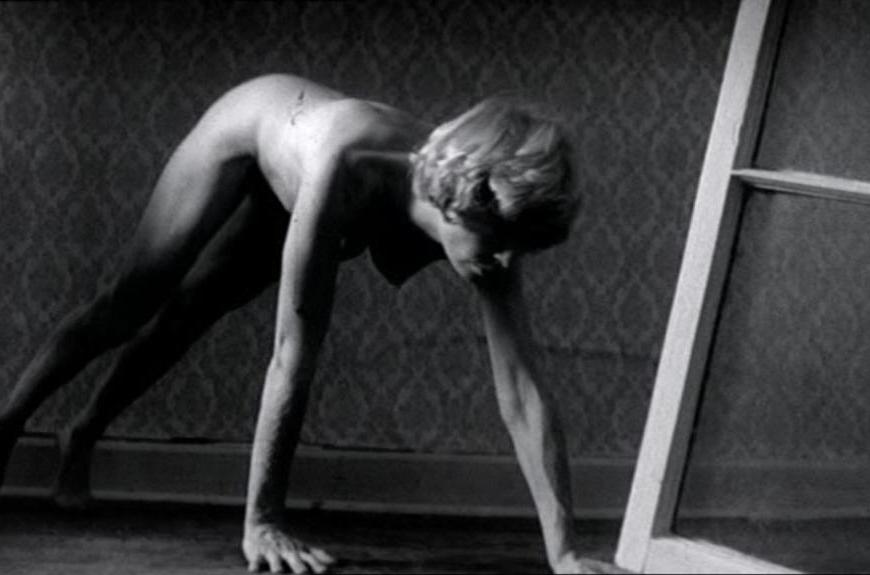
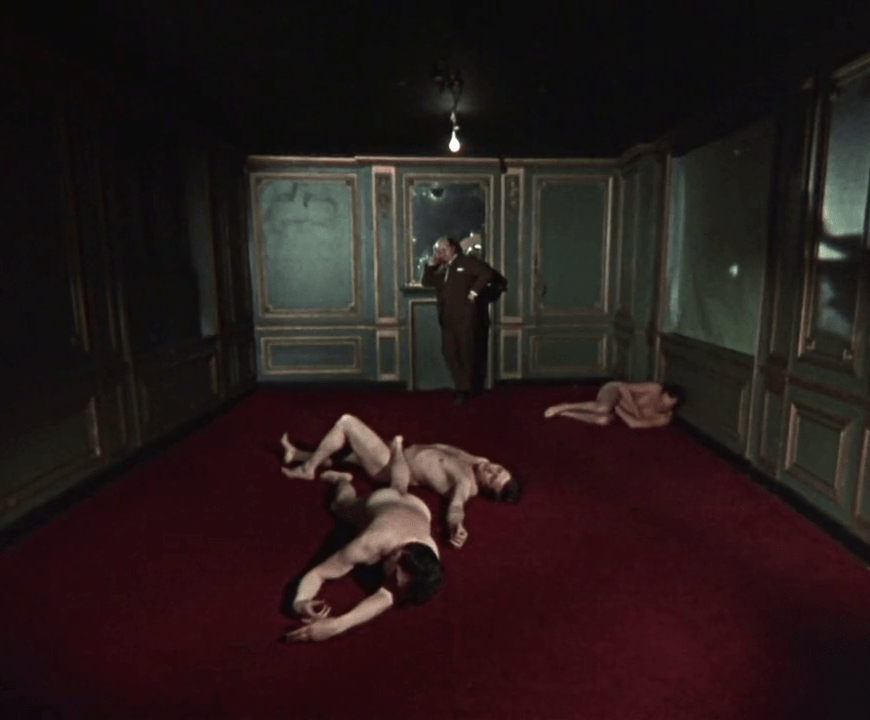
Part 1. Part 2. Herostratus (1967) Expanding upon the ideas of screaming in The Shout, the analysis of Francis Bacon’s influence on counterculture British cinema can conclude with Don Levy’s 1967 film Herostratus.  The film and its obsessions with textures and urban landscapes has already been discussed in other articles but Herostratus is full of other forms of terrain; the morphed and emotionally tortured form … Continue reading Cinematic Identity Crises And Francis Bacon – Part 3 (Herostratus).

Cinematic Identity Crises and Francis Bacon – Part 2 (The Shout).

Part 1. The Shout (1978) “I’ve always desired to be able to paint the mouth like Monet could paint the sunset.” – Francis Bacon (1966, interview with David Sylvester). Though Jerzy Skolimowski’s The Shout (1978) is equally as complex as Performance in terms of narrative linearity (or lack of it), Skolimowski’s film and its complexity derives not from the identity crisis surrounding individual characters within … Continue reading Cinematic Identity Crises and Francis Bacon – Part 2 (The Shout).

Short Film – Holloway (Robert Macfarlane)

It feels odd to finally be able to say that Holloway is finished.  This oddness derives not just from the fact that it has been the longest planned film that I’ve produced so far (starting all the way back from Robert Macfarlane’s first email to me in February 2014) but because the subject of the film itself is never-ending.  The holloways of Dorset do not … Continue reading Short Film – Holloway (Robert Macfarlane)

Cinematic Identity Crises and Francis Bacon – Part 1 (Performance).

Introduction The paintings of Francis Bacon have been so often alluded to within post-1960s British cinema that it more often than not loses a sense of consistent meaning and turns more readily into a repeated meme for cultural acknowledgement.  Since the art market has promptly recognised that Bacon’s work is of a very genuine commercial value, his style of imagery has been taken on board … Continue reading Cinematic Identity Crises and Francis Bacon – Part 1 (Performance).

Forest (Short Film) and A Screaming Breeze (Book).

For some time now I have been involved in a collaborative arts project with local illustrator and artist Katie Craven.  Before the first stage of the project could be unleashed onto the unsuspecting public, the project collapsed in on itself thanks to a Belgian art gallery among other things.  To show just how close it got to being finished, there’s even a stop press advert … Continue reading Forest (Short Film) and A Screaming Breeze (Book).

Eroticism in the Music of Béla Bartók – Part 2 (Post-Wagnerian).

Part 1. Bartók as a Post-Wagnerian Composer and The Confronting of Eroticism in The Miraculous Mandarin. “Thus, at first, there came a weariness of the productions of the Romantic Period, and then, as a consequence of this weariness, a search for points of departure which represented the greatest possible contrast to those of the Romantic mode of expression.” – Bartók (1976, p.331) In the context … Continue reading Eroticism in the Music of Béla Bartók – Part 2 (Post-Wagnerian).

Diary (2010) – Tim Hetherington (Open Eye Gallery).

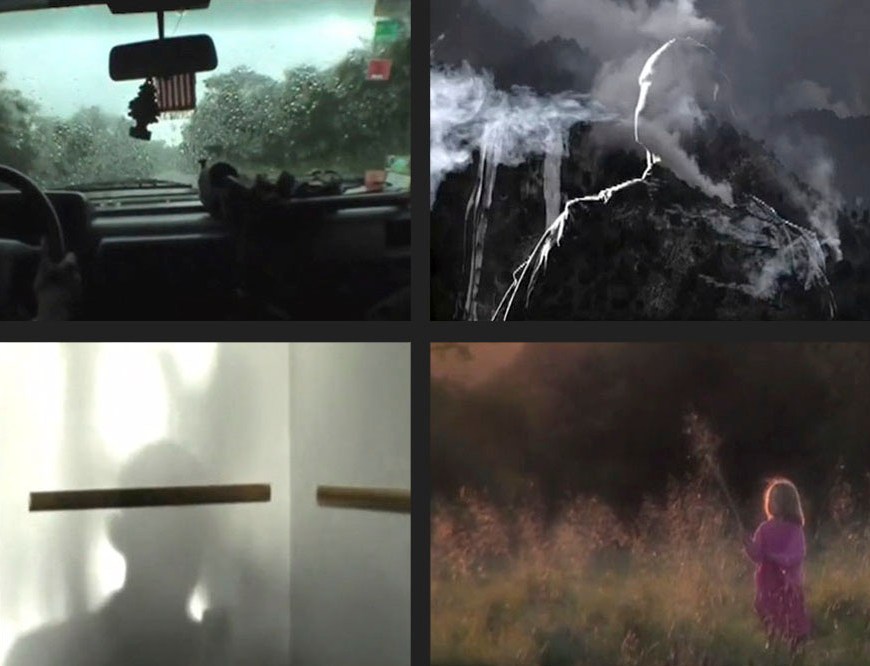
An exhibition of Tim Hetherington’s excellent, emotionally charged photography work is currently on display at Open Eye Gallery. Whereas a whole exhibition of high standard work would usually warrant an long, blow-by-blow review, there is a piece currently on display there that not only sums up the whole show but also requires a full and proper write-up all of its own. The piece is a … Continue reading Diary (2010) – Tim Hetherington (Open Eye Gallery).

The Problematic Reception of Derek Jarman’s Blue – Part 2 (Early Forms of Blue)

Part 1 The Reception of Blue in its Original Forms. Blue in Written Form and Early Performances. “The difference between formalist and realist philosophies is not in the possibility of affecting the spectator but in what the cinema ought to do, its prescriptive work.  Cinema either organizes the world or duplicates the experience of perceiving of it for the spectator.” (Staiger, 1992, p.51) Though Blue … Continue reading The Problematic Reception of Derek Jarman’s Blue – Part 2 (Early Forms of Blue)