Presence, or Polaroid Ghosts (Part 8)

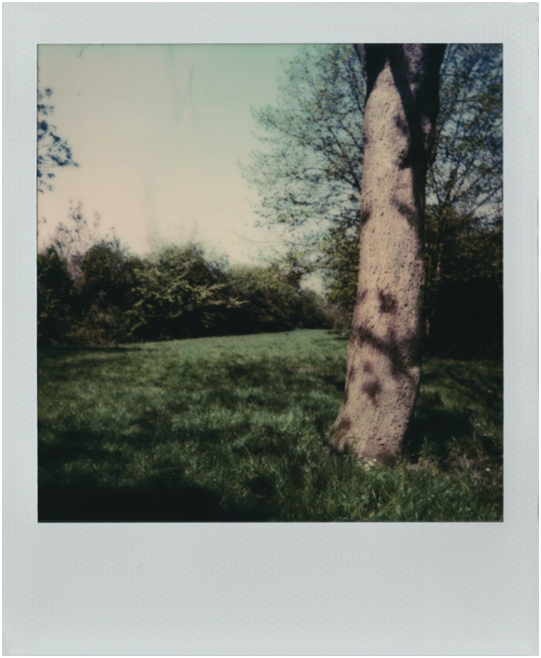
Part 7 Remembering Afterimage ‘At times,’ the Nobel Laureate and novelist Patrick Modiano writes, ‘it seems, our memories act much like Polaroids.’ This interesting thought comes from the semi-autobiographical perspective of a character in his novella Afterimage (1993). It is a narrative filled with strangeness, derived in part from the recollection of memories once forgotten; put to one side, left in the back of a … Continue reading Presence, or Polaroid Ghosts (Part 8)

Presence, or Polaroid Ghosts (Part 6)

Part 5 In the Park I often find myself asking a question. ‘What film would I live in if I could?’ It is a question that belies my own rather childish need to escape reality. But, if I could live in a piece of film, it would probably be Michelangelo Antonioni’s celebrated swinging cult classic, Blowup (1966). It is more than a little questionable as … Continue reading Presence, or Polaroid Ghosts (Part 6)

Deep Red; or Renditions of Murder

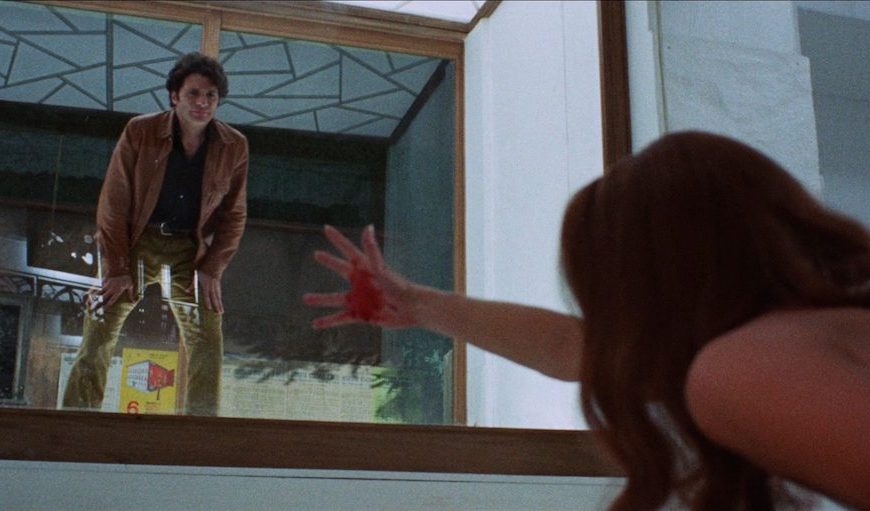
“But to learn to dye is better than to study the ways of dying.” – Sir Thomas Browne Writing He stalks with a lens, Short hair and floral dresses: Red, Deep red.                                                           The lens is a recollection, Occurring at a wooden desk, With a typewriter, Tapped by fingers, clothed in black leather; Dead skin masks for desperate hands. No prints. Writing violence. The lens is … Continue reading Deep Red; or Renditions of Murder

All The Lonely People

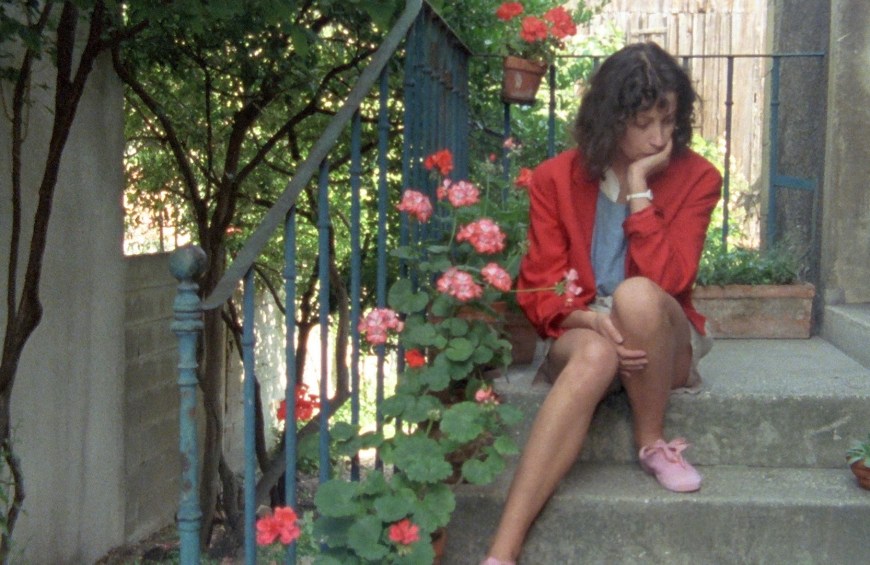
Chantal Akerman’s early features have one aspect in common: all are suffused with loneliness. In her first fiction feature, Je Tu Il Elle (1974), a character wanders between lovers old and new but is always confused as to what she really wants, only really content in isolation. In Jeanne Dielman, 23 Commerce Quay, 1080 Brussels (1975), we follow a woman trapped in the monotony of a mysteriously empty everyday … Continue reading All The Lonely People

Accumulation in Jacques Rivette’s La Belle Noiseuse (1991)

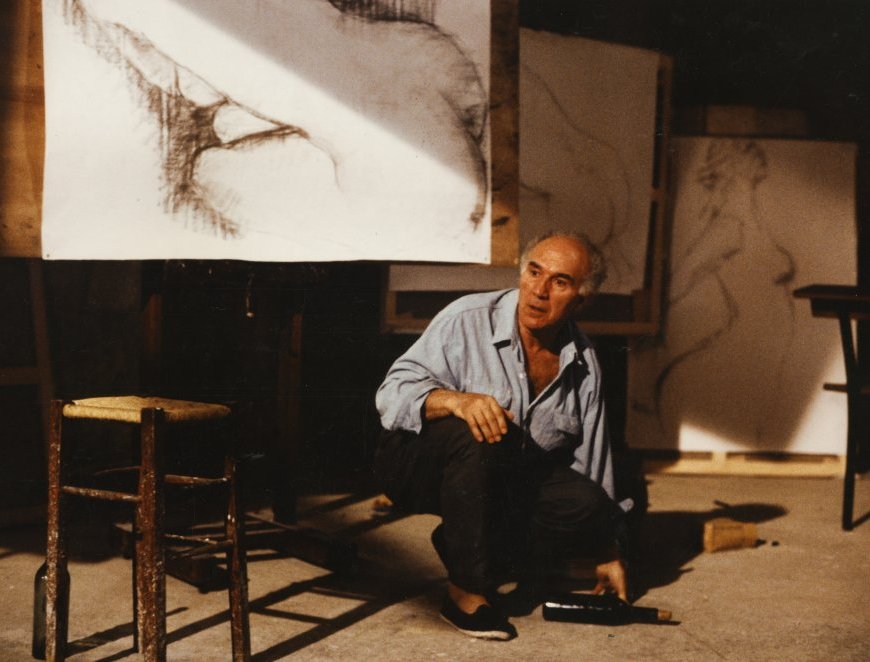
For a while after watching Jacques Rivette’s La Belle Noiseuse (The Beautiful Troublemaker, 1991), I repeatedly heard the sound of ink scratching from a nib onto rough paper and canvas. This action occurs throughout the almost four hour long film, to the point where the process of painting – from its earliest preparatory sketches to a devilish, unseen final canvas – feels almost conveyed in … Continue reading Accumulation in Jacques Rivette’s La Belle Noiseuse (1991)

An Exhaustive List of Nothing and Everything in Chantal Akerman’s Flat

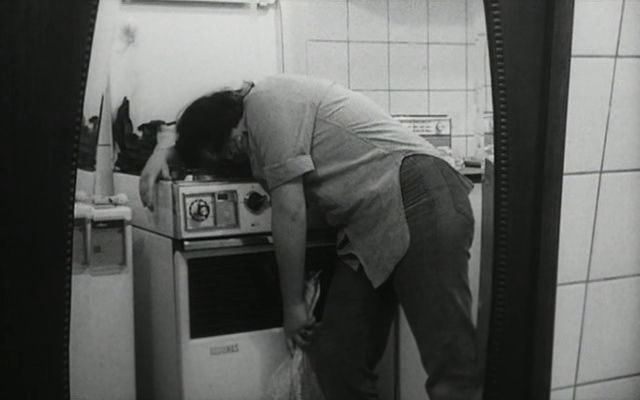
Fifty years ago this September, Chantal Akerman made her first film. It was a short, comical fragment about distraction and suicide called Saute Ma Ville (1968). Following Akerman herself running up to her flat, the film then shows her gradually making a mess of the kitchen where she has locked herself, taping the gaps in the door and windows ready for a slow death. The … Continue reading An Exhaustive List of Nothing and Everything in Chantal Akerman’s Flat

Skin On Stone – Grief in Three Colours: Blue (1994)

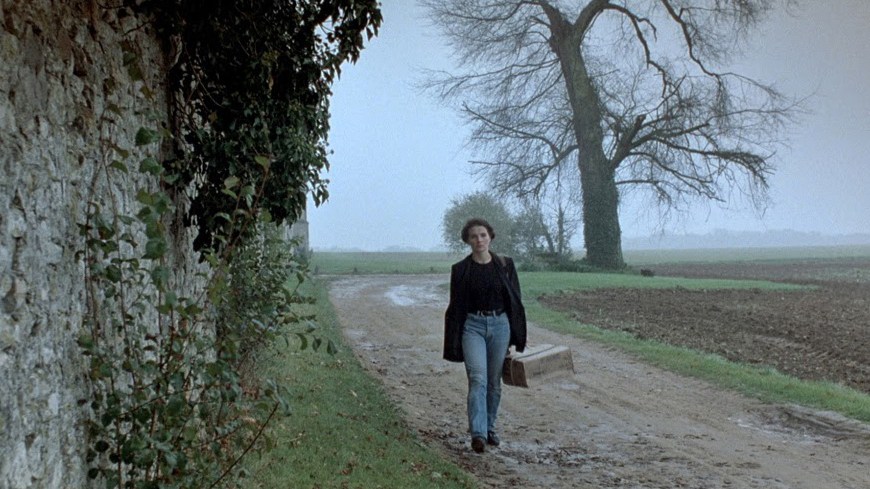
One of my favourite scenes in cinema is, in fact, not really a scene at all but a moment; a collection of three shots that has very little to do with the overall narrative but everything to do with the humanity questioned in the film.  The film is Krzysztof Kieślowski’s Three Colours: Blue (1994) and the moment is when Juliette Binoche, playing a woman in … Continue reading Skin On Stone – Grief in Three Colours: Blue (1994)

Heart Of Glass (1976) – Optimism in Destruction

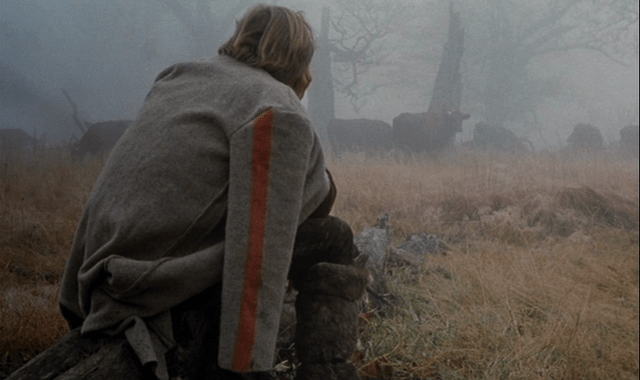
On a rock, there sits a man lost in thought.  Or perhaps he is not thinking at all and is instead letting the landscape around him fill his thoughts unconsciously.  Werner Herzog’s 1976 film, Heart of Glass (Herz aus Glas), has one of the director’s strongest opening set of images as the main character of the film sits in a foggy Bavarian landscape with life … Continue reading Heart Of Glass (1976) – Optimism in Destruction

Sex and the Landscape

Once I loved a man who was a lot like the desert, and before that I loved the desert. – Rebecca Solnit Late last year, I watched two films back-to-back that effectively spoke of one very particular theme. Viewing Michelangelo Antonioni’s Zabriskie Point (1970) followed by Dennis Hopper’s directorial debut The Last Movie (1971) highlighted a number of unavoidable connections between the films. Both films … Continue reading Sex and the Landscape