Communicative Reality in The Lover (1963) – Harold Pinter.

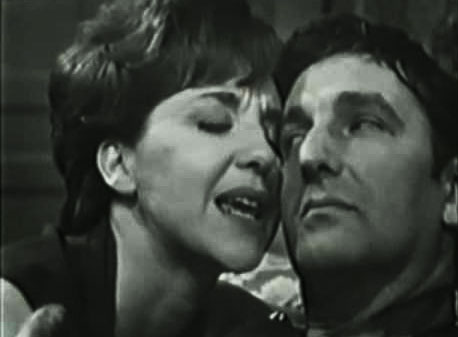
This article contains plot twists. Harold Pinter’s The Lover was a script first publically showcased as a television play in March 1963[i] before it went on for a theatre run a few months later starting from September that year.  As a model of how Pinter plays on words and the natural duel meaning found explicitly within the English language, it develops on several ideas that would … Continue reading Communicative Reality in The Lover (1963) – Harold Pinter.

Walking “A Warning To The Curious” (M.R. James).

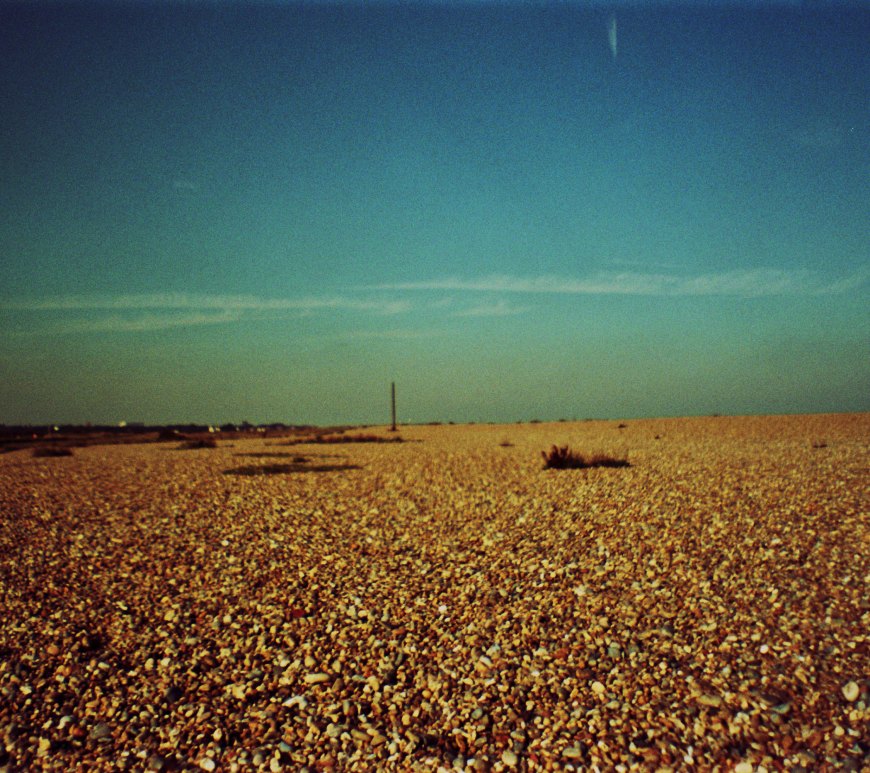
A few years back, whilst on holiday in Norfolk, I began exploring some of locations used for the BBC’s famous M.R. James adaptations, specifically for Lawrence Gordon Clark’s adaptation of A Warning To The Curious (1972).  Though I had been far from thorough in this escapade (I completely missed the film’s most iconic structure in the church at Happisburgh), on finding myself in Suffolk, I … Continue reading Walking “A Warning To The Curious” (M.R. James).

Emerson’s Nature and Sleep Furiously (2008) – Gideon Koppel.

Nature is always present or at the very least contrasted against something in Gideon Koppel’s nostalgia portrait, Sleep Furiously (2008).  In spite of the film being a very clear ethnographic postcard from the director’s past, having lived previously in the Welsh town of Trefeurig, it manages to underline its gentle portraiture with a sense of pervading nature and landscape; where even the most concrete of … Continue reading Emerson’s Nature and Sleep Furiously (2008) – Gideon Koppel.

Mirrors, Donald Cammell and Jorge Luis Borges.

More so than his relationship with painting, film, drugs or threesomes, Donald Cammell’s life and work seems to have been directly linked with mirrors.  While all of the former aspects played huge roles and allowed access to knowledge of his obsessions in the first place through his work, it is the mirror and its hidden powers that seem to haunt Cammell as an artist and … Continue reading Mirrors, Donald Cammell and Jorge Luis Borges.

Short Film – An Impossible Dérive.

An Impossible Dérive is a film that channels a number of my own current interests.  Though predominantly about the changing landscape and topography of the city centre of Liverpool, it is also about using psychogeography and the writing of John Wyndham to assess and comment upon the fallout of such change within the landscape.  The title, An Impossible Dérive, refers to two different aspects of … Continue reading Short Film – An Impossible Dérive.

Short Film – Holloway (Robert Macfarlane).

It feels odd to finally be able to say that Holloway is finished.  This oddness derives not just from the fact that it has been the longest planned film that I’ve produced so far (starting all the way back from Robert Macfarlane’s first email to me in February 2014) but because the subject of the film itself is never-ending.  The holloways of Dorset do not … Continue reading Short Film – Holloway (Robert Macfarlane).

Alchemical Magic in Derek Jarman’s The Tempest (1979).

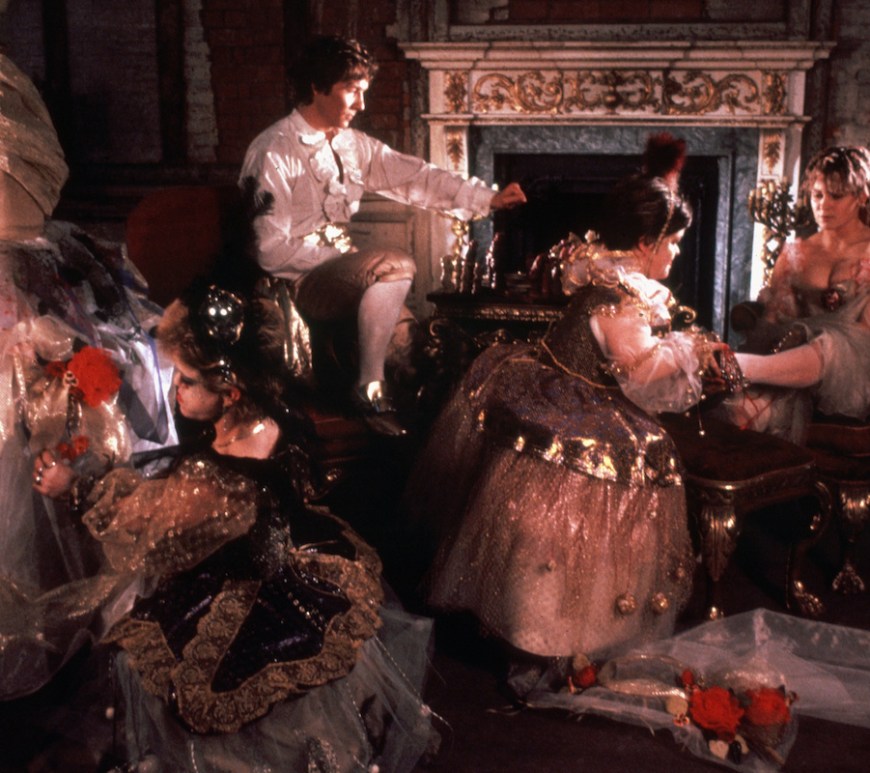
Forever a cinematic alchemist – a sage that conjured and devoured celluloid before the eventual ritualistic sacrifice- Derek Jarman is the perfect suitor to Shakespeare’s The Tempest (1979); a play whose heart is bathed in the tragedy and power of magic.  Of course Jarman isn’t the only person from the Brit-pack of avant-garde directors to remould the work but his is the most natural.  Peter … Continue reading Alchemical Magic in Derek Jarman’s The Tempest (1979).

Repetition, Adorno and 71 Fragments Of A Chronology Of Chance (Haneke).

Much has been written about the stark comparisons between the cinema of Michael Haneke and the culture theories of the Frankfurt School of philosophy.  In the 2010 book, A Companion To Michael Haneke, Roy Grundmann devotes a whole essay in the volume to Theodor Adorno and the “aesthetic fragmentation” of several of Haneke’s films whilst various articles and essays spend time drawing comparisons to Haneke’s … Continue reading Repetition, Adorno and 71 Fragments Of A Chronology Of Chance (Haneke).

Philip Larkin’s Spirit in Requiem For A Village (1976)

I thought it would last my time – The sense that, beyond the town, There would always be fields and farms, Where the village louts could climb Such trees as were not cut down; I knew there’d be false alarms – Going, Going, Philip Larkin. Above is the opening stanza of Philip Larkin’s 1972 poem, Going, Going. The poem captures the sense of a world being lost. The … Continue reading Philip Larkin’s Spirit in Requiem For A Village (1976)

Falconry, H Is For Hawk, and Powell & Pressburger.

After recently finishing Helen Macdonald’s excellent book, H Is For Hawk, a number of connections and synchronicities emerged that all seemed in some way to tie in to its various chapters and ideas.  Whilst many of these were of a more personal, emotional nature, the chief connection of interest lay in the presence of hawks in Powell and Pressburger’s 1944 film, A Canterbury Tale.  This … Continue reading Falconry, H Is For Hawk, and Powell & Pressburger.