The “English Eerie” and The Landscape Venn.

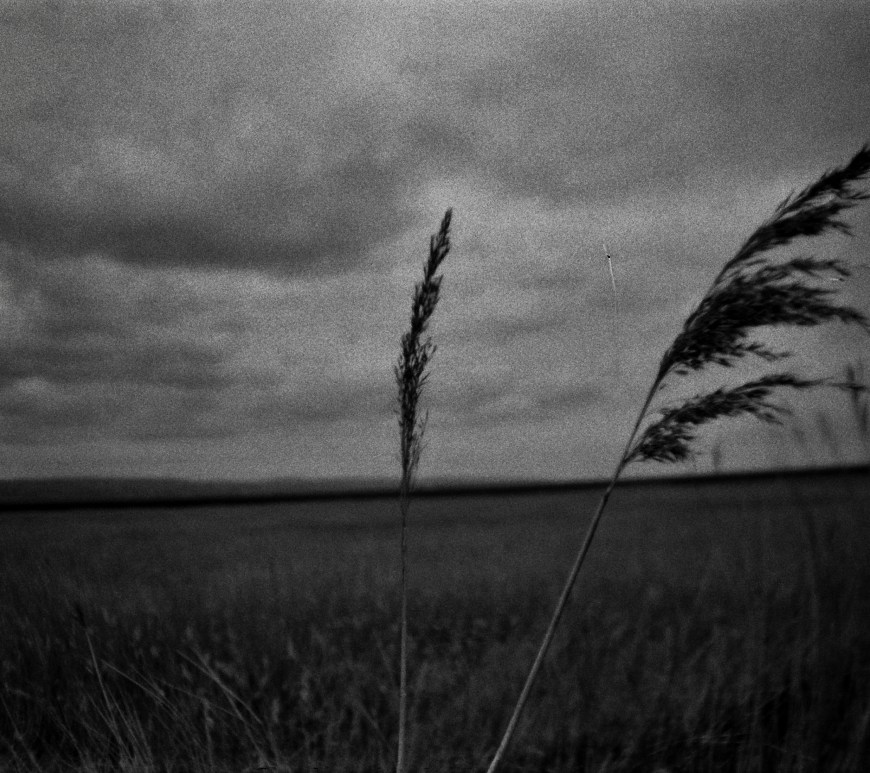
As I write this, it is just under two weeks to the Spectral Landscapes event in Oxford.  Put together between myself and the Oxford University’s Romantic society through Jen Wood, the event is looking at the resurgence of interest in work across all forms of creative media which looks to the landscape in order to find essences of the “eerie”, especially of that in English … Continue reading The “English Eerie” and The Landscape Venn.

Walking “A Warning To The Curious” (M.R. James).

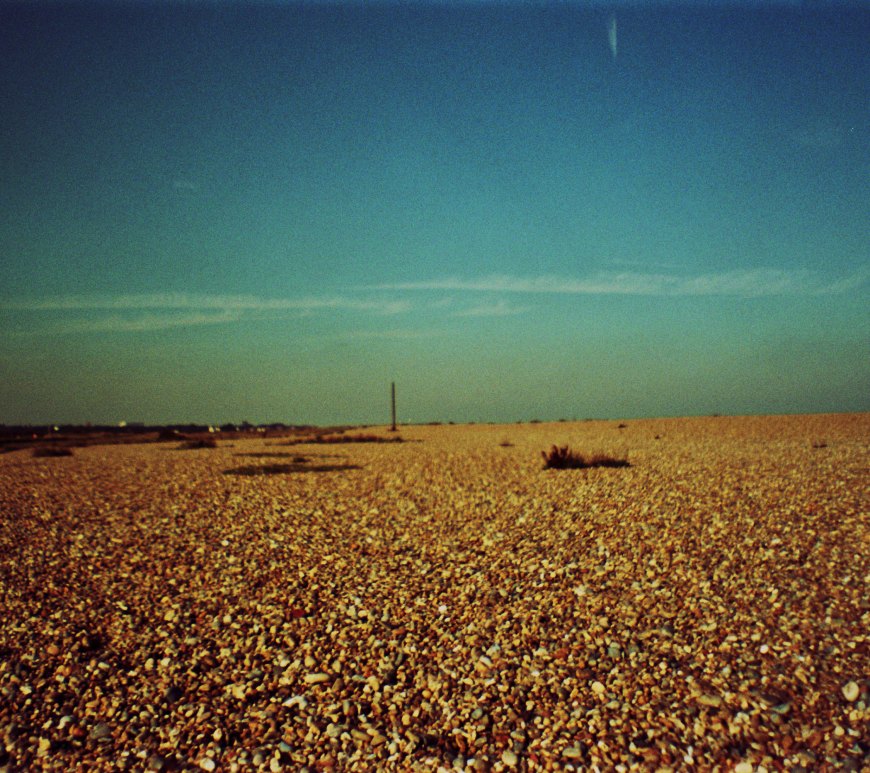
A few years back, whilst on holiday in Norfolk, I began exploring some of locations used for the BBC’s famous M.R. James adaptations, specifically for Lawrence Gordon Clark’s adaptation of A Warning To The Curious (1972).  Though I had been far from thorough in this escapade (I completely missed the film’s most iconic structure in the church at Happisburgh), on finding myself in Suffolk, I … Continue reading Walking “A Warning To The Curious” (M.R. James).

Journey Within Practice – Richard Long and Chris Marker.

The work of Richard Long is so indebted to the act of walking into a landscape that it seems a rather obvious aspect to point out.  While many of his transient works, especially of the sculptural variety left in various wildernesses, required the act of the artist to walk, it is often the photographic capture of the finished event in question that, in the majority, … Continue reading Journey Within Practice – Richard Long and Chris Marker.

Trailer – Salthouse Marshes.

Above is the trailer for my last film of the year, Salthouse Marshes.  Continuing on from last year’s theme in a trend I hope to continue with on a yearly basis, the film is a short, landscape obsessed ghost story.  With the BBC seeming reluctant to bother with a ghost story for Christmas any more, it feels necessary to in some way plug the gap … Continue reading Trailer – Salthouse Marshes.

Emerson’s Nature and Sleep Furiously (2008) – Gideon Koppel.

Nature is always present or at the very least contrasted against something in Gideon Koppel’s nostalgia portrait, Sleep Furiously (2008).  In spite of the film being a very clear ethnographic postcard from the director’s past, having lived previously in the Welsh town of Trefeurig, it manages to underline its gentle portraiture with a sense of pervading nature and landscape; where even the most concrete of … Continue reading Emerson’s Nature and Sleep Furiously (2008) – Gideon Koppel.

Mirrors, Donald Cammell and Jorge Luis Borges.

More so than his relationship with painting, film, drugs or threesomes, Donald Cammell’s life and work seems to have been directly linked with mirrors.  While all of the former aspects played huge roles and allowed access to knowledge of his obsessions in the first place through his work, it is the mirror and its hidden powers that seem to haunt Cammell as an artist and … Continue reading Mirrors, Donald Cammell and Jorge Luis Borges.

Isolation And Madness In Cul-De-Sac (1966) – Roman Polanski.

Few films are as explicit in their depiction of character relationships that are at the mercy of the fluctuating landscape than Roman Polanski’s 1966 film, Cul-De-Sac.  Polanski had been to both ends of the environmental spectrum within his previous two films – the open waters of Knife In The Water (1962) and the cramped, claustrophobic London of Repulsion (1965) – and Cul-De-Sac sees him returning … Continue reading Isolation And Madness In Cul-De-Sac (1966) – Roman Polanski.

Cinematic Identity Crises And Francis Bacon – Part 3 (Herostratus).

Part 1. Part 2. Herostratus (1967) Expanding upon the ideas of screaming in The Shout, the analysis of Francis Bacon’s influence on counterculture British cinema can conclude with Don Levy’s 1967 film Herostratus.  The film and its obsessions with textures and urban landscapes has already been discussed in other articles but Herostratus is full of other forms of terrain; the morphed and emotionally tortured form … Continue reading Cinematic Identity Crises And Francis Bacon – Part 3 (Herostratus).

Repetition And Occultism Of Invocation Of My Demon Brother (1969) – Kenneth Anger.

There exist volumes of academic research and work surrounding the role of repetition in religious and cultural practices.  Repeated actions of any type, creating an easily recognisable mimesis, seems almost an aesthetic by-word for a normalised analytical framework of cultural activities, especially musically.  From prayer to mantra, the idea of repetition is stretched to form (or conform) belief patterns, as if deliberately signposting theological culture … Continue reading Repetition And Occultism Of Invocation Of My Demon Brother (1969) – Kenneth Anger.

Cinematic Identity Crises and Francis Bacon – Part 2 (The Shout).

Part 1. The Shout (1978) “I’ve always desired to be able to paint the mouth like Monet could paint the sunset.” – Francis Bacon (1966, interview with David Sylvester). Though Jerzy Skolimowski’s The Shout (1978) is equally as complex as Performance in terms of narrative linearity (or lack of it), Skolimowski’s film and its complexity derives not from the identity crisis surrounding individual characters within … Continue reading Cinematic Identity Crises and Francis Bacon – Part 2 (The Shout).