
‘When I was not confined to the house, I would spend my days and my nights on the Edge.’ – Alan Garner

On a frosty but sunny January morning, I was steadily making my way along the M56 towards Macclesfield. I was on my way to Alderley Edge in Cheshire, the stalking ground of writer Alan Garner. In 2015 I had made this journey in order to make a film, quickly zipping between the Alderley, Congleton, Jodrell Bank (where Garner still lives), and Mow Cop further down the M6. With such haste, I had been unable to fully explore the Edge on foot properly, in part due to the need to get shots that were at the total mercy of the weather.
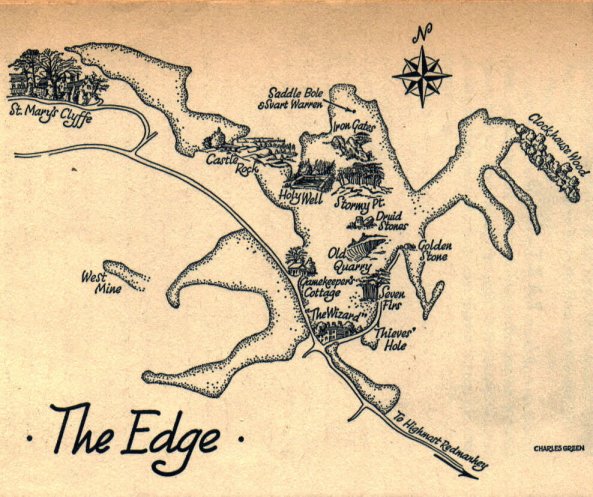
My aim in returning was to properly explore the Edge in relation to Garner’s history and especially in the context of his first novel, The Weirdstone Of Brisingamen (1960), which maps the area in such detail (as well as actually providing an illustrated map) that reliving Susan and Colin’s magical adventure there is possible with little difficulty. After all, the subtitle of the book is ‘A Tale of Alderley.’
Driving through the town which resides further down the hill, it is clear that the area has changed dramatically since Garner’s youth. The affluence of the place is all too clear; its shops are almost all independent and expensive looking, rather like the groups of people who wandered in and out of them, all dressed impeccably as they push huge designer prams into delicatessens and vintage sweet shops. This is no longer the realm of the ancient or the place of working-class characters such as Gowther and Bess Mossock.
The new sheen to the place is, however, quickly lost once on the Macclesfield Road, itself littered intimidatingly large-looking mansions but one that quickly descends into forest and rock. A few minutes hence, and civilisation virtually vanishes; only reappearing like a conjuring trick when the official National Trust car park appears alongside a certain pub.
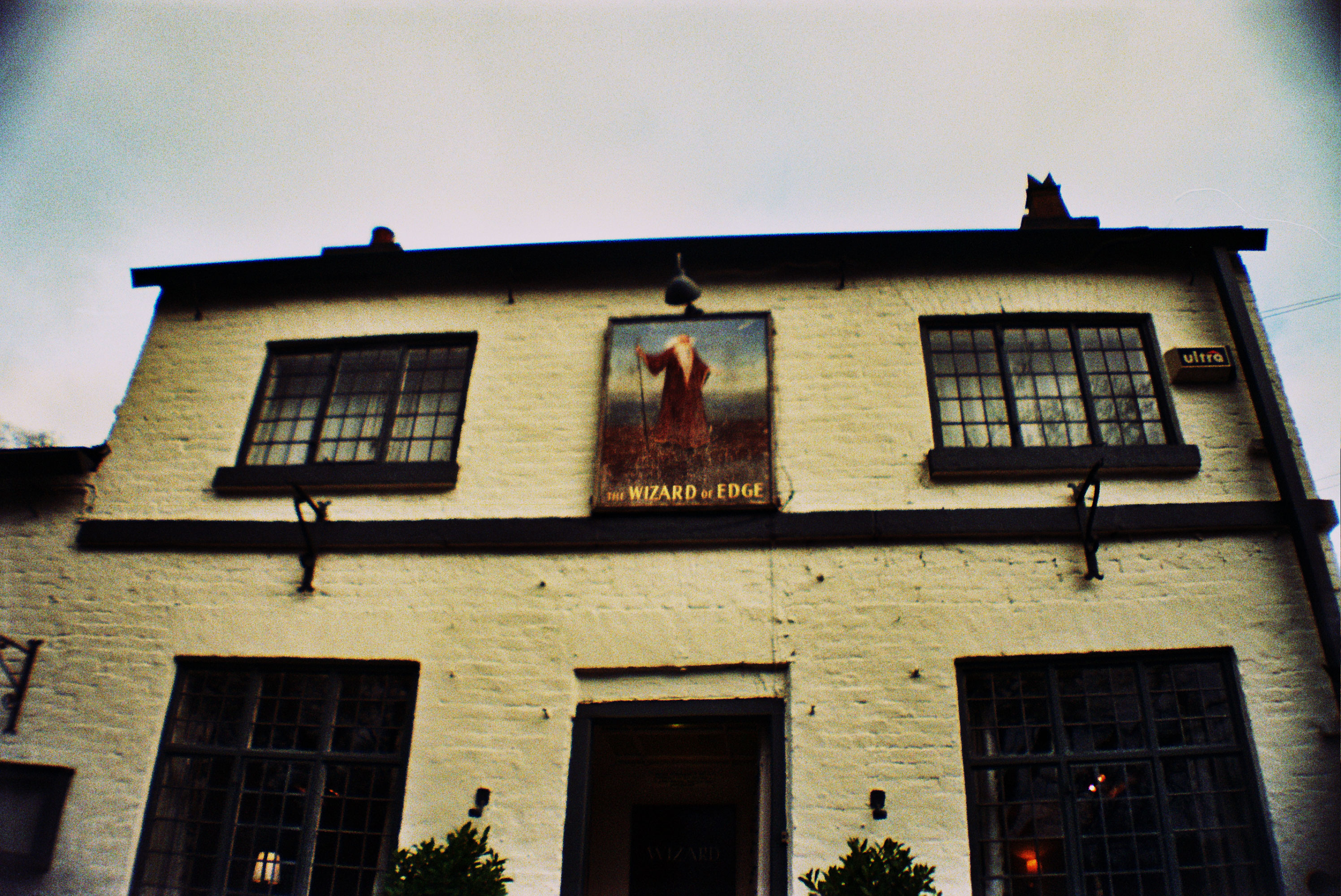
The Wizard Inn is one of the key points in Garner’s story, and is the first stop on any Garner-related walk. In Brisingamen, Garner writes the following about the pub: ‘It was named The Wizard, and above the door was fixed a painted sign which held the children’s attention. The painting showed a man dressed like a monk, with long white hair and beard…’. Little has changed on the surface.
The building retains the same black and white design, built on the very precipice of the forest. The sign still hangs proudly above the door, its magical character standing confidently as protector of the area. It is aptly one of the few buildings around whose sense of magic is palpable, its beams bending gently and windows creaking. The only downfall is that it is now an upmarket restaurant. Perhaps a local pub is a little too downmarket for the new generation of customers.

My aim was to hit the Edge as soon as possible. The path wound around and through the forest, past several mines which may or may not have housed various groups of aggressive Svarts, Garner’s makeshift equivalent of Goblins.
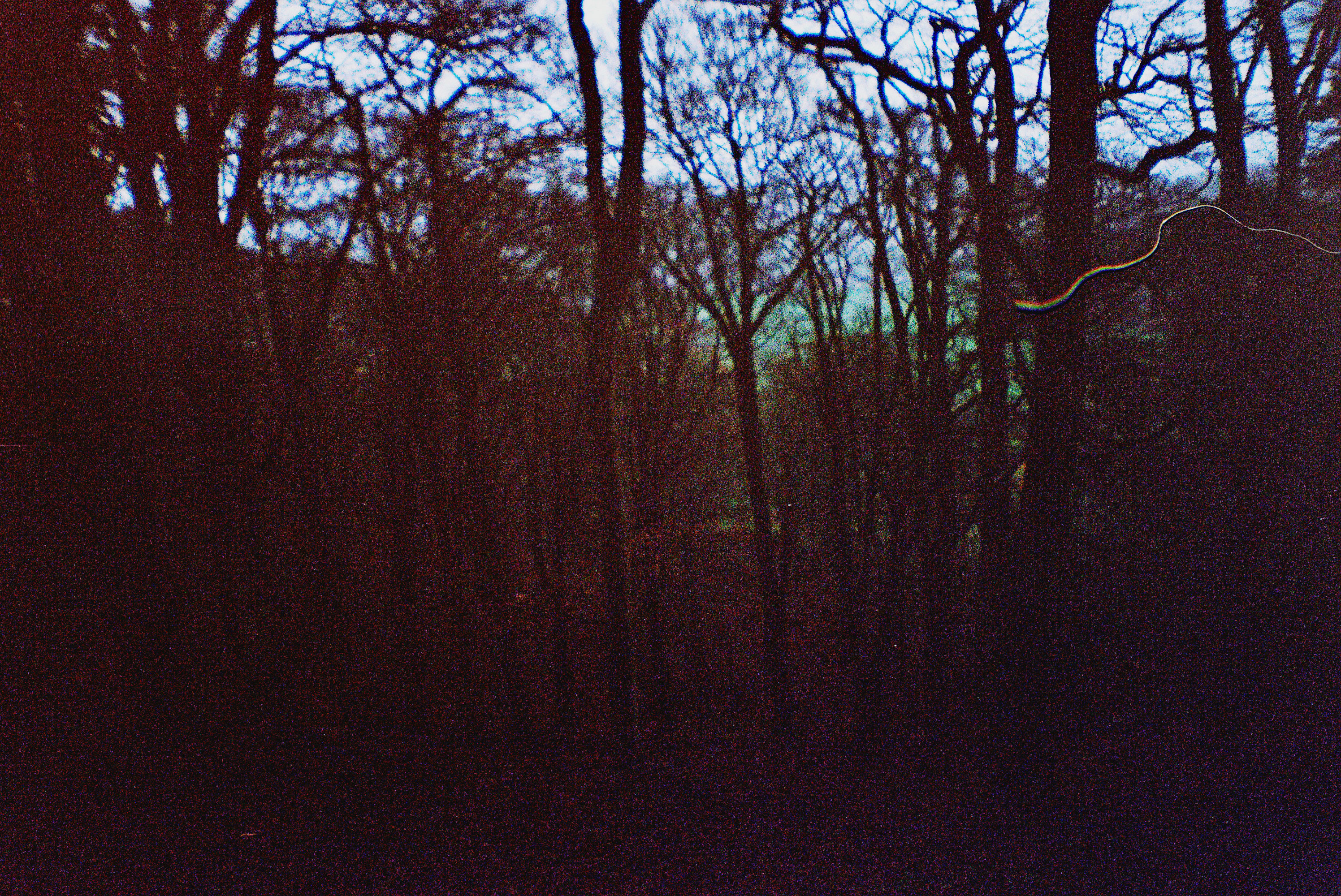
The day was muddy and groggy, raining on and off, though the walk was protected largely by the trees allowing only a minor trickle to filter through. Instead of veering left straight away towards the forest again, I meandered straight on through a thin path created by barbed wire on either side, fields stretching out as far as they dared. In terms of Garner’s map, it was heading towards Clockhouse Wood though the weather meant that a left turn was soon taken back to the main area.
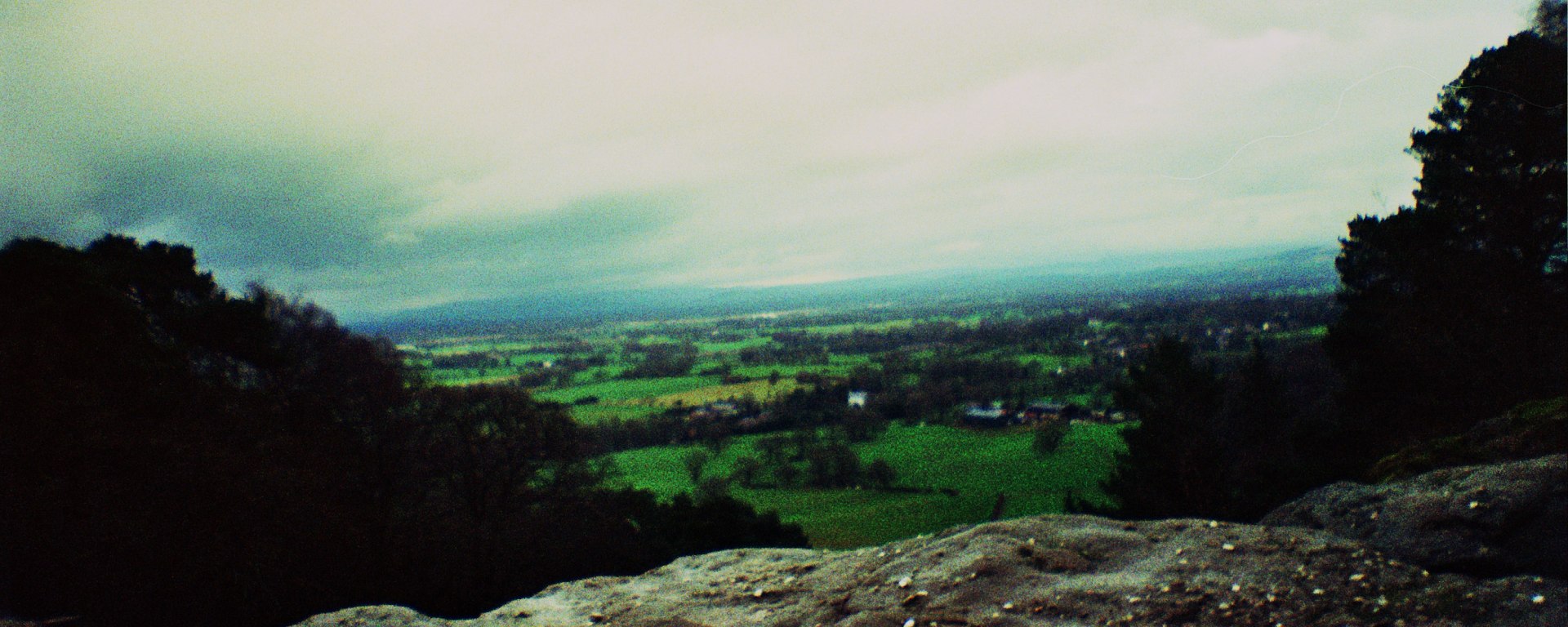
The paths twisted again through a creaky gate though the neatness leading up to the Edge’s various points began to feel rather tidy and unnervingly Disney-ish. There was a viewing point and path so unnaturally created that it felt perturbing, though the view itself was excellent. Garner writes of this Edge in Brisingamen, describing it as ‘high, and sombre, and black.’ Further elaborations come from Susan and Colin’s reaction to the place:
Nearer they came to the Edge, until it towered above them, then they turned to the right along a road which kept to the foot of the hill. On one side lay fields, and on the other the steep slopes. The trees came right down to the road, tall beeches which seemed to be whispering to each other in the breeze.
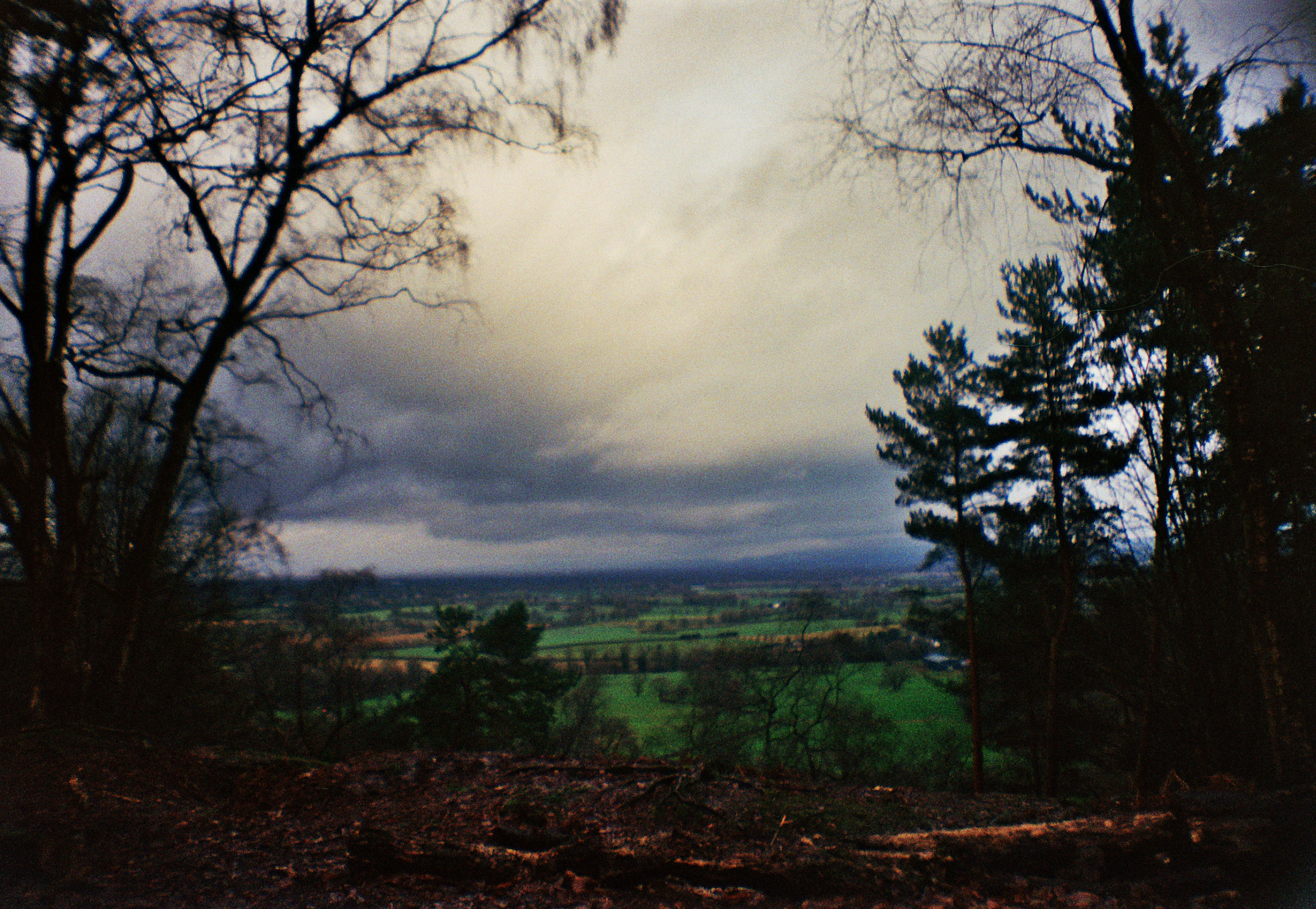
The beeches were whispering as the wind began to pick up. The view distracted from properly finding the Golden Stone, another Garner site, while the muddy track softened underfoot as the day went on. It was aptly refreshing, however, from the bark-chip laden path of the first view. There was an obvious attempt to make the place a safe retreat for inhabitants of the urban sprawl down the hill and beyond, rather than retaining the landscape’s real wildness.
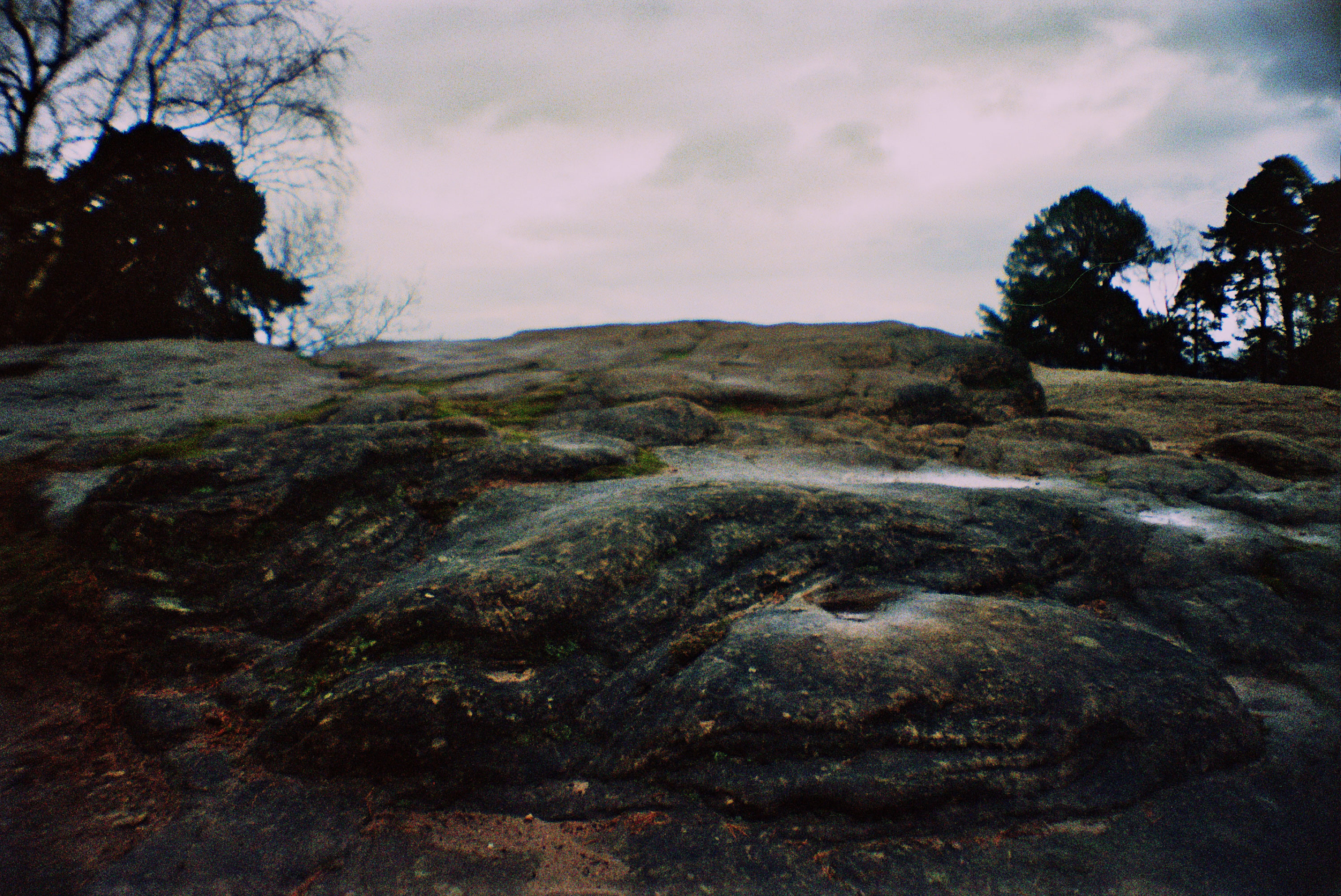
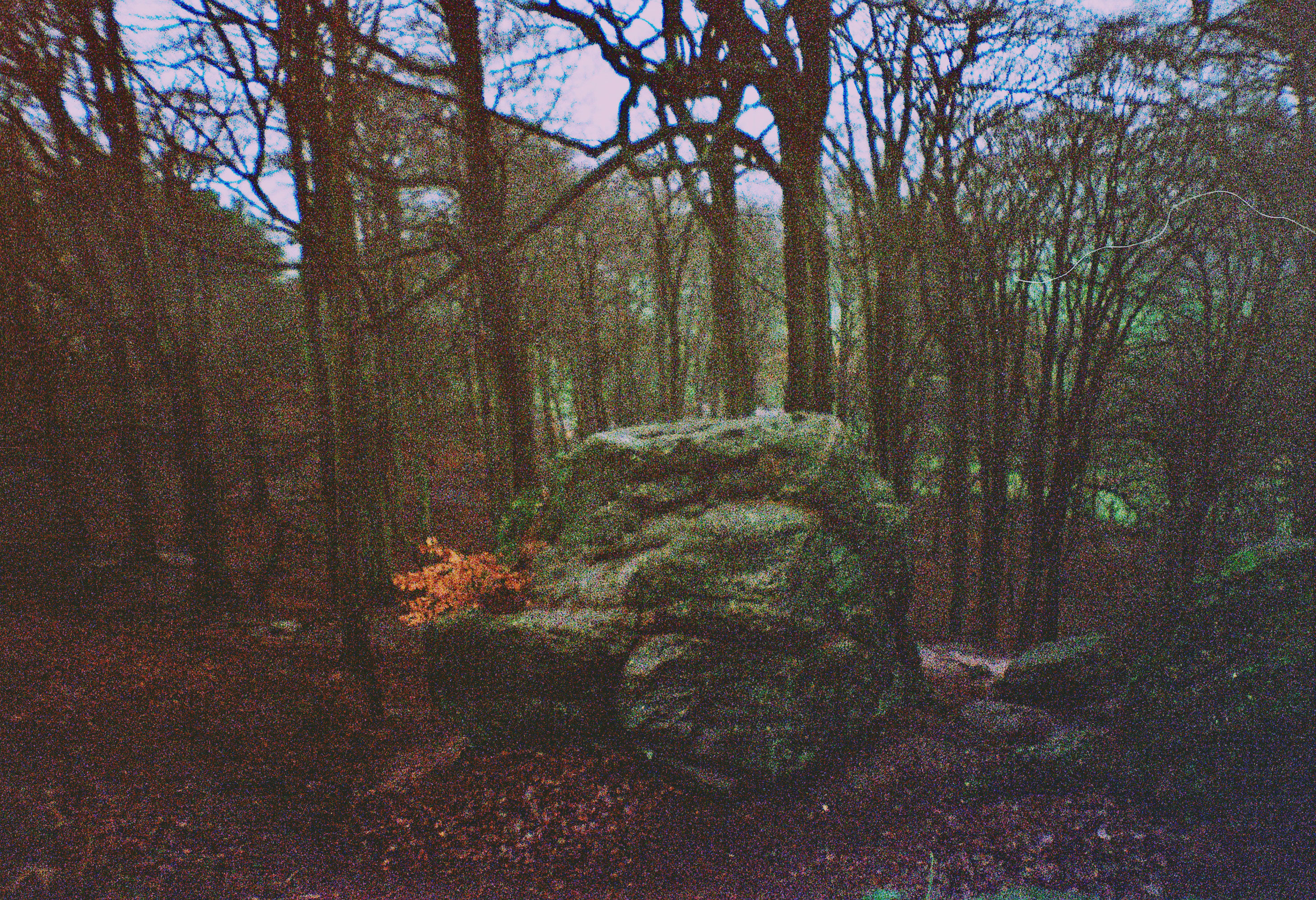
On the other hand, the wildness of the rocky plains of the Edge will never be taken away completely. The outcrop is varies between razor jagged and slippery smooth, allowing a Roman sentry view onto the Cheshire plains. It is a view that transports temporally as well as physically; the viewer is small in both place and time. Even Manchester looks like a blip among the fields.
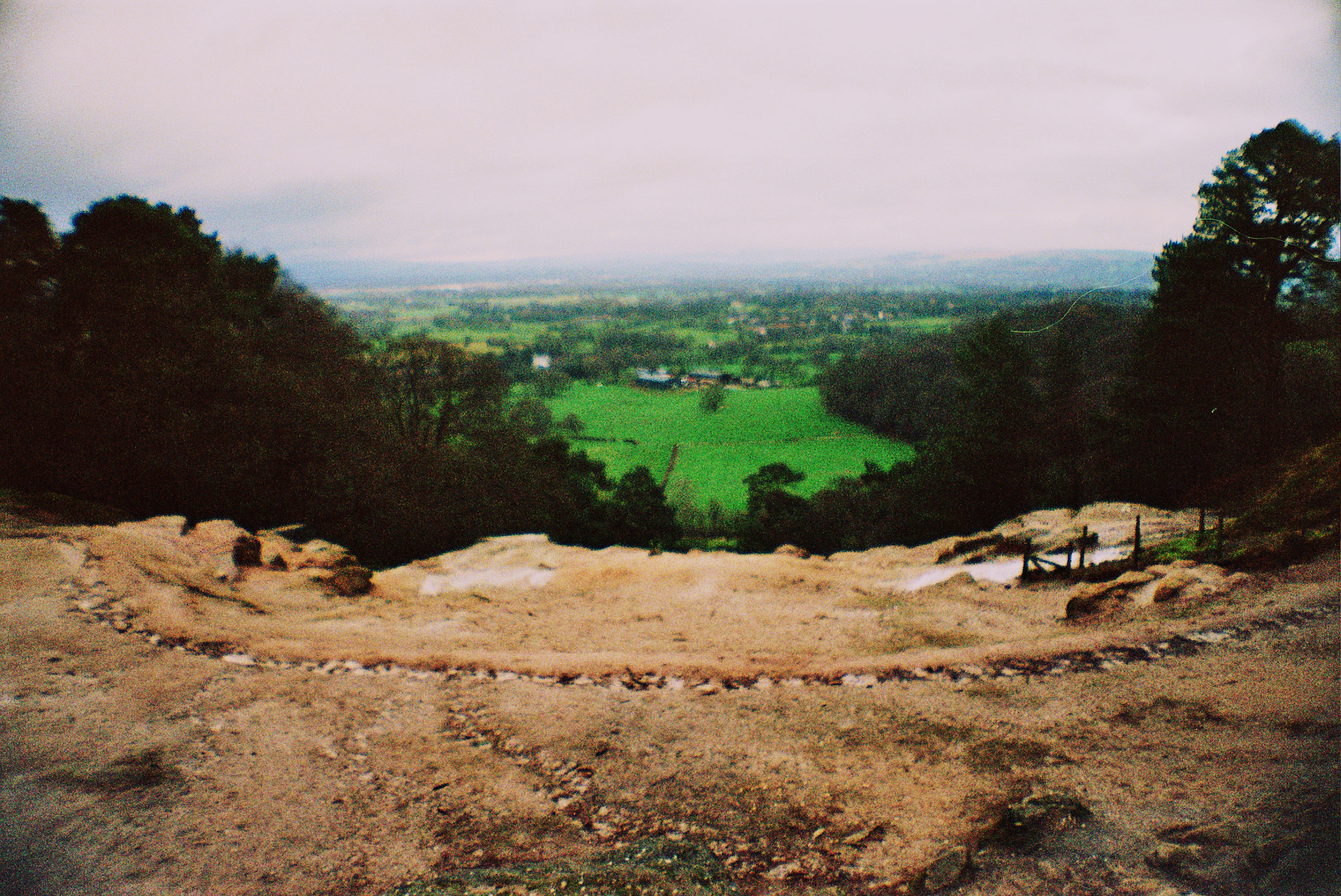
Garner developed a unique but emotionally lethal view of this landscape. He wrote that ‘As a result of gained knowledge, for me the Edge both stopped, and melted, time.’ But he also writes in the same essay that the Edge ‘is physically and emotionally dangerous. No one born to the Edge questions that, and we showed it proper respect.’
He is evidently not simply discussing the dangers of an incorrect footing but a relationship with the self; places that force us to reflect on our own minuteness and pitiful position in the universe. We are tiny, and that is often terrifying. The rock was here before we were born, and will be here once we and Waitrose are gone. Deep time has no concern for supermarkets and boutiques. Garner knew this, especially as the rock transcended his own family, binding it right the way back like a sandstone vein.
With such a view, it is worth restating the sheer aesthetic beauty of its rolling landscape. Perhaps the surprisingly morbid quality of Garner’s vision of this place is also partly to do with his attachment to it. ‘They were on top of the Edge now,’ he wrote, ‘and through the gaps in the trees they caught occasional glimpses of lights twinkling on the plain far below.’ It is a description tinged with complex affection.
This aspect of emotional danger does not quite make it through into Brisingamen but the spellbinding nature of the place certainly does. For example:
To the north, the Cheshire plain spread before them like a green and yellow patchwork quilt dotted with toy farms and houses. Here the Edge dropped steeply for several hundred feet, while away to their right the country rose in folds and wrinkles until it joined the bulk of the Pennines, which loomed eight miles away through the haze.
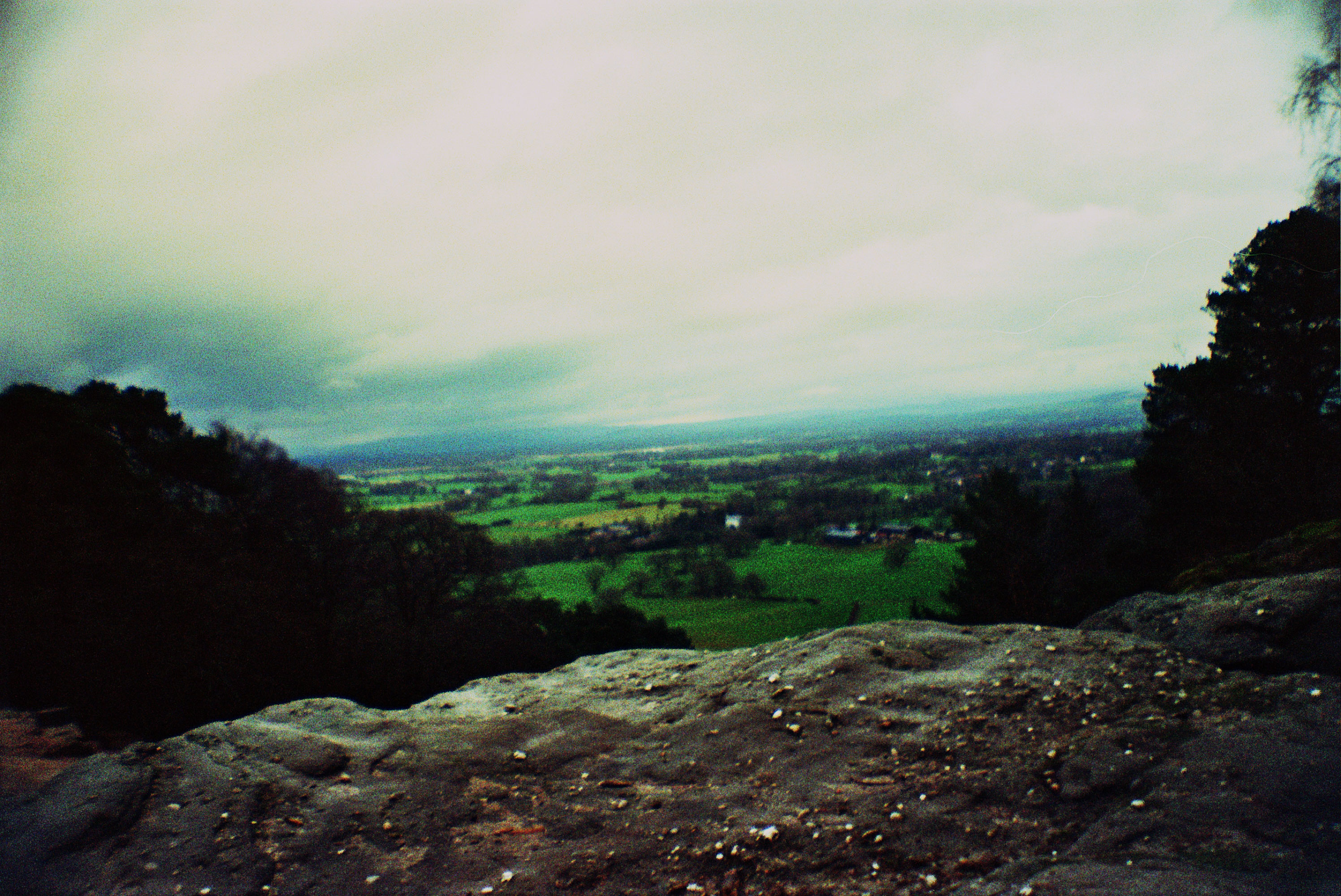
The walk continued, though not with the handrail caution of the path. Down through the valley of the stones, little discernible way presented itself. Behind the Edge, a quick stray from the path led to some eerily abandoned mine shafts, of which the danger became all too obvious. Standing unwisely and irresponsibly over a precipice, the danger of the place, that same aspect that Garner channels again and again, was briefly felt.
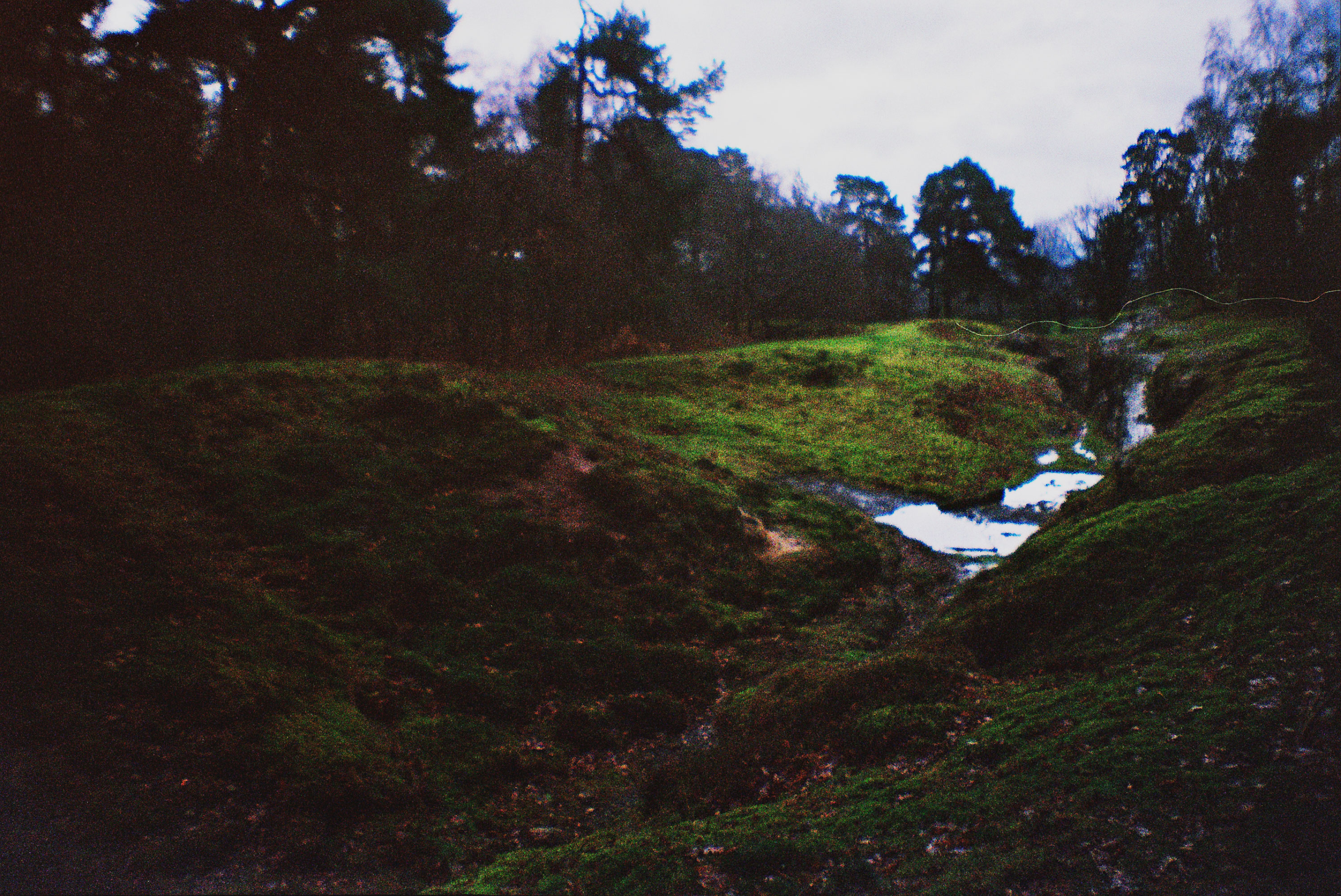
The rain trickled down again. Mud clogged the grips of my boots and so the gravel make-way of the paths was soon re-joined. Past the small, obviously Victorian ‘Druid’ stone circle and back around and down into the forest’s valley, an unstable path eventually led to such places as Stormy Point and its adjacent Holy Well.
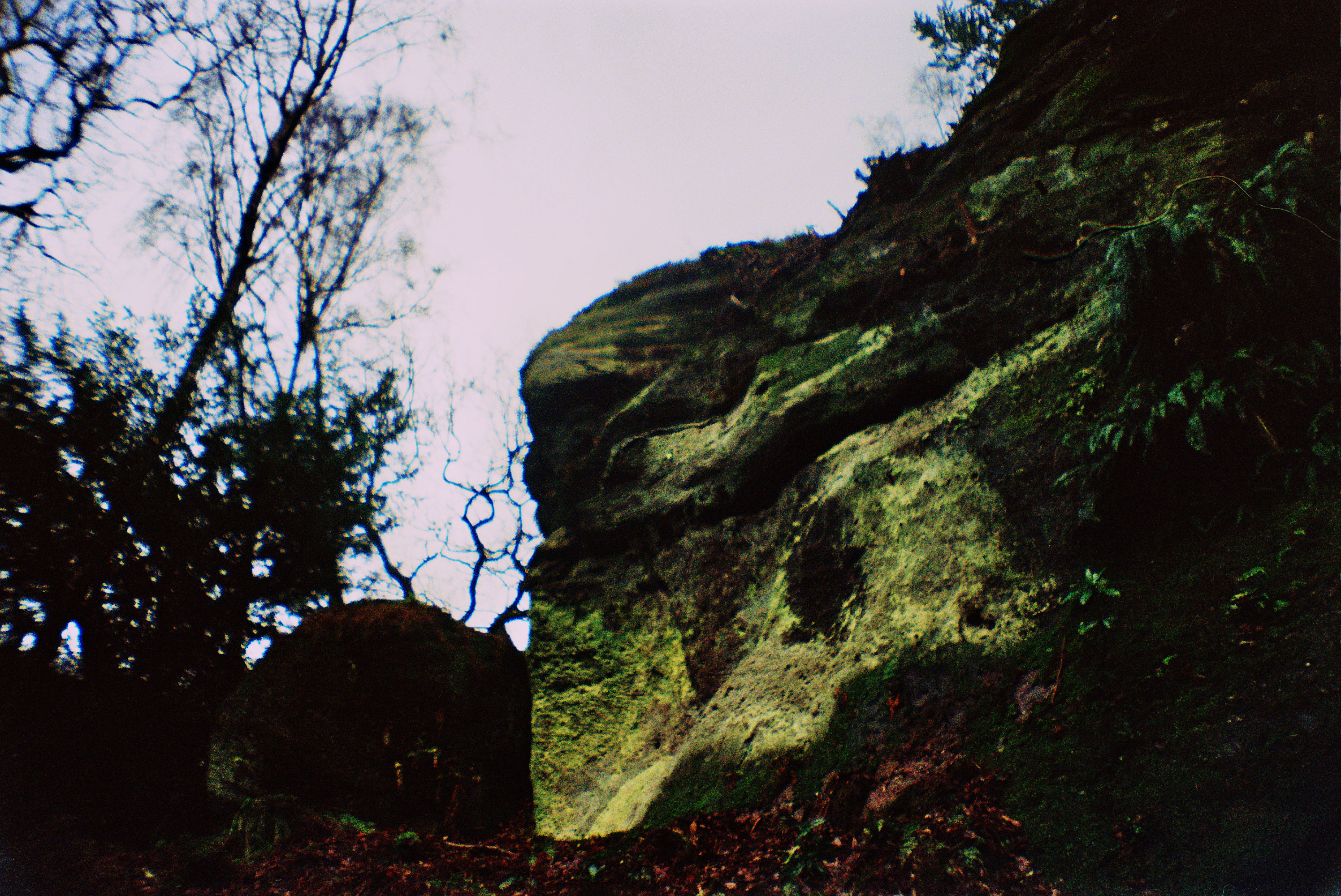
The sound of the water was incredibly pleasant as it dripped and bubbled, in part because it was the history of Garner and the place made manifest; a source in many senses of the word. He talks about this well several times in various essays, mentioning that it is where his family gathered their water as well as their children’s pocket money. ‘Our water supply derived from the Holy Well,’ he admitted, ‘which granted wishes to tourists at weekends, and an income for the child of our family who, on a Monday morning, cleaned out the small change.’

His grandfather even claimed that the well’s water was ‘a cure for barren women.’ I drank some in spite of being neither barren nor a woman but chiefly as resistance to the prevalent idea of everything outside being contaminated. Have we ever, in our history, been so afraid of the outdoors?
The ground was incredibly loose at this point and it made sense after reading Garner’s research of the place:
Below the well the ground is almost precipitous and is a deep bog, deep enough to strand a child. In it is a rock of unknown size, but of several hundred tons. It is reputed to have fallen from the cliff in the year 1740, and to have shaken all the cottages of the Hough.
The boggy nature was evident and the walk back up the side of the valley was enjoyably slippery, even catching an absentminded dog-walker off balance as he fell off the path and down the side.
The last stop on the walk, which was haphazard enough to sadly not include several other relevant locations such as the West Mine or Thieves Hole, was the Wizard’s Well; another natural source of water that displays a carving of a wizard and an inscription that reads ‘Drink of this and take thy fill for the water falls by the Wizard’s will.’ The carving is reputedly one of the many remains of handiwork by Garner’s great-great-grandfather, Robert. The well sadly proved too magical for my camera to properly capture it, its overhanging rock casting out most of the light from above the trees.
I rubbed my hand on the Wizard’s mossy beard and then on my own, perhaps for some luck in it growing long and bringing wisdom, though sadly both seem unlikely. In Brisingamen, Colin and Susan also find the Wizard’s Well which provides a clue to Cadellin’s presence on the Edge:
Just as they were about to turn for home after a climb from the foot of the Edge, the children came upon a stone trough into which water was dripping from an overhanging cliff, and high in the rock was carved the face of a bearded man, and underneath was engraved…
“The wizard again!” said Susan.
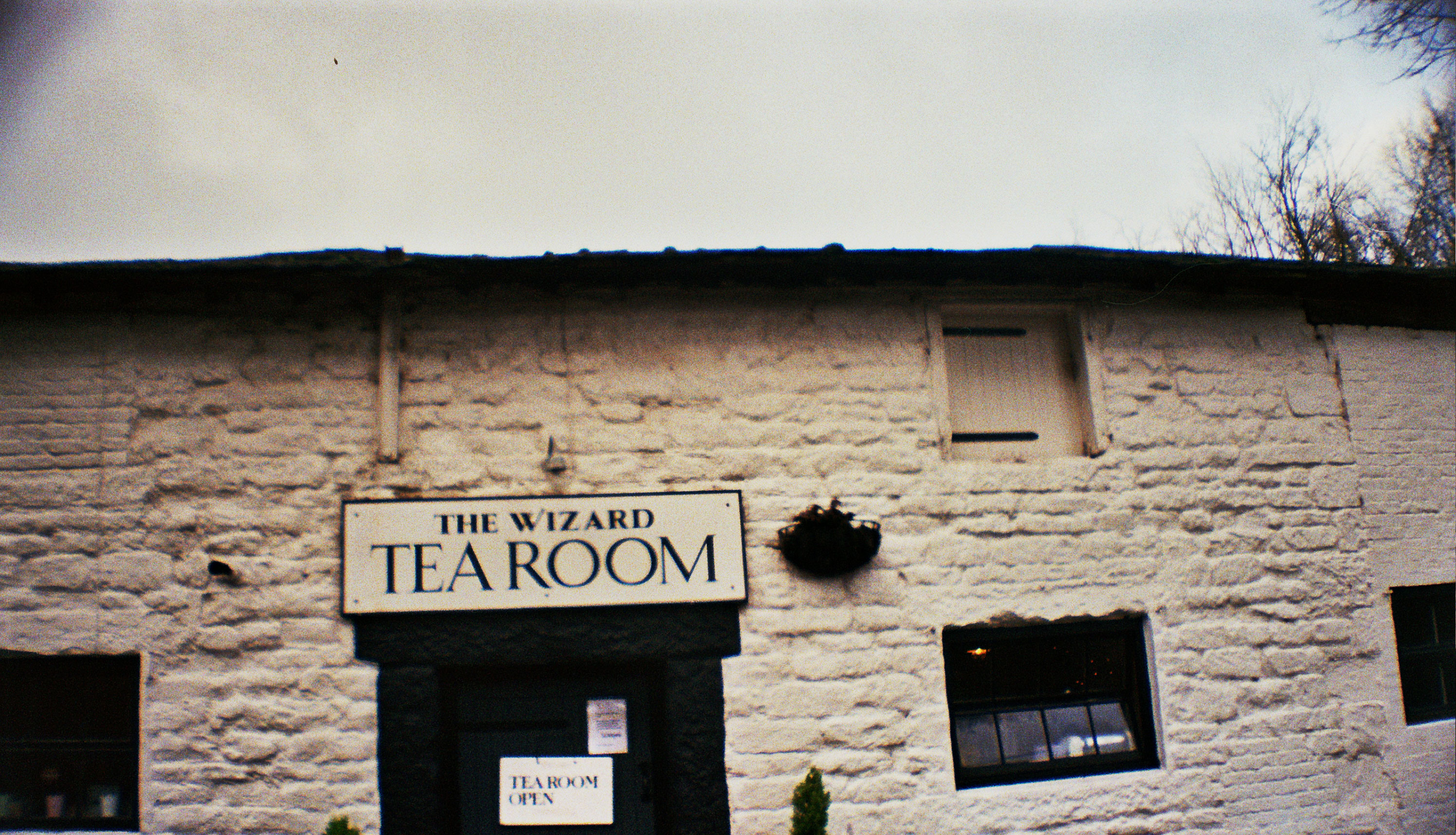
The warmth of the inn was calling but it was not to be an entirely uplifting end to the walk.
The inn itself, rather than the restaurant, is still functioning in its service of foods for more transient travellers. It seems an aptly old building, more like a barn extension to the original pub. This outer layer is misleading though as, upon entering, the strangest collection of items and people is presented.
Though the beams creak with age and the cozy fire crackles, the inn is really a sentinel enclave from the town. People were sat discussing holidays in Dubai and how to get their second iPad repaired. Radio 1 was at full volume blasting Mr Brightside by The Killers and there was even a sign on the counter that read ‘Have a totally amazeballs days.’ It was like entering back into a misremembered reality, alien to the ancientness of the building and the character of the Edge as a whole.
While sat at a table, a figure came in with a long, grey beard. He was in walking gear rather than a long cloak but, upon looking inside the café, he sighed, turned and walked back out. It seemed rather poignant considering his likeness to Cadellin, even if it was likely because there were no seats available. Perhaps he went back to the gates again to wait another hundred years to see if things would improve.
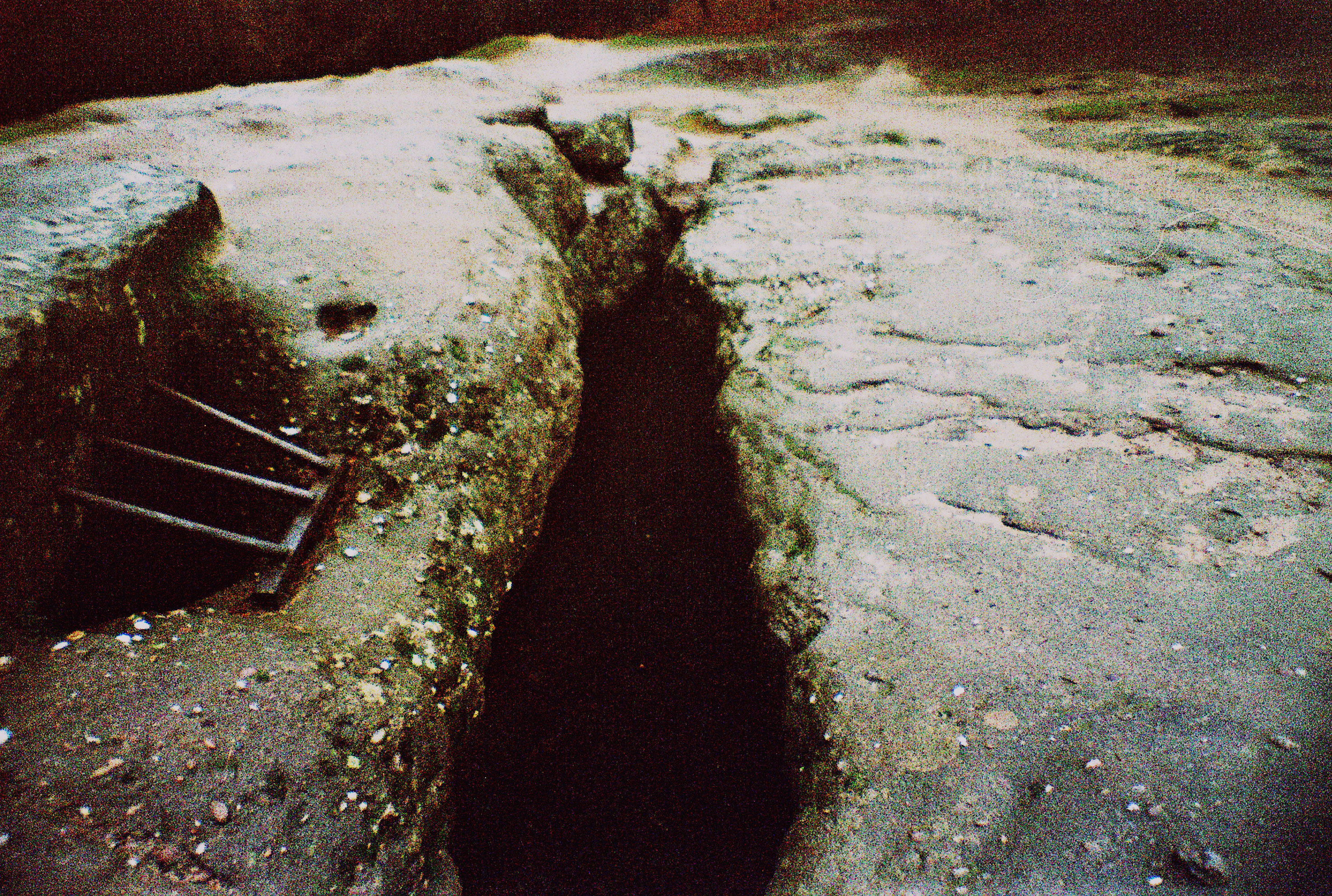
No matter these passing fads, the Edge is still a wild landscape, full of magic. Garner writes that ‘Coincidence, error, fantasy or folklore: this is a reality. And for this I care.’ My walk on the Edge provided all of these things though it seemed a reality slipping away, stone by stone, gradually going into hiding; lying in wait for another time.

 Celluloid Wicker Man
Thank you for this – we did this pilgrimage back in… oh, a very long time ago, some time in the mid-70s perhaps? and it was an experience that has stayed with me, just as Garner’s books have done. I first read the Weirdstone/Moon of Gomrath back in the 60s, not long after they were published, whilst we were living in West Africa – a strange sort of displacement but one which seemed to create a bond with the England that I hardly knew. Reading your account I now want to re-read, and revisit…