
On finishing W.G. Sebald’s novel The Emigrants (1992), it felt as if some loose connection to a recent film or book was left hanging mid-air. The narrative of Sebald’s novel is split into the stories of four émigrés, all seemingly interconnected by a multitude of strange images but chiefly by their fleeing from the rise of Nazi Germany.
The connection didn’t seem to be so much in relation to the book’s latter three narratives, but to the first and shortest segment looking into the life of the husband of one of Sebald’s landlords in 1970s Norfolk, Dr Henry Selwyn. The portrayal of Selwyn is a tragic one; a distanced, eccentric man who appears to have been acutely estranged from this wife for unnamed reasons.
It was only upon rewatching Andrew Haigh’s recent film 45 Years (2015) that the connection clicked: this was the film whose similarities, not say to atmosphere, were astonishingly parallel to Sebald’s narrative.
Suffice to say, 45 Years also concerns an elderly couple, Kate and Geoff (Charlotte Rampling and Tom Courtney), whose upcoming 45th anniversary, not to say their pleasant retirement in Norfolk, is shattered by the revelation that the body of Geoff’s first love who died in a hiking accident in the Swiss Alps some years previous has finally been freed from the tomb of ice preserving her body.
The drama unfolds as Geoff’s previous feelings become reawakened with the discovery, questioning the aging of both the body and emotions, but also dragging down Kate whose life is all but in tatters by the end of the film.
Haigh described 45 Years as a ghost story, stating in an interview with The Film Stage that it ‘was all kind of trying to make it feel like we’re watching a ghost story unfold.’ The same feeling is present in Sebald’s narrative.
Dr. Henry Selwyn is himself haunted. The shadow of a man he lost in a strikingly similar accident walking in the Swiss Alps is hinted at being the rupture that led to the distance between Selwyn and his wife. The character tells Sebald’s narrator of a short stay in Bern before the outbreak of World War One and the loss of his friend, Johannes Naegeli.
‘Even the separation from Elli,’ he wrote, ‘whom I had met at Christmas in Berne and married after the war, did not cause me remotely as much pain as the separation from Naegeli.’ Selwyn even suggests that Naegeli, in spite of being dead ‘seems closer whenever he comes to my mind’ than his wife Elli who ‘has come to seem a stranger to me over the years’.
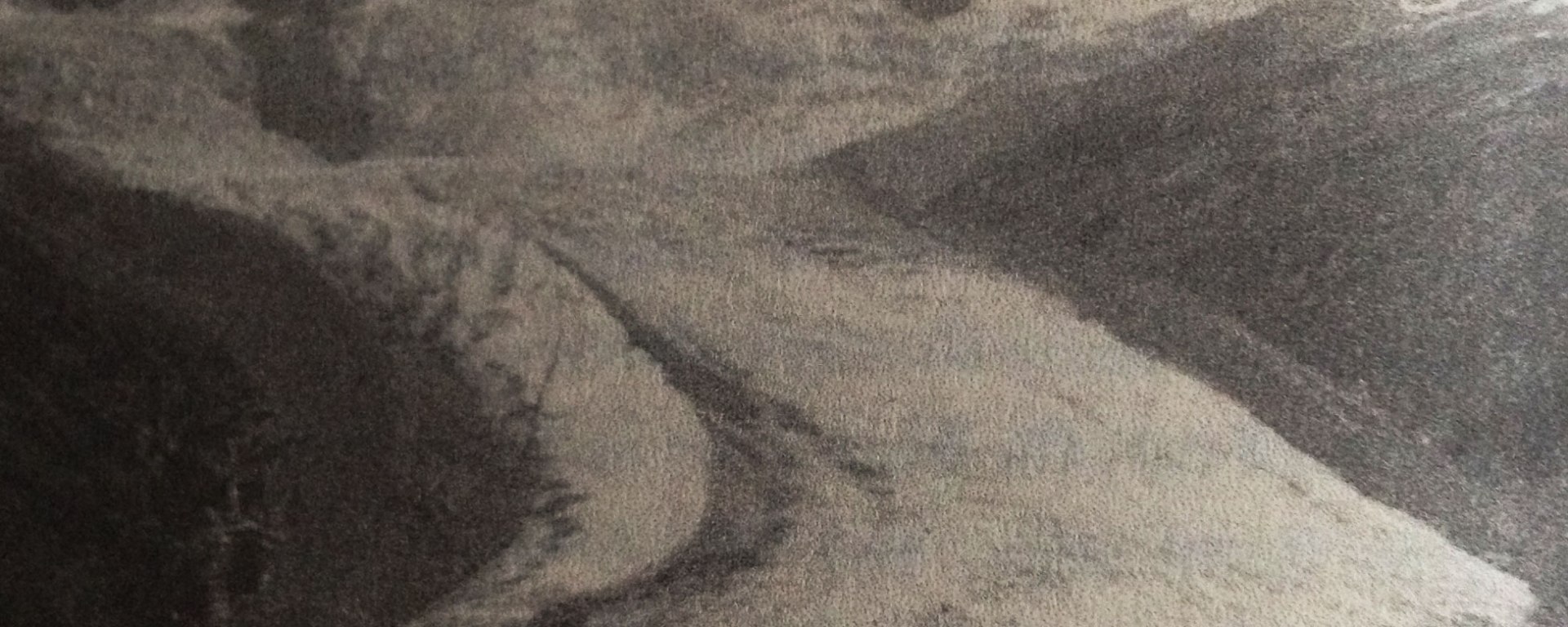
Naegeli, according to Selwyn, ‘had fallen into a crevasse in the Aare glacier.’ This highlights the relationship between the two works. Though the pain started for Selwyn when saying farewell to Naegeli at a train station at Meriningen rather than witnessing the full accident as Geoff had, the impact appears to be the same.
Perhaps a slight difference (apart from the relations in question) is the place in time where the two stories sit. While 45 Years charts the initial breakdown directly after such a revelation, Dr Selwyn’s story plays as one potential future that Geoff has waiting for him after the conclusion of the film.
Geoff’s behaviour deteriorates rapidly upon receiving the news of his lover’s retrieved body and he mimics the behaviour of Dr Selwyn who lives as a hermit, largely in the garden of the Norfolk house. The fact that both feature the Norfolk landscape, too, heightens the resemblance; the landscape being a flat, endless vista suitable for literary and screen hauntings of all kinds. It is also, after all, the landscape that is littered with enough debris from the past to bring out the most melancholic of Sebald’s thoughts and writing, even when dealing with subjects that appear to have little to no connection with the county.
Dr Selwyn’s story ends in the ultimate tragedy: suicide. Sebald, however, does not let the haunting end with his death but meets the inorganic demon while on holiday in Switzerland. Travelling from Zürich to Lausanne, he finds a newspaper detailing the recovery of Naegeli’s body which ‘had been released by the Oberarr glacier, seventy-two years later.’
It is a detail which he fails to spot until the train itself is actually crossing the Aare Bridge on its approach to Bern. It is this melancholic synchronicity that again reminds of 45 Years whose whole narrative is one of timing; the movement of the ice releasing the ghost only days before an (already interrupted) anniversary of a delicate relationship.
As Sebald finally writes when talking about Selwyn, ‘they are ever returning to us, the dead. At times they come back from the ice more than seven decades later and are found at the edge of the moraine, a few polished bones and a pair of hobnailed boots.’
 Celluloid Wicker Man
An intriguing comparison. That the figure in the photographic vision you refer to is Nabokov muddies the waters further… http://fmwww.bc.edu/SL-V/ShrayerRelArt2005.pdf
The film 45 Years also play out in Sebald country–the Norfolk Broads sure look like The Rings of Saturn, but I’m not so precise in English geography.
I’ve just finished reading part I of The Emigrants and, being 45 Years one of my favourite recent films, I thought about it as soon as I reached the last page of Sebald’s story. Then I googled “45 years Sebald” and this is the first and only essay connecting these two. Kudos for it, it saved me some time in writing about what’s already so well put 🙂
Thanks!
A more distant parallel might perhaps be made with Joyce’s ‘The Dead’, in which the ‘reappearance’ of his wife’s former love, Michael Furey, has a profoundly unsettling effect on the story’s protagonist.