The “English Eerie” and The Landscape Venn.

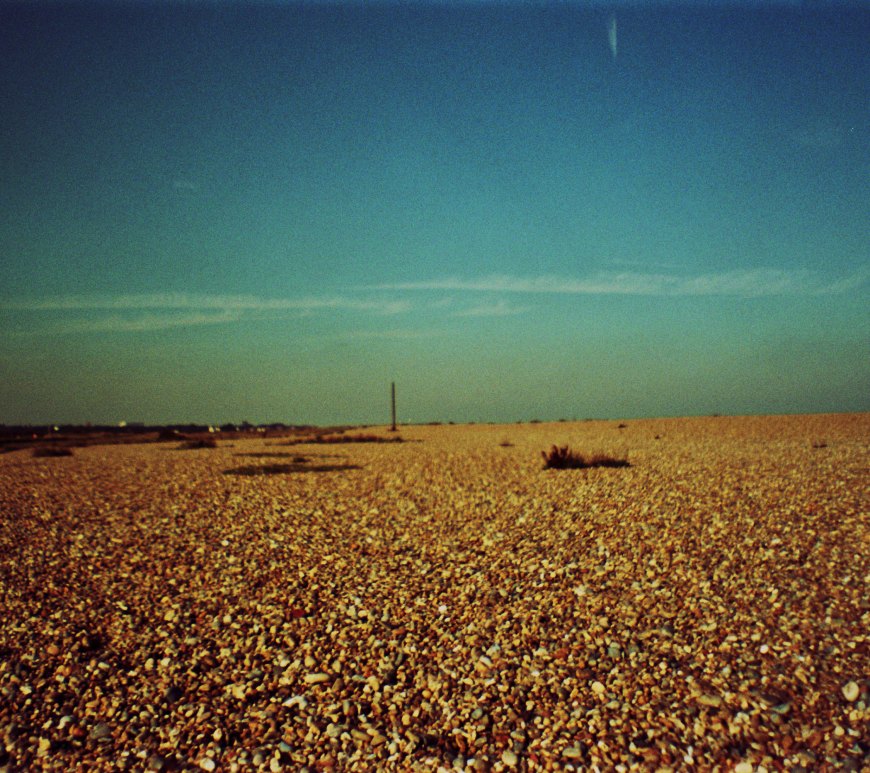
As I write this, it is just under two weeks to the Spectral Landscapes event in Oxford.  Put together between myself and the Oxford University’s Romantic society through Jen Wood, the event is looking at the resurgence of interest in work across all forms of creative media which looks to the landscape in order to find essences of the “eerie”, especially of that in English … Continue reading The “English Eerie” and The Landscape Venn.

Uncanny Portals And Standing Stones (Children Of The Stones, The Owl Service and Barbara Hepworth) – Part 3.

Part 1. Part 2. The Eeriness of Landscape Entities. The final aspect to assess is the natural eeriness created from putting an object within a landscape; here, it is the context of such an action and implications of the aesthetics that is key.  When Hepworth’s work is situated in the landscape, two things can occur.  The first is that the link between the work and … Continue reading Uncanny Portals And Standing Stones (Children Of The Stones, The Owl Service and Barbara Hepworth) – Part 3.

Walking “A Warning To The Curious” (M.R. James).

A few years back, whilst on holiday in Norfolk, I began exploring some of locations used for the BBC’s famous M.R. James adaptations, specifically for Lawrence Gordon Clark’s adaptation of A Warning To The Curious (1972).  Though I had been far from thorough in this escapade (I completely missed the film’s most iconic structure in the church at Happisburgh), on finding myself in Suffolk, I … Continue reading Walking “A Warning To The Curious” (M.R. James).

Valerie And Her Week Of Wonders (1970) – Duality Through Sound And Vision (Part 4).

Part 1. Part 2. Part 3. Conclusions. Whilst this essay has attempted to be as detailed as possible in its readings of Valerie And Her Week Of Wonders, there’s little doubt that covering every aspect of the film would be an infinite task.  Three aspects have been considered quite deliberately in order to show the strong musical framework in which the film is built upon but … Continue reading Valerie And Her Week Of Wonders (1970) – Duality Through Sound And Vision (Part 4).

Philip Larkin’s Spirit in Requiem For A Village (1976)

I thought it would last my time – The sense that, beyond the town, There would always be fields and farms, Where the village louts could climb Such trees as were not cut down; I knew there’d be false alarms – Going, Going, Philip Larkin. Above is the opening stanza of Philip Larkin’s 1972 poem, Going, Going. The poem captures the sense of a world being lost. The … Continue reading Philip Larkin’s Spirit in Requiem For A Village (1976)

The Urban Wyrd

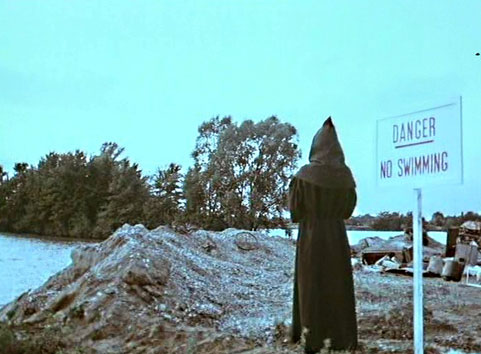
One of the key criticisms of theories surrounding the genre Folk Horror is its emphasis upon the rural landscape. How can a genre really encompass such rural horror films as Witchfinder General (1968) and The Wicker Man (1973) while also discussing more urban-set horrors such as Quatermass and the Pit (1967)? While key works of Folk Horror cinema seem to broadly focus on rural landscapes to set … Continue reading The Urban Wyrd

Valerie And Her Week Of Wonders (1970) – Duality Through Sound and Vision (Part 3).

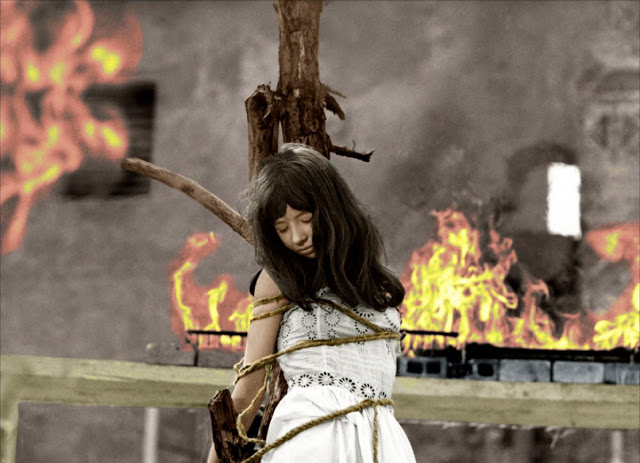
Part 1. Part 2. Belief And Ritual. The power of belief and its will in the distortion of reality is one of Valerie‘s more crucial cinematic aspects.  This isn’t simply a belief in the sense of a religious doctrine and all of the aesthetics that accompany it, but the moral belief of the main character whose fantasies dictate the narrative ruptures within the film.  However, … Continue reading Valerie And Her Week Of Wonders (1970) – Duality Through Sound and Vision (Part 3).

Questioning Nostalgia In Folk Horror.

As the Folk Horror canon expands into more forms of media and territory, the Folk Horror Chain becomes less useful as a tool for looking at thematic material.  This is partly due to it being derived as an idea from one medium and one that is explicitly narrative based.  Yet, some of its ideas can be loosely translated into the area of reception studies of … Continue reading Questioning Nostalgia In Folk Horror.

Valerie And Her Week Of Wonders (1970) – Duality Through Sound and Vision (Part 1).

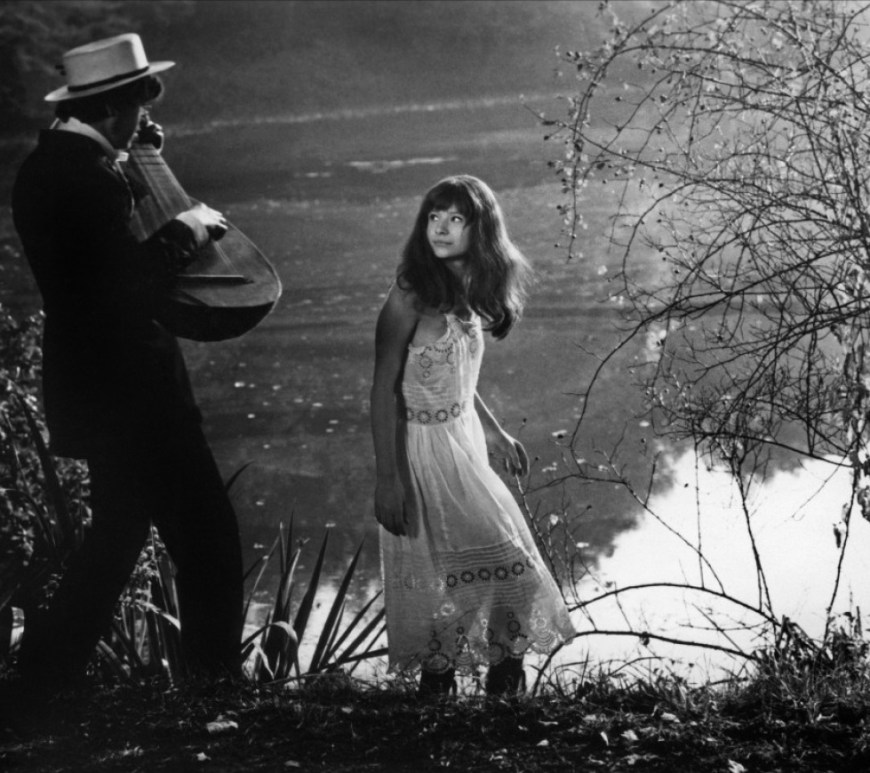
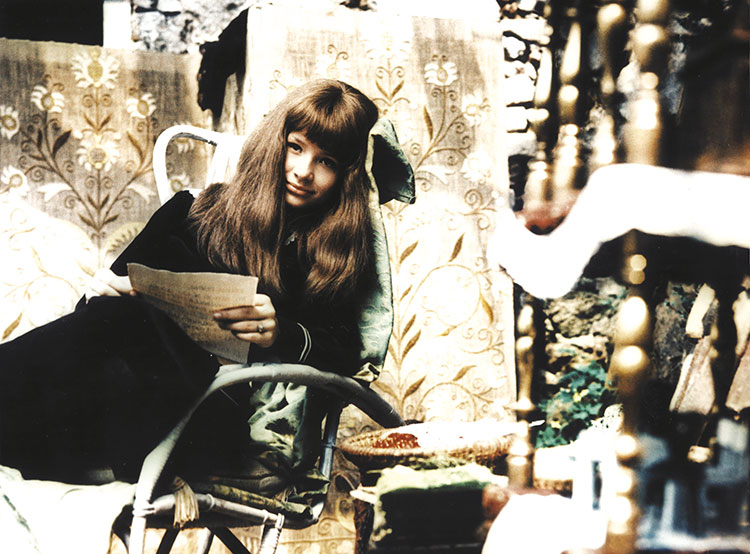
Valerie And Her Week Of Wonders (1970) – Duality Through Sound and Vision. Jaromil Jireš’ Valerie And Her Week Of Wonders (1970) is a cornucopia of images and sound.  Its vision is of a complex blossoming of sexuality amidst the visual and thematic realisations of a Freudian dreamscape, driven primarily by the lack of understanding and misinterpretation caused by social naivety.  The narrative rarely ascends to … Continue reading Valerie And Her Week Of Wonders (1970) – Duality Through Sound and Vision (Part 1).

Technological Hysteria in Nigel Kneale’s The Stone Tape (1972).

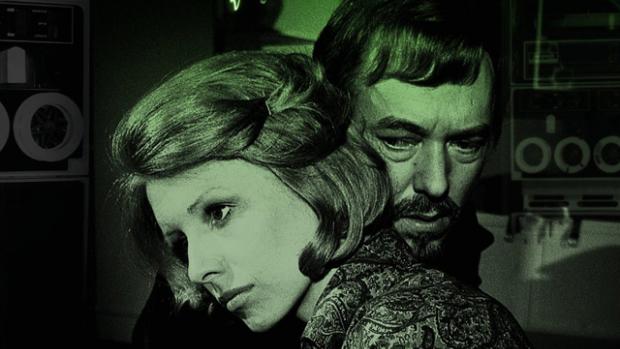
The following article contains plot twists. Hysteria and Nigel Kneale’s Baby. A very particular and often quoted segment from Freud’s summations of hysterical patients will be used here to begin the contextualisation our analysis.  Whilst writing about the generalities surrounding such cases of hysteria and eventually compulsion neurosis, Freud came up with a short but rather useful sound-bite to describe every patient he had seen.  … Continue reading Technological Hysteria in Nigel Kneale’s The Stone Tape (1972).