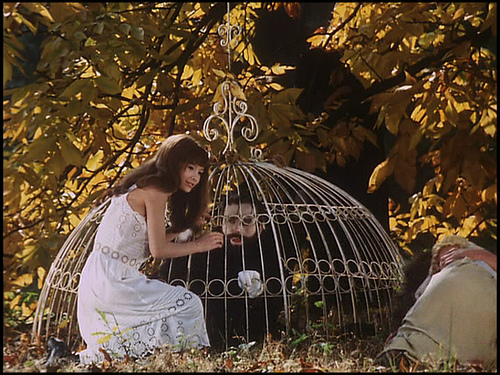
Valerie And Her Week Of Wonders (1970) – Duality Through Sound And Vision (Part 2).

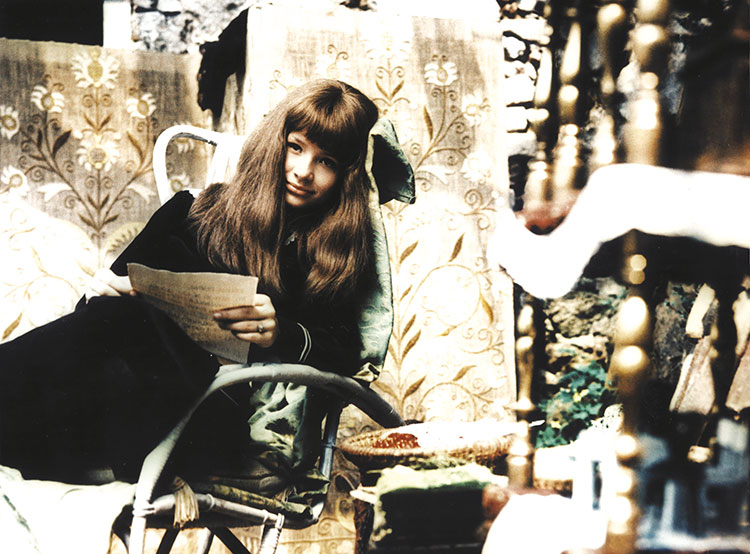
Part 1. Innocence and Sexuality. As already suggested, Valerie is first and foremost about the links, barriers and cross-over between innocence and sexuality.  Whilst some characters (for example, the religious fundamentalists), believe there to be a strict differentiation between the two, the film and Valerie herself know that this is not the case; if anything, it is the watermark of the patriarchy that such a … Continue reading Valerie And Her Week Of Wonders (1970) – Duality Through Sound And Vision (Part 2).

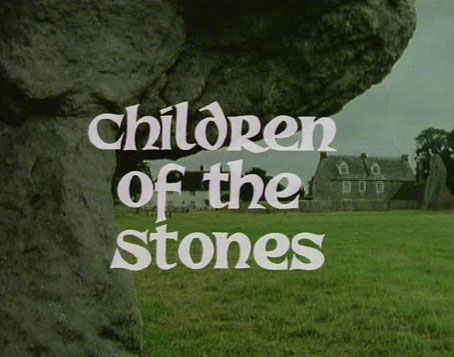
Interview With Jeremy Burnham (Children Of The Stones, 1977).

Alongside Trevor Ray, Jeremy Burnham co-created the fantastical Folk Horror drama, Children Of The Stones (1977). Now considered a key text in 1970s Folk Horror and possibly one of the scariest programs ever conceived for children, I caught up with Jeremy to ask him about the ideas behind the show, the process of filming it and its subsequent novelisation. Where did the initial ideas for … Continue reading Interview With Jeremy Burnham (Children Of The Stones, 1977).

The Ritual Of Craft In Folk Horror.

With the ideas of the Folk Horror Chain starting to seem incomplete as the sub-genre grows in popularity and is more analysed, it’s about time further facets, themes, ideas and traits were added to the conversation.  This will be the first in a number of pieces about other traits not accounted for or addressed in the initial idea of the chain (which itself was only … Continue reading The Ritual Of Craft In Folk Horror.

Valerie And Her Week Of Wonders (1970) – Duality Through Sound and Vision (Part 1).

Valerie And Her Week Of Wonders (1970) – Duality Through Sound and Vision. Jaromil Jireš’ Valerie And Her Week Of Wonders (1970) is a cornucopia of images and sound.  Its vision is of a complex blossoming of sexuality amidst the visual and thematic realisations of a Freudian dreamscape, driven primarily by the lack of understanding and misinterpretation caused by social naivety.  The narrative rarely ascends to … Continue reading Valerie And Her Week Of Wonders (1970) – Duality Through Sound and Vision (Part 1).

Short Film – Weirdstone (For Alan Garner).

“It is for this reason that we find that co-existence, which could neither be in time alone, for time has no contiguity, nor in space alone, for space has no before, after, or now, is established through matter.” (p.12, 1891) – Schopenhauer, The World As Will And Idea Volume 1. It seems fitting to open with this quote from Schopenhauer when discussing the themes behind … Continue reading Short Film – Weirdstone (For Alan Garner).

Fear of the Outsider in Quatermas II

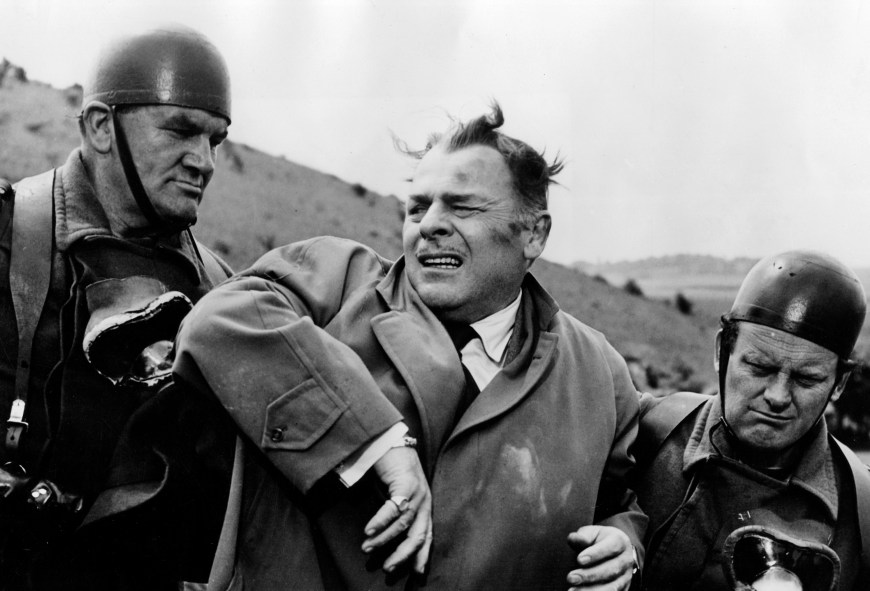
The characters of Nigel Kneale’s work rarely like an outsider. The drama of his plays is often built around small groups of people at odds with some concept of an outsider. The oppositional group will be diametrically opposed for a variety of reasons; sometimes for more pulp tendencies such as aliens in a space invasion scenario, but also more recognisable images of townspeople entering closed … Continue reading Fear of the Outsider in Quatermas II

The Aural Aesthetics Of Ghosts in BBC Ghost Stories – Part 9 (Conclusions).

Part 1. Part 2. Part 3. Part 4. Part 5. Part 6. Part 7. Part 8. Conclusions. “If its central characteristics remained immune to change, the ghost story did keep pace with the times through progressive modernization of settings and language.” – Cox (xix, 1991). From analysis of the BBC Ghost Stories, it is clear that the narrative function of the supernatural has a natural … Continue reading The Aural Aesthetics Of Ghosts in BBC Ghost Stories – Part 9 (Conclusions).

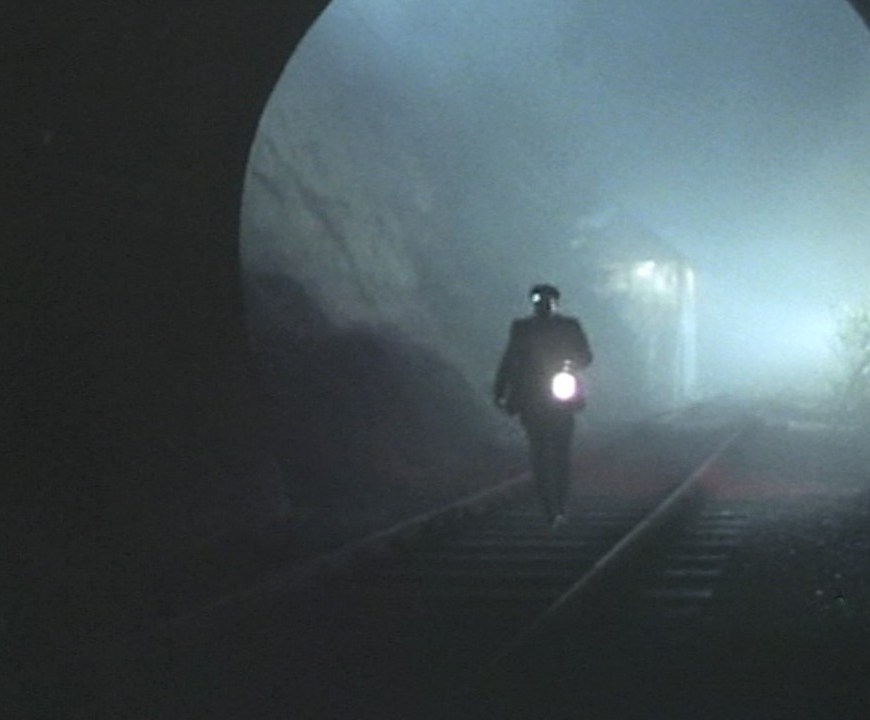
The Aural Aesthetics Of Ghosts In BBC Ghost Stories – Part 8 (The Signalman).

Part 1. Part 2. Part 3.Part 4. Part 5. Part 6. Part 7. The Signalman And Aural Paranoia Over Dickensian Technology. “For those who look back on it, the Victorian age seems to be invested with a peculiar quality of difference – heightened by its relative proximity in time – that is reflected in its ghosts.  It was an age shaped, perhaps more than any … Continue reading The Aural Aesthetics Of Ghosts In BBC Ghost Stories – Part 8 (The Signalman).

The Aural Aesthetics Of Ghosts In BBC Ghost Stories – Part 7 (Haunted Objects).

Part 1. Part 2. Part 3. Part 4. Part 5. Part 6. “The Ghost In The Machine”: The Haunting Nature Of Unnatural Diegetic Sound. “M.R. James’ objects are imbued with our deepest fears, deepest terrors and resonances.  The whistle can bring up a storm or bring a monster from the deep.  The crown, that if you touch, its guardian will tear you to pieces.” – … Continue reading The Aural Aesthetics Of Ghosts In BBC Ghost Stories – Part 7 (Haunted Objects).

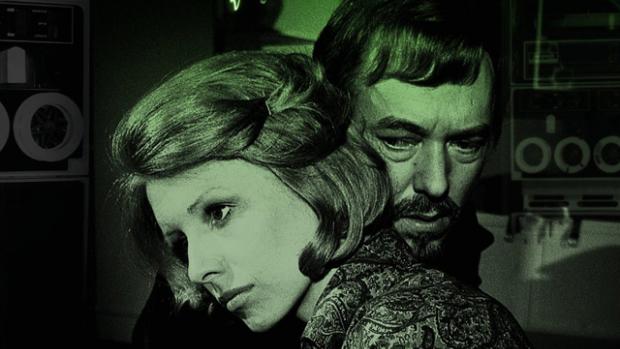
Technological Hysteria in Nigel Kneale’s The Stone Tape (1972).

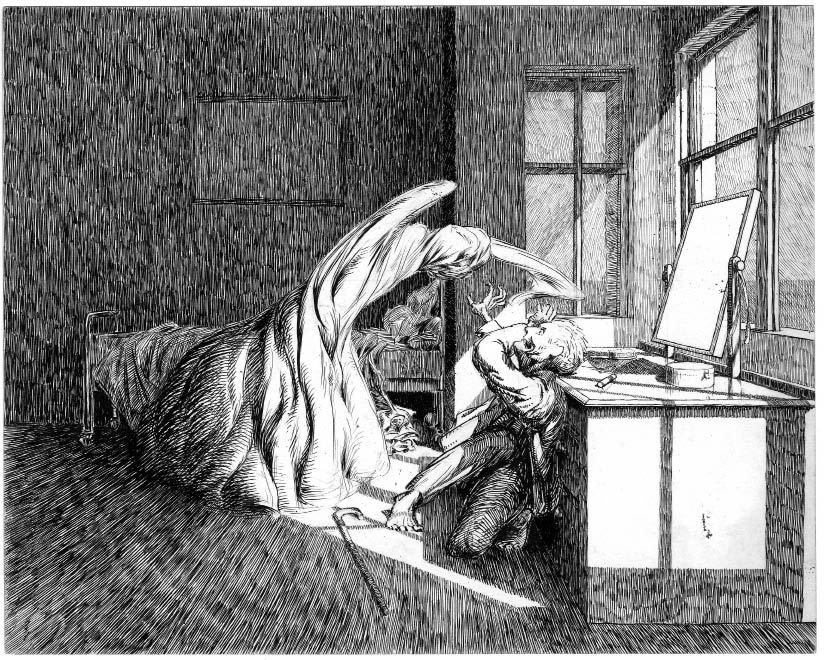
The following article contains plot twists. Hysteria and Nigel Kneale’s Baby. A very particular and often quoted segment from Freud’s summations of hysterical patients will be used here to begin the contextualisation our analysis.  Whilst writing about the generalities surrounding such cases of hysteria and eventually compulsion neurosis, Freud came up with a short but rather useful sound-bite to describe every patient he had seen.  … Continue reading Technological Hysteria in Nigel Kneale’s The Stone Tape (1972).