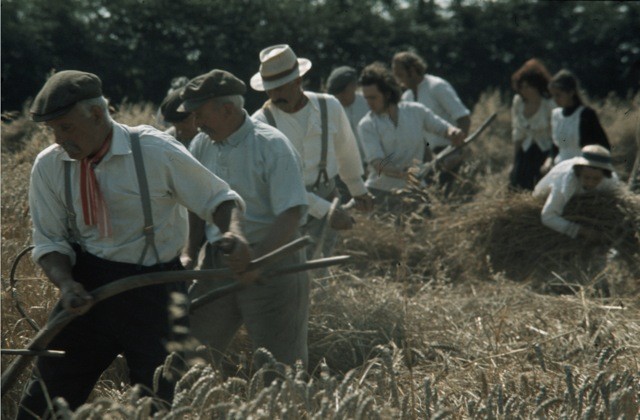
Hysteria and Curses in Nigel Kneale’s Baby (Beasts, 1976).

When watching Nigel Kneale’s infinitely weird TV series, Beasts (1976), there’s a great sense of underlying currents behind what appear to be strange amalgamations of the everyday with something of the Other.  Though the links between the episodes are often animalistic, ranging the ghost of a dolphin in Buddyboy to the hoards of rats in During Barty’s Party, the majority of the episodes all, at … Continue reading Hysteria and Curses in Nigel Kneale’s Baby (Beasts, 1976).

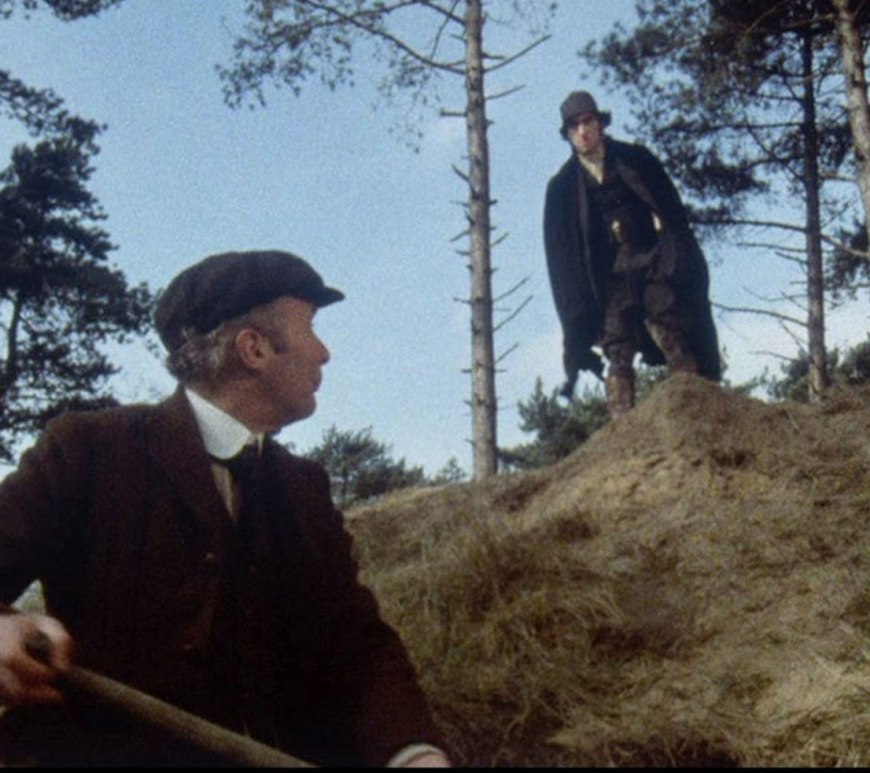
The Aural Aesthetics of Ghosts in BBC Ghost Stories – Part 6 (Excavation).

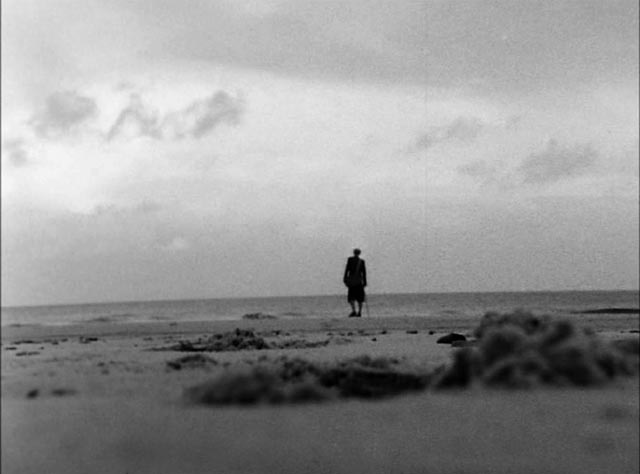
Part 1. Part 2. Part 3. Part 4. Part 5. Human Interaction With The Landscape And Its Soundscape. “The wind was bitter from the north, but was at his back when he set out for the Globe.  He quickly rattled and clashed through the shingle and gained the sand, upon which, but for the groynes which had to be got over every few yards, the … Continue reading The Aural Aesthetics of Ghosts in BBC Ghost Stories – Part 6 (Excavation).

Short Film – Tarot.

For my last film of the year, I wanted to put into practice some of ideas that I explored in my presentation at this year’s Folk Horror conference, held at Queens University Belfast in September.  I had already filmed the footage before I presented my paper (though didn’t get it developed until a good few weeks after that) but had already been forming the ideas … Continue reading Short Film – Tarot.

The Aural Aesthetics of Ghosts in BBC Ghost Stories – Part 5 (Landscape).

Part 1. Part 2. Part 3. Part 4. Natural Diegesis And Aural Interaction With Landscape. One of M.R. James’ most recognisable writing traits is his emphasis on rural settings.  From his own personal experience, of both exploring the churches of France on holiday bike-rides and living and holidaying in Suffolk and Norfolk, the rural landscape became almost as much of a story trope as the … Continue reading The Aural Aesthetics of Ghosts in BBC Ghost Stories – Part 5 (Landscape).

The Aural Aesthetics of Ghosts in BBC Ghost Stories – Part 4 (Music).

Part 1. Part 2. Part 3. Nondiegetic Musical Themes And Textures. “Indeed, the celestial voices of film music do resemble a phantom in several significant ways.  They are ephemeral, they are not ‘substantial’ or do not constitute part of what audiences cognise as important in the film, and have an effect that is not apparent.” – Donnelly (p.8, 2005). Though looking at nondiegetic scores for … Continue reading The Aural Aesthetics of Ghosts in BBC Ghost Stories – Part 4 (Music).

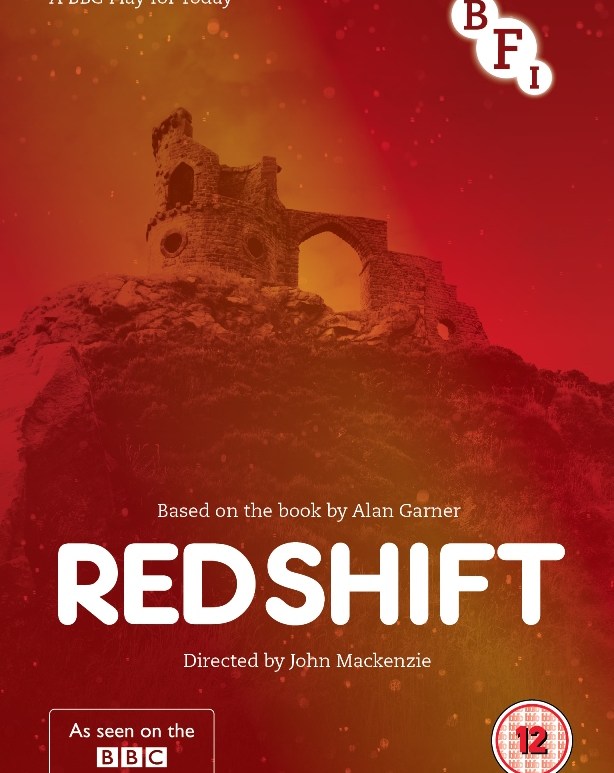
Red Shift (Play For Today, 1978) – John Mackenzie (BFI).

A shifting sense of time, space, and place can bring huge advantages to fantastical works of fiction.  The feeling that time is a folded concept, repeating and resetting in a quasi-ritualistic ceremony of life adds a sheen of the monumental to even the smallest and most intimate of dramas.  This sheen is the absolute embodiment of the work of writer, Alan Garner, and is never … Continue reading Red Shift (Play For Today, 1978) – John Mackenzie (BFI).

The Folk Horror Chain

The Folk Horror Chain The following is a rough transcript of a paper delivered at the A Fiend in the Furrows conference, held at Queens University, Belfast on the 20th of September, 2014. Introduction Folk horror is a strange form of media. There’s an unusual craving for defining and canonising in spite of being a sub-genre which seems inherently intuitive. This unusual combination of shared thematic … Continue reading The Folk Horror Chain

The Aural Aesthetics of Ghosts in BBC Ghost Stories – Part 1 (Introduction).

Manifesting The Supernatural: The Aural Aesthetics Of Ghosts In BBC Ghost Stories. Introduction. “When Monty first began to write them, with the intention of inducing a pleasing terror in his listeners, he did so as an avid and discerning reader and connoisseur of the genre, keenly aware of his precedents and of the characteristics, objectives, and limitations of the ghost story as he understood the … Continue reading The Aural Aesthetics of Ghosts in BBC Ghost Stories – Part 1 (Introduction).

The Music of Folk Horror – Part 8 (Conclusions).

Part 1. Part 2. Part 3. Part 4. Part 5. Part 6. Part 7. Conclusions From the analysis of only a handful of British folk horror films, it has been shown that they rely heavily on their music in order to achieve their full cinematic effect.  Altman states the following when discussing genre theory: “Constantly opposing cultural values to counter-culture values, genre films regularly depend on … Continue reading The Music of Folk Horror – Part 8 (Conclusions).

The Uncanny in Häxan: Witchcraft Through The Ages (1922)- Benjamin Christensen.

In one of the first attempts I made at canonising the sub-genre of Folk Horror, I likened the majority of its films to be brilliant but mere fugues on the ideas presented in Benjamin Christensen’s Häxan: Witchcraft Through The Ages (1922).  Outside of Victor Sjöström’s The Phantom Carriage (1921), it was the earliest and most explicit form of the sub-genre that seemed to be surviving … Continue reading The Uncanny in Häxan: Witchcraft Through The Ages (1922)- Benjamin Christensen.