Emerson’s Nature and Sleep Furiously (2008) – Gideon Koppel.

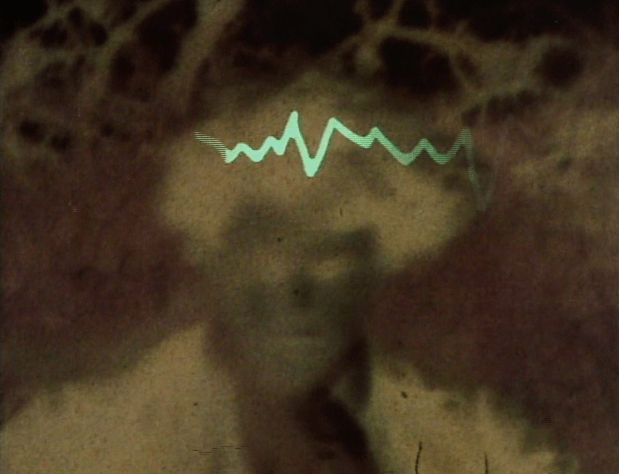
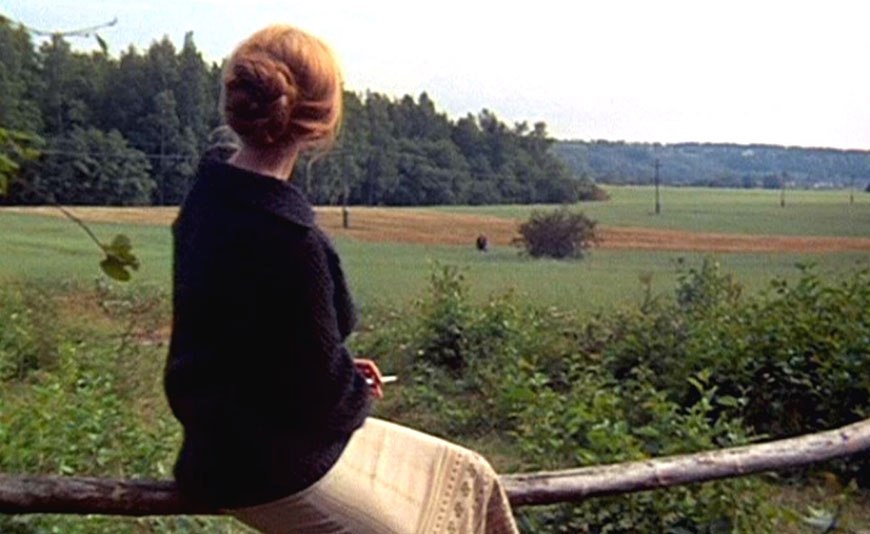
Nature is always present or at the very least contrasted against something in Gideon Koppel’s nostalgia portrait, Sleep Furiously (2008).  In spite of the film being a very clear ethnographic postcard from the director’s past, having lived previously in the Welsh town of Trefeurig, it manages to underline its gentle portraiture with a sense of pervading nature and landscape; where even the most concrete of … Continue reading Emerson’s Nature and Sleep Furiously (2008) – Gideon Koppel.

Mirrors, Donald Cammell and Jorge Luis Borges.

More so than his relationship with painting, film, drugs or threesomes, Donald Cammell’s life and work seems to have been directly linked with mirrors.  While all of the former aspects played huge roles and allowed access to knowledge of his obsessions in the first place through his work, it is the mirror and its hidden powers that seem to haunt Cammell as an artist and … Continue reading Mirrors, Donald Cammell and Jorge Luis Borges.

Isolation And Madness In Cul-De-Sac (1966) – Roman Polanski.

Few films are as explicit in their depiction of character relationships that are at the mercy of the fluctuating landscape than Roman Polanski’s 1966 film, Cul-De-Sac.  Polanski had been to both ends of the environmental spectrum within his previous two films – the open waters of Knife In The Water (1962) and the cramped, claustrophobic London of Repulsion (1965) – and Cul-De-Sac sees him returning … Continue reading Isolation And Madness In Cul-De-Sac (1966) – Roman Polanski.

Short Film – An Impossible Dérive.

An Impossible Dérive is a film that channels a number of my own current interests.  Though predominantly about the changing landscape and topography of the city centre of Liverpool, it is also about using psychogeography and the writing of John Wyndham to assess and comment upon the fallout of such change within the landscape.  The title, An Impossible Dérive, refers to two different aspects of … Continue reading Short Film – An Impossible Dérive.

Repetition And Occultism Of Invocation Of My Demon Brother (1969) – Kenneth Anger.

There exist volumes of academic research and work surrounding the role of repetition in religious and cultural practices.  Repeated actions of any type, creating an easily recognisable mimesis, seems almost an aesthetic by-word for a normalised analytical framework of cultural activities, especially musically.  From prayer to mantra, the idea of repetition is stretched to form (or conform) belief patterns, as if deliberately signposting theological culture … Continue reading Repetition And Occultism Of Invocation Of My Demon Brother (1969) – Kenneth Anger.

Analogue Ghosts of the 1970s And Hauntology.

There seems to be an overt connection between analogue recording technology (of both the visual and aural varieties) and the narratives surrounding paranormal activity in 1970s British fantasy television.  Of course, there are no doubt connections between the interest in such activity (with the genuine events surrounding the Enfield Haunting for example, recently made into a drama on Sky) and the technological means of the … Continue reading Analogue Ghosts of the 1970s And Hauntology.

Short Film – Holloway (Robert Macfarlane).

It feels odd to finally be able to say that Holloway is finished.  This oddness derives not just from the fact that it has been the longest planned film that I’ve produced so far (starting all the way back from Robert Macfarlane’s first email to me in February 2014) but because the subject of the film itself is never-ending.  The holloways of Dorset do not … Continue reading Short Film – Holloway (Robert Macfarlane).

Fugitive in the Landscape

In the British tradition of the Chase & Pursuit drama, there are several reoccurring themes. The idea of a lone individual being chased through different landscapes by a group was popularised in Britain by the Second World War but was around far before then. The basic set-up has an individual wanted for some crime or misdemeanour (sometimes falsely). They are pursued by various parties, from the law … Continue reading Fugitive in the Landscape

Ringo’s Dérive in A Hard Day’s Night (1964).

Richard Lester’s film collaboration with The Beatles, A Hard Day’s Night (1964), has been attributed many aspects of foreshadowing modern culture.  From the almost accidental invention of the surrealism-infused music video to the defining of pre-counter-culture 1960s Britain and London, the film acts as both a periodical bubble and an innovative audio-visual experience that is as prescient today as it was then.  One segment in … Continue reading Ringo’s Dérive in A Hard Day’s Night (1964).

The Emotional Landscape of Scenes From A Marriage (1973)

Scenes from a Marriage was Ingmar Bergman’s first successful attempt to work in the medium of serialised television. The six episode series following the highs and lows of a marriage signposted many changes that the director would make during his work in the 1970s, aesthetically and thematically. Though a later cut of the series’ six episodes was edited into as a whole film for American audiences, several … Continue reading The Emotional Landscape of Scenes From A Marriage (1973)