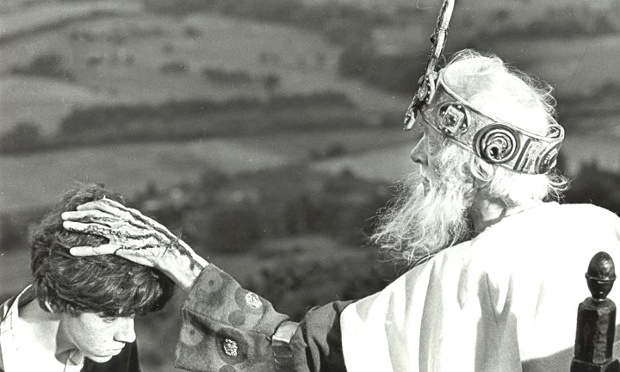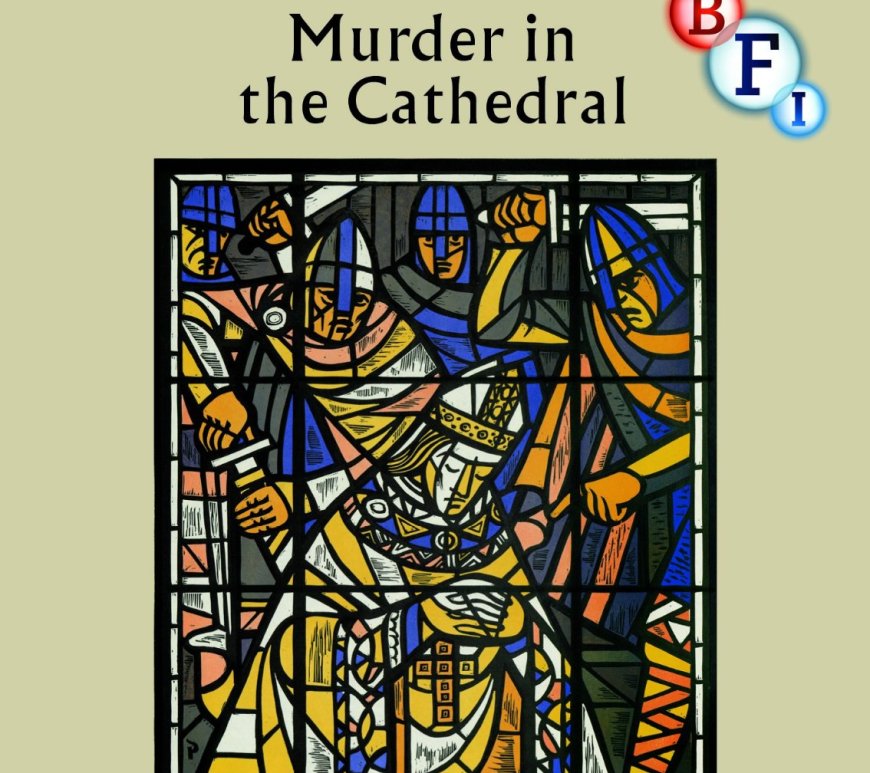
Murder In The Cathedral (1952) – George Hoellering (BFI).

British cinema in the early 1950s appears to have been fond of experimenting with other art forms.  Powell and Pressburger were transplanting opera and dance into the form in their colour zoetrope Offenbach amalgamation, The Tales Of Hoffmann (1951) (and slightly earlier in The Red Shoes (1948)) whilst Laurence Olivier was continuing his melding of Shakespearean theatre with celluloid in Richard III (1955).  The great … Continue reading Murder In The Cathedral (1952) – George Hoellering (BFI).

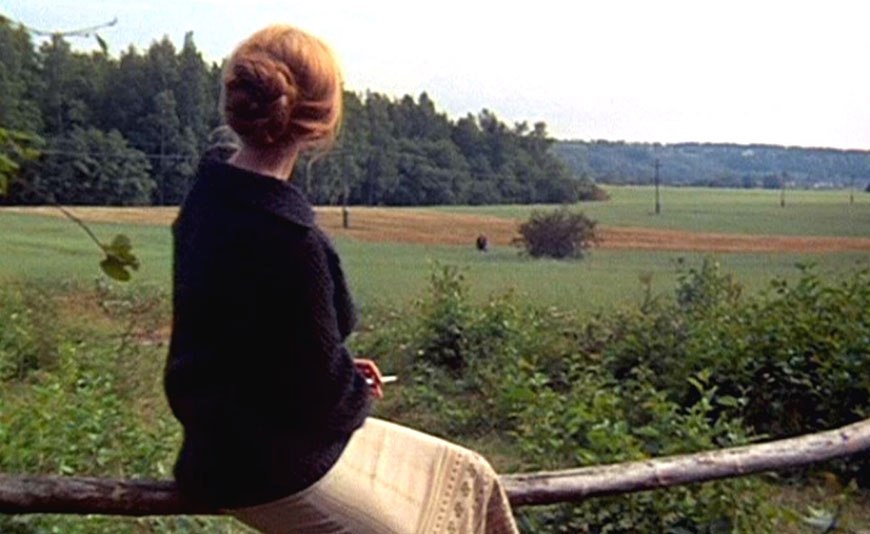
The Breeze In The Grass – Elemental Realisation in Tarkovsky’s Mirror (1975).

In last month’s issue of Sight & Sound (November, 2015) Nick James details his relationship with the cinema of Andrei Tarkovsky in line with the season of films he’s curated for the BFI.  Though the article is chiefly surrounding Tarkovsky’s (vast) legacy, one aspect in particular caught my attention whilst reading.  He refers to a scene from Tarkovsky’s 1975 film, Mirror, which partly accounted for … Continue reading The Breeze In The Grass – Elemental Realisation in Tarkovsky’s Mirror (1975).

Ritual And Identity in Penda’s Fen (1974) – Alan Clarke.

The relationship between myth and ritual has been often debated within anthropology ever since its Victoriana days of enlightened scientific thinking through the prism of evolution and the birth of mechanisation and industrial blight.  The idea of returning to the “primacy of ritual”, where whole belief systems stem as a result from repeated actions or events, is a common theme of exploration in Folk Horror as … Continue reading Ritual And Identity in Penda’s Fen (1974) – Alan Clarke.

Trailer – Salthouse Marshes.

Above is the trailer for my last film of the year, Salthouse Marshes.  Continuing on from last year’s theme in a trend I hope to continue with on a yearly basis, the film is a short, landscape obsessed ghost story.  With the BBC seeming reluctant to bother with a ghost story for Christmas any more, it feels necessary to in some way plug the gap … Continue reading Trailer – Salthouse Marshes.

Emerson’s Nature and Sleep Furiously (2008) – Gideon Koppel.

Nature is always present or at the very least contrasted against something in Gideon Koppel’s nostalgia portrait, Sleep Furiously (2008).  In spite of the film being a very clear ethnographic postcard from the director’s past, having lived previously in the Welsh town of Trefeurig, it manages to underline its gentle portraiture with a sense of pervading nature and landscape; where even the most concrete of … Continue reading Emerson’s Nature and Sleep Furiously (2008) – Gideon Koppel.

Isolation And Madness In Cul-De-Sac (1966) – Roman Polanski.

Few films are as explicit in their depiction of character relationships that are at the mercy of the fluctuating landscape than Roman Polanski’s 1966 film, Cul-De-Sac.  Polanski had been to both ends of the environmental spectrum within his previous two films – the open waters of Knife In The Water (1962) and the cramped, claustrophobic London of Repulsion (1965) – and Cul-De-Sac sees him returning … Continue reading Isolation And Madness In Cul-De-Sac (1966) – Roman Polanski.

Cinematic Identity Crises And Francis Bacon – Part 3 (Herostratus).

Part 1. Part 2. Herostratus (1967) Expanding upon the ideas of screaming in The Shout, the analysis of Francis Bacon’s influence on counterculture British cinema can conclude with Don Levy’s 1967 film Herostratus.  The film and its obsessions with textures and urban landscapes has already been discussed in other articles but Herostratus is full of other forms of terrain; the morphed and emotionally tortured form … Continue reading Cinematic Identity Crises And Francis Bacon – Part 3 (Herostratus).

Repetition And Occultism Of Invocation Of My Demon Brother (1969) – Kenneth Anger.

There exist volumes of academic research and work surrounding the role of repetition in religious and cultural practices.  Repeated actions of any type, creating an easily recognisable mimesis, seems almost an aesthetic by-word for a normalised analytical framework of cultural activities, especially musically.  From prayer to mantra, the idea of repetition is stretched to form (or conform) belief patterns, as if deliberately signposting theological culture … Continue reading Repetition And Occultism Of Invocation Of My Demon Brother (1969) – Kenneth Anger.

Analogue Ghosts of the 1970s And Hauntology.

There seems to be an overt connection between analogue recording technology (of both the visual and aural varieties) and the narratives surrounding paranormal activity in 1970s British fantasy television.  Of course, there are no doubt connections between the interest in such activity (with the genuine events surrounding the Enfield Haunting for example, recently made into a drama on Sky) and the technological means of the … Continue reading Analogue Ghosts of the 1970s And Hauntology.

Cinematic Identity Crises and Francis Bacon – Part 2 (The Shout).

Part 1. The Shout (1978) “I’ve always desired to be able to paint the mouth like Monet could paint the sunset.” – Francis Bacon (1966, interview with David Sylvester). Though Jerzy Skolimowski’s The Shout (1978) is equally as complex as Performance in terms of narrative linearity (or lack of it), Skolimowski’s film and its complexity derives not from the identity crisis surrounding individual characters within … Continue reading Cinematic Identity Crises and Francis Bacon – Part 2 (The Shout).