Peeping Tom (Michael Powell,1960) – Aural Perspectives of Murder.

In spite of its very energetic reappraisal and various analyses, Michael Powell’s career destroying masterpiece, Peeing Tom (1960), is a film whose musical eccentricities and sound design contain hidden depths. For a film that appears on the surface to be almost excessively Freudian, this was normal yet, when looking at some of the detailed reappraisals and even some of the high-end re-evaluations of its narrative … Continue reading Peeping Tom (Michael Powell,1960) – Aural Perspectives of Murder.

Eyes Wide Shut (1999) – Occult Sexuality

Strange undercurrents of sexuality pervade the films of Stanley Kubrick. Though not always present explicitly, the raw presence of dark desire and physical wanting seems scattered throughout his work. From Dr Strangelove‘s ideas of selective breeding based on the “sexual characteristics that will have to be of a highly stimulating nature” to The Shining‘s most surreal haunting of a man receiving oral sex from another … Continue reading Eyes Wide Shut (1999) – Occult Sexuality

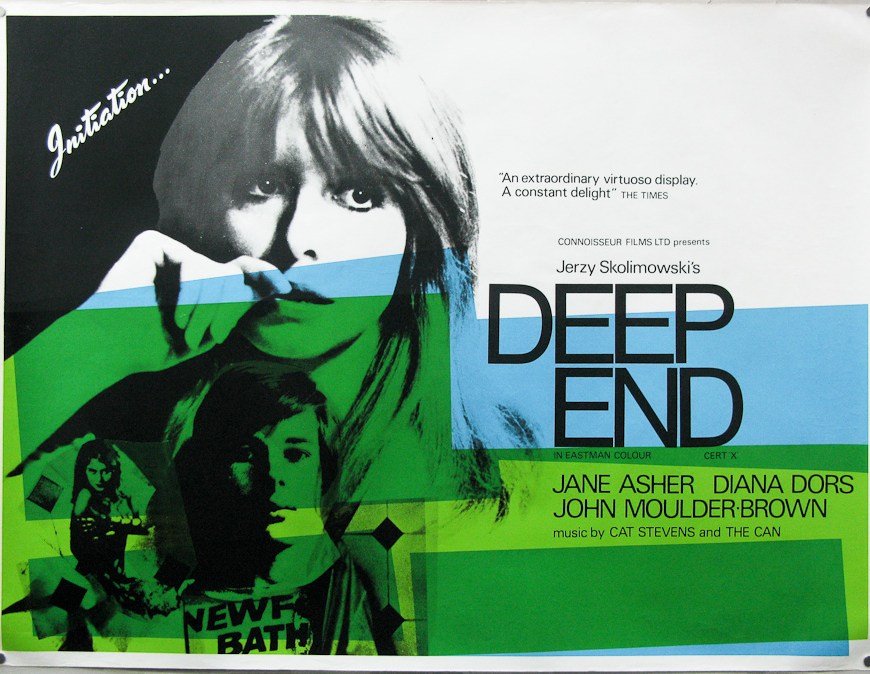
Deep End (1970) and the Musical Emphasising of Narrative (Jerzy Skolimowski).

This article contains spoilers. There are many aspects of distraction within Jerzy Skolimowski’s 1970 film, Deep End.  Its highly sexualised, sometimes seedy narrative, its vast array of colours and its crisp, sharp direction are only a handful of its hyper-active eccentricities.  Even David Lynch, a long-time pessimist about colour cinema, is on record as a fan of Deep End‘s array of powerful colours, and styles.  … Continue reading Deep End (1970) and the Musical Emphasising of Narrative (Jerzy Skolimowski).

2013 in Film.

In contrast to other cineastes that I follow online, I really don’t get out that much. While so many excellent film writers seem to be able to see every relevant new release as it comes (even before if they’re lucky enough to have time and money to get thoroughly into the festival circuit), it’s actually a rarity for me to be able to get into … Continue reading 2013 in Film.

The Seventh Continent (Michael Haneke) and the Freudian Death Drive – Part 2

Part 1. The Seventh Continent. Unlike Freud’s vision of how the Death Drive manifests, Haneke uses the idea as an attack on a number of his usual tropes.  Aspects of modern life such as the dreary drag of the 9 to 5 to the middle class obsession with materialism and ownership/possession all come under fire and blame for the Death Drive take over.  The Seventh … Continue reading The Seventh Continent (Michael Haneke) and the Freudian Death Drive – Part 2

The Seventh Continent (Michael Haneke) and the Freudian Death Drive – Part 1.

Introduction Michael Haneke’s debut feature set the tone for the majority of his interests that would be explored over the next few decades.  The Seventh Continent (1989), though part of the Glaciation Trilogy, stands on its own for questioning a very specific and brutal form of philosophy; that of Freud’s Death Drive principles.  Though Haneke would address philosophical issues in a lot of his films (this … Continue reading The Seventh Continent (Michael Haneke) and the Freudian Death Drive – Part 1.

Kevin Brownlow Discusses Abel Gance’s Napoléon.

Said to be a labour of love lasting over forty years, the restoration of Abel Gance’s Napoléon by filmmaker, restorer and archivist Kevin Brownlow, has gone down in the annuls of film history. With the latest restoration having been successfully screen and rapturously received at the San Francisco silent film festival, this November sees a special screening of the epic five hour film with a … Continue reading Kevin Brownlow Discusses Abel Gance’s Napoléon.

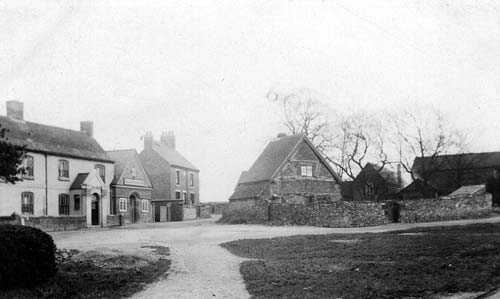
Village Green Repression in Film, Television and Philip Larkin.

Mythological Introduction by Philip Larkin. A white girl lay on the grass With her arms held out for love; her goldbrown hair fell down her face, And her two lips move: See, I am the whitest cloud that strays Through a deep sky: I am your senses’ crossroads, where the four seasons lie. She rose up in the middle of the lawn And spread her … Continue reading Village Green Repression in Film, Television and Philip Larkin.

Interview With Digby Rumsey (BFI Flipside, The Pledge).

Director Digby Rumsey sees his BFI DVD debut this month on the Flipside release of Leslie Megahey’s Schalcken the Painter.  Rumsey is a traditional BFI director, coming from the same ranks as Terence Davies, Bill Douglas and Peter Greenaway.  His work in Gothic short films, especially adaptations of work by Lord Dunsany, places him firmly in the British Gothic traditions of directors such as Jonathan … Continue reading Interview With Digby Rumsey (BFI Flipside, The Pledge).

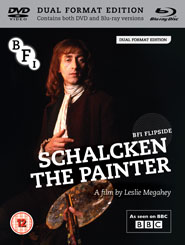
Schalcken The Painter – Leslie Megahey (BFI Flipside).

The notion of gothic is quite rightly taking over the BFI at the moment.  Their gothic season is looking set to be its most all encompassing and vast seasonal retrospective for some time.  The gothic tint has found its way into a number of avenues including its DVD range.  The Flipside label always seemed fit for the sort of gothic releases still residing in the … Continue reading Schalcken The Painter – Leslie Megahey (BFI Flipside).