The Seventh Continent (Michael Haneke) and the Freudian Death Drive – Part 1.

Introduction Michael Haneke’s debut feature set the tone for the majority of his interests that would be explored over the next few decades.  The Seventh Continent (1989), though part of the Glaciation Trilogy, stands on its own for questioning a very specific and brutal form of philosophy; that of Freud’s Death Drive principles.  Though Haneke would address philosophical issues in a lot of his films (this … Continue reading The Seventh Continent (Michael Haneke) and the Freudian Death Drive – Part 1.

Graveyard of the VHS.

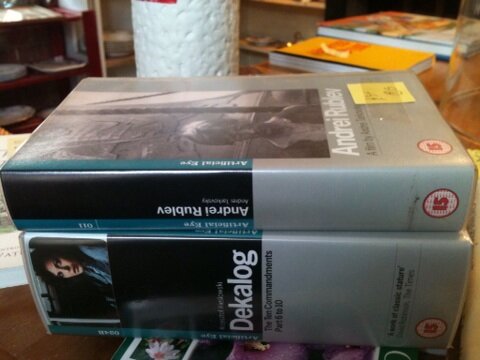
It occurred one Saturday afternoon that my own deep and personal mourning for the innocent VHS had found a new low. When describing VHS to people who appear to be gradually younger and younger, it mimics those conversations witnessed with parents, explaining to their I-pod bound offspring what the big black thing is that’s playing a crackly, slightly warped version of Shine on You Crazy … Continue reading Graveyard of the VHS.

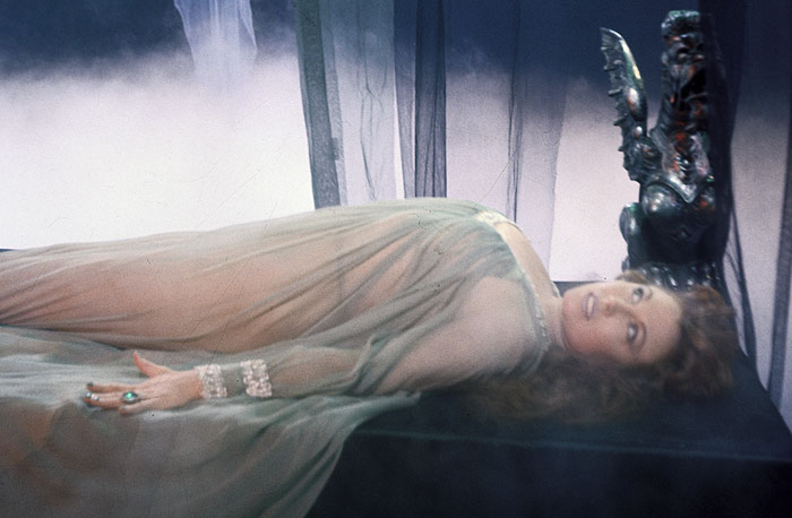
The Masque of the Red Death, Roger Corman (Part 3) – The Freudian Dream.

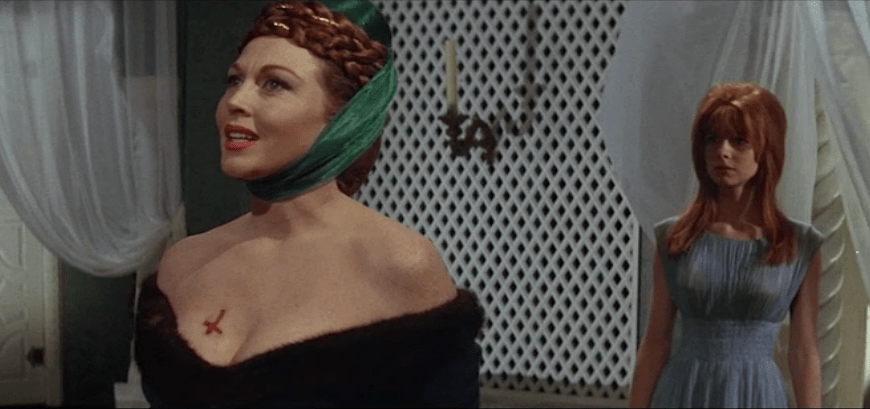
Part 1. Part 2. The Freudian Dream Corman’s Poe films have become famous for their dream sequences.  The source literature revels in the possibilities of nightmares taking over the psyche so they seem an apt distraction for a medium that already adores the possibilities of dreams.  The Masque of the Red Death perhaps contains Corman’s most effective and disturbing sequence; one of the few to … Continue reading The Masque of the Red Death, Roger Corman (Part 3) – The Freudian Dream.

Kevin Brownlow Discusses Abel Gance’s Napoléon.

Said to be a labour of love lasting over forty years, the restoration of Abel Gance’s Napoléon by filmmaker, restorer and archivist Kevin Brownlow, has gone down in the annuls of film history. With the latest restoration having been successfully screen and rapturously received at the San Francisco silent film festival, this November sees a special screening of the epic five hour film with a … Continue reading Kevin Brownlow Discusses Abel Gance’s Napoléon.

Village Green Repression in Film, Television and Philip Larkin.

Mythological Introduction by Philip Larkin. A white girl lay on the grass With her arms held out for love; her goldbrown hair fell down her face, And her two lips move: See, I am the whitest cloud that strays Through a deep sky: I am your senses’ crossroads, where the four seasons lie. She rose up in the middle of the lawn And spread her … Continue reading Village Green Repression in Film, Television and Philip Larkin.

Interview With Digby Rumsey (BFI Flipside, The Pledge).

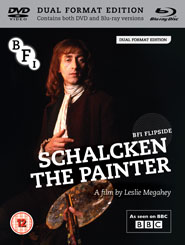
Director Digby Rumsey sees his BFI DVD debut this month on the Flipside release of Leslie Megahey’s Schalcken the Painter.  Rumsey is a traditional BFI director, coming from the same ranks as Terence Davies, Bill Douglas and Peter Greenaway.  His work in Gothic short films, especially adaptations of work by Lord Dunsany, places him firmly in the British Gothic traditions of directors such as Jonathan … Continue reading Interview With Digby Rumsey (BFI Flipside, The Pledge).

Schalcken The Painter – Leslie Megahey (BFI Flipside).

The notion of gothic is quite rightly taking over the BFI at the moment.  Their gothic season is looking set to be its most all encompassing and vast seasonal retrospective for some time.  The gothic tint has found its way into a number of avenues including its DVD range.  The Flipside label always seemed fit for the sort of gothic releases still residing in the … Continue reading Schalcken The Painter – Leslie Megahey (BFI Flipside).

The Masque of the Red Death (1964) – Kierkegaard’s Aesthetic Phase and Inverted Freudian Pleasure Principle (Part 2).

Part 1. The Levels of the Aesthetic Stage Through Castle Rooms and Colour. Corman’s beautiful excess of colour in the film has already been mentioned but colour plays a vital role within the film’s narrative too.  Its narrative focus however does not chime well with the Kierkegaard reading when considering the unevenness and ambiguity as to the death creatures and their colours at the end … Continue reading The Masque of the Red Death (1964) – Kierkegaard’s Aesthetic Phase and Inverted Freudian Pleasure Principle (Part 2).

The Masque of the Red Death (Roger Corman, 1964) – Kierkegaard’s Aesthetic Phase and Inverted Freudian Pleasure Principle (Part 1).

Roger Corman may be better known for pulpy B-movies but his work adapting Edgar Allen Poe for the big screen is uncharacteristically layered and has a depth that far outstrips films of a far more serious ilk.  Almost all his Poe adaptations (excluding the fun but overall light The Raven) take Poe’s original structure for stories and adds questioning elements to them, largely built around … Continue reading The Masque of the Red Death (Roger Corman, 1964) – Kierkegaard’s Aesthetic Phase and Inverted Freudian Pleasure Principle (Part 1).

The Lady Vanishes (Alfred Hitchcock, 1938) – Early Uses of Musical, Narrative Tools.

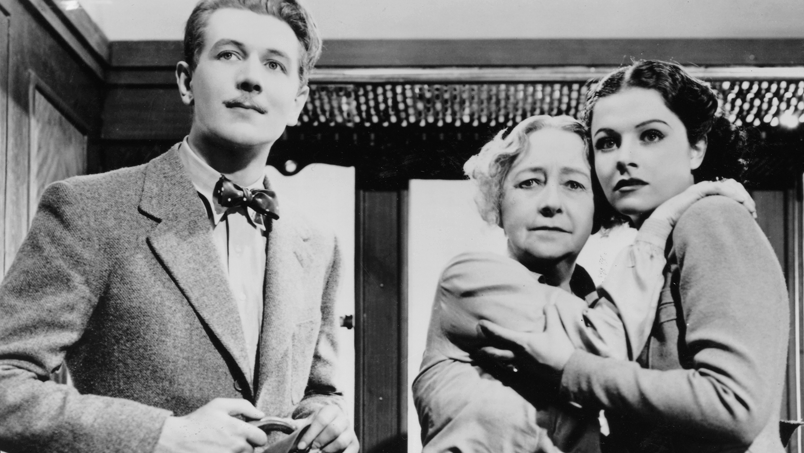
Hitchcock’s early British films tend largely to be devoid of the interesting, endlessly analysable scores his later films have, (thanks mainly to Bernard Herrmann being sat at the musical helm).  It seems to have been an almost standard practice to use a handful of musical scores or fragments in the occasional scene but to largely leave the films musically blank outside of their opening and … Continue reading The Lady Vanishes (Alfred Hitchcock, 1938) – Early Uses of Musical, Narrative Tools.