An Ancient Evil: M.R. James and Nigel Kneale.

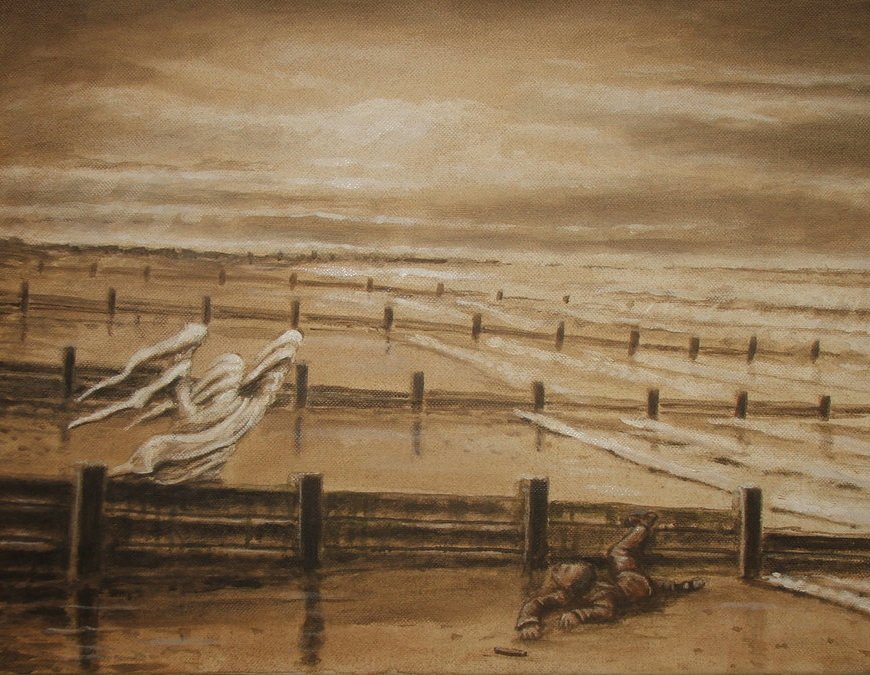
Two writers who could be said to epitomise the ideas of Folk Horror, M.R. James and Nigel Kneale, while addressing these ideals through different media, are writers whose work often crept into the same realm.  This has lead to both of their work having a natural relationship with each other, with one almost being a reincarnation of the other.  Of course, to imply such things … Continue reading An Ancient Evil: M.R. James and Nigel Kneale.

2013 in Film.

In contrast to other cineastes that I follow online, I really don’t get out that much. While so many excellent film writers seem to be able to see every relevant new release as it comes (even before if they’re lucky enough to have time and money to get thoroughly into the festival circuit), it’s actually a rarity for me to be able to get into … Continue reading 2013 in Film.

The Seventh Continent (Michael Haneke) and the Freudian Death Drive – Part 2

Part 1. The Seventh Continent. Unlike Freud’s vision of how the Death Drive manifests, Haneke uses the idea as an attack on a number of his usual tropes.  Aspects of modern life such as the dreary drag of the 9 to 5 to the middle class obsession with materialism and ownership/possession all come under fire and blame for the Death Drive take over.  The Seventh … Continue reading The Seventh Continent (Michael Haneke) and the Freudian Death Drive – Part 2

The Seventh Continent (Michael Haneke) and the Freudian Death Drive – Part 1.

Introduction Michael Haneke’s debut feature set the tone for the majority of his interests that would be explored over the next few decades.  The Seventh Continent (1989), though part of the Glaciation Trilogy, stands on its own for questioning a very specific and brutal form of philosophy; that of Freud’s Death Drive principles.  Though Haneke would address philosophical issues in a lot of his films (this … Continue reading The Seventh Continent (Michael Haneke) and the Freudian Death Drive – Part 1.

Kevin Brownlow Discusses Abel Gance’s Napoléon.

Said to be a labour of love lasting over forty years, the restoration of Abel Gance’s Napoléon by filmmaker, restorer and archivist Kevin Brownlow, has gone down in the annuls of film history. With the latest restoration having been successfully screen and rapturously received at the San Francisco silent film festival, this November sees a special screening of the epic five hour film with a … Continue reading Kevin Brownlow Discusses Abel Gance’s Napoléon.

Village Green Repression in Film, Television and Philip Larkin.

Mythological Introduction by Philip Larkin. A white girl lay on the grass With her arms held out for love; her goldbrown hair fell down her face, And her two lips move: See, I am the whitest cloud that strays Through a deep sky: I am your senses’ crossroads, where the four seasons lie. She rose up in the middle of the lawn And spread her … Continue reading Village Green Repression in Film, Television and Philip Larkin.

Schalcken The Painter – Leslie Megahey (BFI Flipside).

The notion of gothic is quite rightly taking over the BFI at the moment.  Their gothic season is looking set to be its most all encompassing and vast seasonal retrospective for some time.  The gothic tint has found its way into a number of avenues including its DVD range.  The Flipside label always seemed fit for the sort of gothic releases still residing in the … Continue reading Schalcken The Painter – Leslie Megahey (BFI Flipside).

BBC Dead of Night (1972) – BFI

The BBC experienced a real golden age for television horror during the late 1960s and 1970s.  Almost every year seems to have produced an array of horror delights, ranging from ghost stories of all types to full blown, psychological nightmares.  Though now over half of the series is missing from the archives, 1972’s horror anthology Dead of Night and its surviving three episodes represent a … Continue reading BBC Dead of Night (1972) – BFI

Robin Redbreast – Play For Today (1970) – James MacTaggart (BFI).

This articles contains minor spoilers. Holding the record at the time for being the only play in the BBC Play For Today series to be repeated, James MacTaggart’s Robin Redbreast has an aptly cult aura surrounding it.  First broadcast in the “spooky” slot (a December time tradition since Dickens’ era) in 1970, it manages to foreshadow a number of interesting movements in film and television … Continue reading Robin Redbreast – Play For Today (1970) – James MacTaggart (BFI).

The Lady Vanishes (Alfred Hitchcock, 1938) – Early Uses of Musical, Narrative Tools.

Hitchcock’s early British films tend largely to be devoid of the interesting, endlessly analysable scores his later films have, (thanks mainly to Bernard Herrmann being sat at the musical helm).  It seems to have been an almost standard practice to use a handful of musical scores or fragments in the occasional scene but to largely leave the films musically blank outside of their opening and … Continue reading The Lady Vanishes (Alfred Hitchcock, 1938) – Early Uses of Musical, Narrative Tools.