Fugitive in the Landscape

In the British tradition of the Chase & Pursuit drama, there are several reoccurring themes. The idea of a lone individual being chased through different landscapes by a group was popularised in Britain by the Second World War but was around far before then. The basic set-up has an individual wanted for some crime or misdemeanour (sometimes falsely). They are pursued by various parties, from the law … Continue reading Fugitive in the Landscape

Ringo’s Dérive in A Hard Day’s Night (1964).

Richard Lester’s film collaboration with The Beatles, A Hard Day’s Night (1964), has been attributed many aspects of foreshadowing modern culture.  From the almost accidental invention of the surrealism-infused music video to the defining of pre-counter-culture 1960s Britain and London, the film acts as both a periodical bubble and an innovative audio-visual experience that is as prescient today as it was then.  One segment in … Continue reading Ringo’s Dérive in A Hard Day’s Night (1964).

The Emotional Landscape of Scenes From A Marriage (1973)

Scenes from a Marriage was Ingmar Bergman’s first successful attempt to work in the medium of serialised television. The six episode series following the highs and lows of a marriage signposted many changes that the director would make during his work in the 1970s, aesthetically and thematically. Though a later cut of the series’ six episodes was edited into as a whole film for American audiences, several … Continue reading The Emotional Landscape of Scenes From A Marriage (1973)

Philip Larkin’s Spirit in Requiem For A Village (1976)

I thought it would last my time – The sense that, beyond the town, There would always be fields and farms, Where the village louts could climb Such trees as were not cut down; I knew there’d be false alarms – Going, Going, Philip Larkin. Above is the opening stanza of Philip Larkin’s 1972 poem, Going, Going. The poem captures the sense of a world being lost. The … Continue reading Philip Larkin’s Spirit in Requiem For A Village (1976)

Falconry, H Is For Hawk, and Powell & Pressburger.

After recently finishing Helen Macdonald’s excellent book, H Is For Hawk, a number of connections and synchronicities emerged that all seemed in some way to tie in to its various chapters and ideas.  Whilst many of these were of a more personal, emotional nature, the chief connection of interest lay in the presence of hawks in Powell and Pressburger’s 1944 film, A Canterbury Tale.  This … Continue reading Falconry, H Is For Hawk, and Powell & Pressburger.

The Urban Wyrd

One of the key criticisms of theories surrounding the genre Folk Horror is its emphasis upon the rural landscape. How can a genre really encompass such rural horror films as Witchfinder General (1968) and The Wicker Man (1973) while also discussing more urban-set horrors such as Quatermass and the Pit (1967)? While key works of Folk Horror cinema seem to broadly focus on rural landscapes to set … Continue reading The Urban Wyrd

Death And The Urban Landscape Of Herostratus (1967).

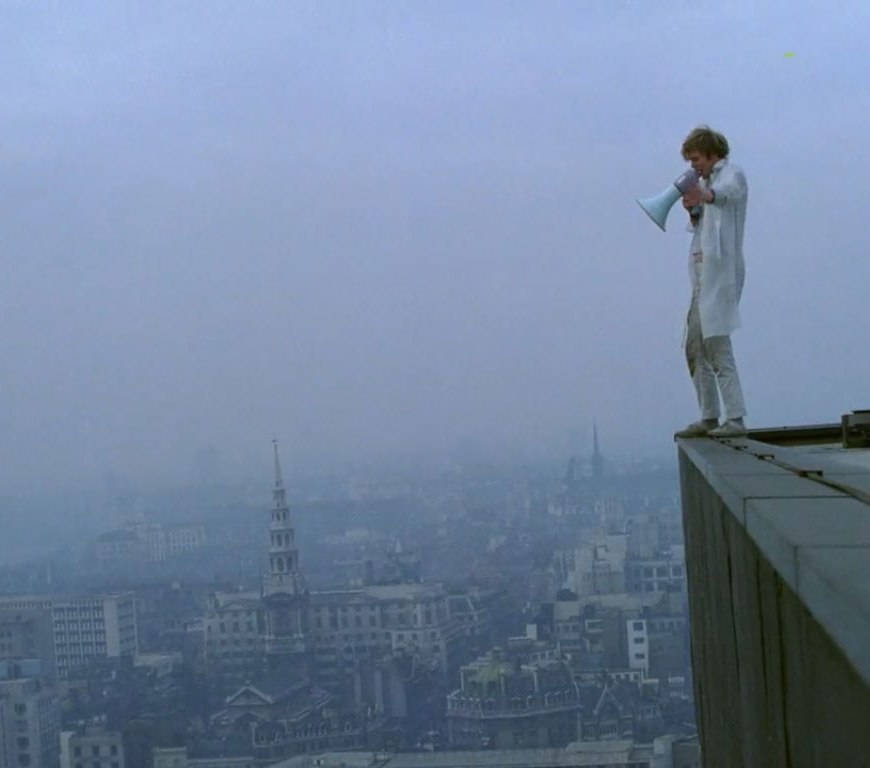
In spite of many British films in late 1960s playing along with the optimistic idea of the counter-culture, free loving dream, several films from era stuck out for their adherence to the harsher reality of late 1960s, urban life.  This is a trait often more associated with the early 1970s, in particular, where all the ideals came crashing down, creating films such as Get Carter … Continue reading Death And The Urban Landscape Of Herostratus (1967).

Trailer – Holloway (Robert Macfarlane).

Above is the trailer for the film that I have been working on with Robert Macfarlane.  Only recently, upon reading a Wikipedia entry no less, did I discover that it is an adaptation of a “Sunday Times best-seller”.  Perhaps it is best to ignore the pressure of this in spite of the article actually putting my name to the project.  As the edit progresses, Holloway … Continue reading Trailer – Holloway (Robert Macfarlane).

Short Film – Weirdstone (For Alan Garner).

“It is for this reason that we find that co-existence, which could neither be in time alone, for time has no contiguity, nor in space alone, for space has no before, after, or now, is established through matter.” (p.12, 1891) – Schopenhauer, The World As Will And Idea Volume 1. It seems fitting to open with this quote from Schopenhauer when discussing the themes behind … Continue reading Short Film – Weirdstone (For Alan Garner).

Fear of the Outsider in Quatermas II

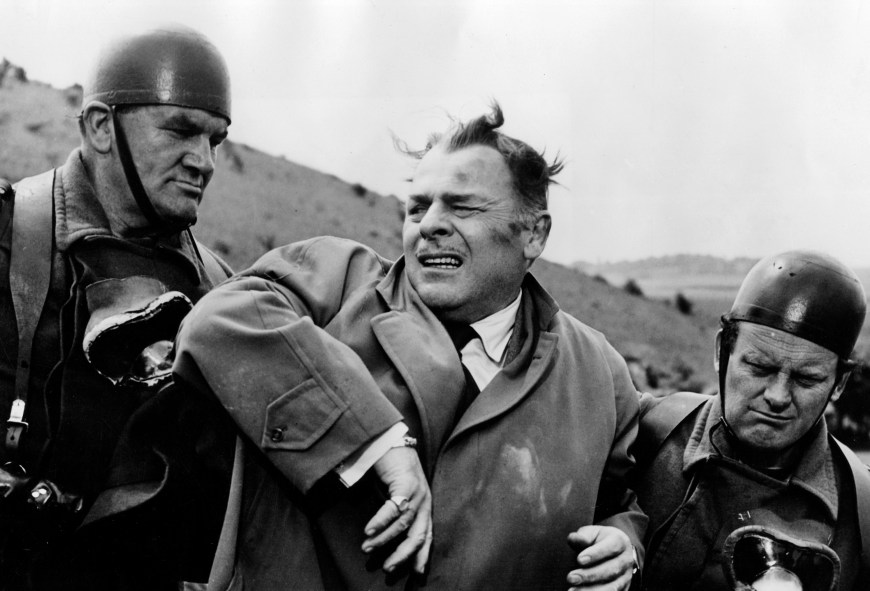
The characters of Nigel Kneale’s work rarely like an outsider. The drama of his plays is often built around small groups of people at odds with some concept of an outsider. The oppositional group will be diametrically opposed for a variety of reasons; sometimes for more pulp tendencies such as aliens in a space invasion scenario, but also more recognisable images of townspeople entering closed … Continue reading Fear of the Outsider in Quatermas II