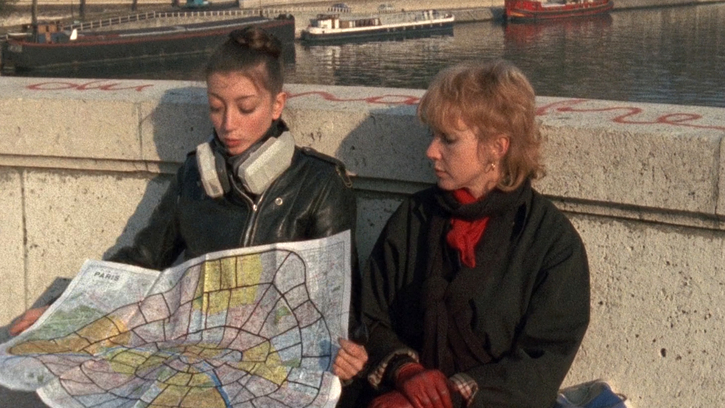
Gertrude Stein’s Rose and Chris Marker’s Owl

When recently reading Gertrude Stein’s famous poem Sacred Emily (1913), later published in Geography and Plays (1922) and famed for its sequence of “A rose is a rose is a rose…”, I was not thinking about a rose. Instead of a rose, I was in fact thinking of an owl. Before reading anything by Gertrude Stein, I had watched copious amounts of films by Chris … Continue reading Gertrude Stein’s Rose and Chris Marker’s Owl

The Temporal Disruptions of Marguerite Duras

Marguerite Duras was never keen on giving cinema an easy time. Adapting her own stories into feature films, it seems that the writer, rather than compromise the unusual qualities of her books, experimented and destabilised the narrative aspects of film form to suit her needs instead. Like her contemporary, Alain Robbe-Grillet, Duras made many attempts to transplant the elements of voice from her literary work … Continue reading The Temporal Disruptions of Marguerite Duras

Interview: David Gladwell on Cinema and Requiem For A Village

This interview was originally was published on the Small Cinema Liverpool website with thanks to Sam Meech and the BFI. However, since the closure and destruction of the cinema by Liverpool developers, the website has since been closed. This interview is saved here for posterity and in appreciation of a much underrated editor, filmmaker and artist Celluloid Wicker Man: In terms of filmmaking, how did … Continue reading Interview: David Gladwell on Cinema and Requiem For A Village

Shadow-Time in Ritual In Transfigured Time (1946, Maya Deren)

Time is Maya Deren’s raw material. Though it could be argued that temporality is the material of all filmmakers to some extent, there’s something about Deren’s short work that captures a very earnest questioning of time passing and even as an unseen character of sorts. Like Andrei Tarkovsky, Deren used time to map the questioning of her of films; creating imagery that highlighted the temporal … Continue reading Shadow-Time in Ritual In Transfigured Time (1946, Maya Deren)

Skin On Stone – Grief in Three Colours: Blue (1994)

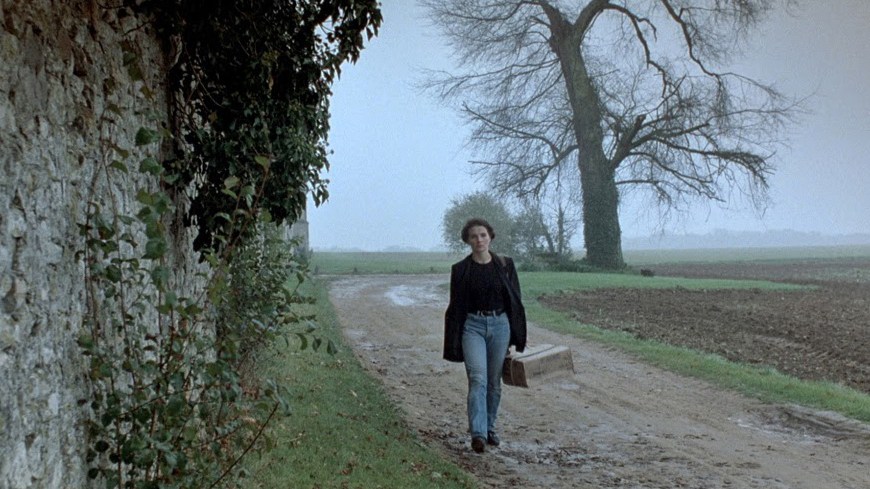
One of my favourite scenes in cinema is, in fact, not really a scene at all but a moment; a collection of three shots that has very little to do with the overall narrative but everything to do with the humanity questioned in the film.  The film is Krzysztof Kieślowski’s Three Colours: Blue (1994) and the moment is when Juliette Binoche, playing a woman in … Continue reading Skin On Stone – Grief in Three Colours: Blue (1994)

2017 Review

Like last year, I have tried to keep up with enough new releases to eventually have something say at the end of the year.  And exactly like last year, I have virtually failed to see ten new releases that I’ve actually enjoyed.  I quietly accepted once again that, with some notable exceptions, new digital films are not especially for me and require a huge crossover … Continue reading 2017 Review

Quatermass And The Pit (1967) @ 50

This November sees the 50th anniversary of one of Hammer Studios’ strongest and most complex films: Roy Ward Baker’s Nigel Kneale adaptation, Quatermass And The Pit (1967).  Sometimes known under the title of Five Million Years To Earth, the film takes Kneale’s BBC script from the original broadcast serial and turns it into something far more unnerving than the other films produced by the studio in … Continue reading Quatermass And The Pit (1967) @ 50

Fox Hunting in Wyrd Landscape Cinema

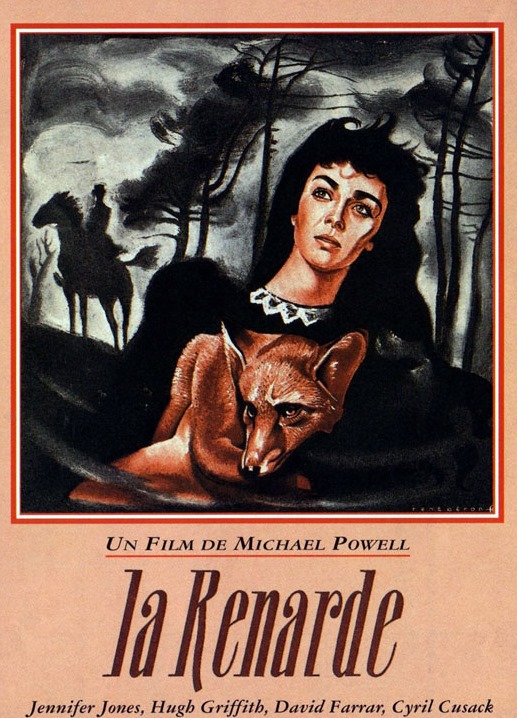
Few events take place in the countryside as brutal as fox hunting. It is one that highlights the class divisions still present in this country, far more powerfully than most other country pursuits. Aside from obvious power on display by those who still, quite illegally, partake in it, even before its ban in 2004 it had become a symbol of the ultimate violence of the … Continue reading Fox Hunting in Wyrd Landscape Cinema

Heart Of Glass (1976) – Optimism in Destruction

On a rock, there sits a man lost in thought.  Or perhaps he is not thinking at all and is instead letting the landscape around him fill his thoughts unconsciously.  Werner Herzog’s 1976 film, Heart of Glass (Herz aus Glas), has one of the director’s strongest opening set of images as the main character of the film sits in a foggy Bavarian landscape with life … Continue reading Heart Of Glass (1976) – Optimism in Destruction