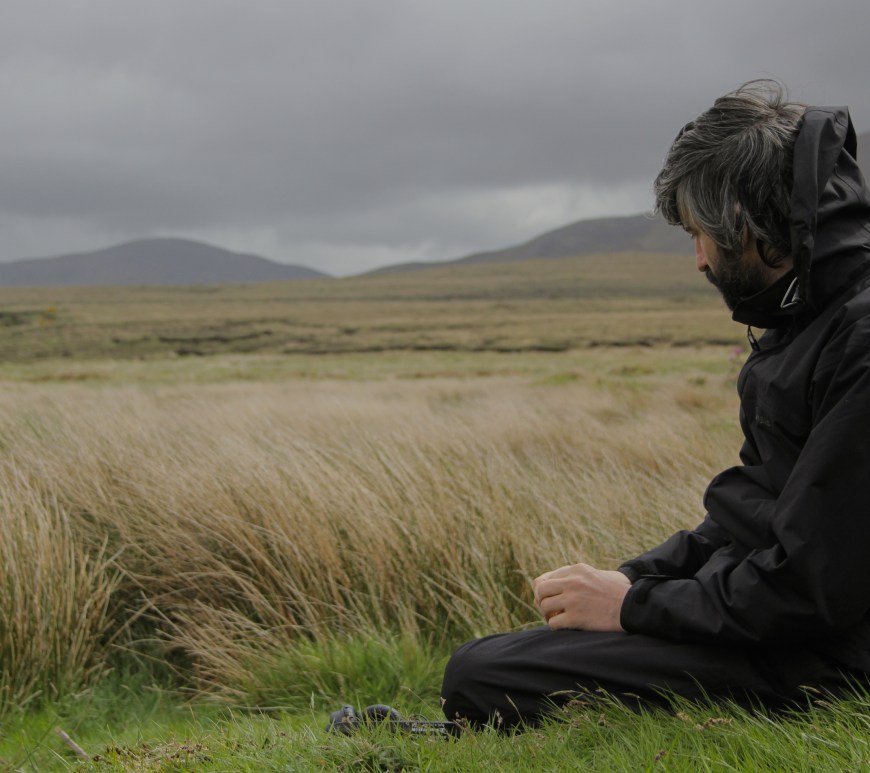
Silence (Pat Collins, 2012) – Landscape and Nostalgia.

Nostalgia can manifest in many forms at the cinema.  Sometimes it can be overt, sometimes it can be unconscious but film is most definitely the medium to explore its inner workings.  A number of films have recently used sound, not just in an interesting way, but as a major part of the narrative and character focus whilst touching upon nostalgia.  These range from the superb … Continue reading Silence (Pat Collins, 2012) – Landscape and Nostalgia.

Persona (1966) – Consequences of a Silent World (Ingmar Bergman)

This article contains spoilers. Though drenched in visual complexities and sharp, hap-hazard editing, Ingmar Bergman’s Persona (1966) is film that is aurally interesting as it is exhilarating to view.  Its opening segment of film footage from all corners of cinematic life, spliced together to form a montage of passing thoughts and nightmares, is actually a beautifully put together piece of sound editing as well.  This … Continue reading Persona (1966) – Consequences of a Silent World (Ingmar Bergman)

Alphaville (1965) and the Absurdities of Cinema – Jean-Luc Godard.

Jean-Luc Godard’s Alphaville (1965) was one of the first pieces of non-Anglo American cinema that I watched.  It may have been diving in toward the deep end in some regards but something became very striking about the film as its running time trickled by. It said more than other dystopias, noirs or sci-fi but this “more” wasn’t to do with anything that could be described … Continue reading Alphaville (1965) and the Absurdities of Cinema – Jean-Luc Godard.

The Early Short Films of David Gladwell.

David Gladwell may be more well known as Lindsay Anderson’s editor on such cinematic masterpieces as If…. (1968) and O Lucky Man! (1973) but his own directorial endeavours are equally worthy of discussion and analysis, especially in their relation to both his editorial work and his own creative trajectories. Whether it is the, very English, visual language of his first four short films or the … Continue reading The Early Short Films of David Gladwell.

Salò (1975) and the Potential for an Adornian Film (Pier Paolo Pasolini).

Reading through some of the writing of Frankfurt school philosopher, Theodor Adorno, it becomes extremely clear that mass culture is what he believes to be the fault of many of the world’s problems as well as symptom of them too; a false enlightenment perhaps, which is the product of simply being unable to accept a world after the end of the Second World War and, … Continue reading Salò (1975) and the Potential for an Adornian Film (Pier Paolo Pasolini).

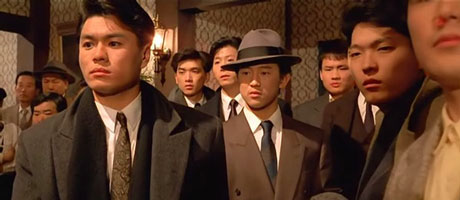
The General’s Son (1990) and Genre-Film Subversion (Im Kwon-Taek).

Im Kwon-Taek’s post Seopyeonje (1993) work perhaps feeds into the more art house desires and pressures from the west but on the cusp of this, his earlier genre film work still managed to show through in his 1990 film The General’s Son.  While on its faded surface is a relatively clichéd crime drama with added kung-fu style violence, in between its more ridiculous and pulpy … Continue reading The General’s Son (1990) and Genre-Film Subversion (Im Kwon-Taek).

Chi-hwa-seon (2002) – Im Kwon-Taek.

The preservation and evolution of South Korean cultural traditions became the dominant focus of Im Kwon-Taek’s films after the ease of censorship in a change of government regime.  A number of his post-genre cinema began to address this though the real cultural reactions can be found in later work which can effectively be called post-Cannes; meaning the cinema he made during his currently slow but … Continue reading Chi-hwa-seon (2002) – Im Kwon-Taek.

Andrei Tarkovsky – Polaroids, Mementos and Time

Some directors are very natural auteurs. Their films always seemingly a product of their own conception which seems unavoidable to visually mistake. Viewing all of Andrei Tarkovsky’s films, this is perhaps clearer to see than in the case of most other directors. His distinctive visual style, which morphs into several similar variations, is instantly recognisable. Dripping with faded lights, distinct textures and elemental forces, his … Continue reading Andrei Tarkovsky – Polaroids, Mementos and Time

Festival (1996) and the Acceptance of Loss – Im Kwon-Taek.

Celebrating loss can be a difficult task even for the more optimistic of personas.  The idea of someone being physically and emotionally lost is not a pleasant experience which, at best can provide some cathartic character building in between the tears and complete incomprehension as to what exactly it means to live or die.  It’s a theme familiar in many filmmaker’s auteur driven, thematic catalogues, … Continue reading Festival (1996) and the Acceptance of Loss – Im Kwon-Taek.

Musical Emphasis on Visual Words (François Truffaut and Pier Paolo Pasolini)

The relationship between sound and vision in film is one that is complex and almost indefinable in a broad sense due to each director and composer treating such relationship in different ways.  The two examples about to be discussed are almost reverse images of each other’s effects; the same method has been applied but for different reasons and different results.  Much examination has taken place … Continue reading Musical Emphasis on Visual Words (François Truffaut and Pier Paolo Pasolini)