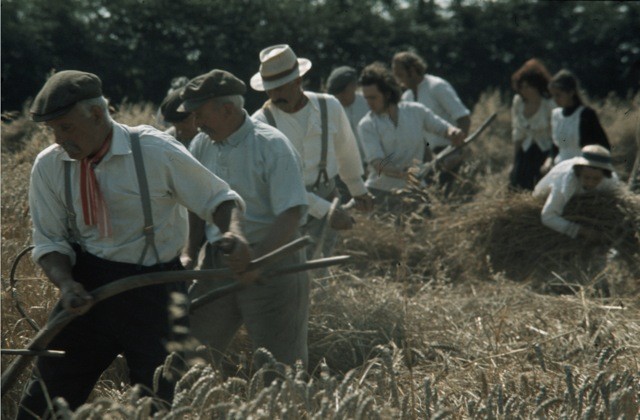
The Music of Folk Horror – Part 8 (Conclusions).

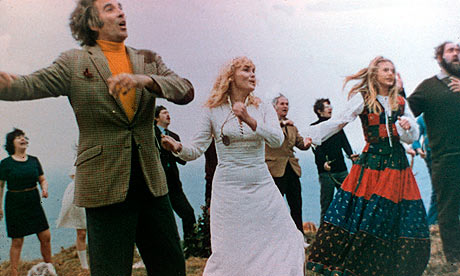
Part 1. Part 2. Part 3. Part 4. Part 5. Part 6. Part 7. Conclusions From the analysis of only a handful of British folk horror films, it has been shown that they rely heavily on their music in order to achieve their full cinematic effect.  Altman states the following when discussing genre theory: “Constantly opposing cultural values to counter-culture values, genre films regularly depend on … Continue reading The Music of Folk Horror – Part 8 (Conclusions).

The Unleashing of Repressed Eroticism in Black Narcissus (1947) and The Shining (1980).

The geographical make-up of a film’s scenario is often a subtle root-cause of its dramatic effect.  The sense of place, both its physical and psychological attributes, can be so overwhelming that whole narratives can follow the buckling of characters under pressure from this force; to the point where their own emotional identity and personal dynamics fluctuate, reflect, and occasionally attempt to rebel against an imposing … Continue reading The Unleashing of Repressed Eroticism in Black Narcissus (1947) and The Shining (1980).

The Uncanny in Häxan: Witchcraft Through The Ages (1922)- Benjamin Christensen.

In one of the first attempts I made at canonising the sub-genre of Folk Horror, I likened the majority of its films to be brilliant but mere fugues on the ideas presented in Benjamin Christensen’s Häxan: Witchcraft Through The Ages (1922).  Outside of Victor Sjöström’s The Phantom Carriage (1921), it was the earliest and most explicit form of the sub-genre that seemed to be surviving … Continue reading The Uncanny in Häxan: Witchcraft Through The Ages (1922)- Benjamin Christensen.

The Music of Folk Horror – Part 5 (The Wicker Man’s Diegesis).

Part 1. Part 2. Part 3. Part 4. Diegesis in The Wicker Man. Some of the music assessed in the last section raised further questions besides their thematic and narrative content.  Though this element was an important part of the analysis, another aspect almost appeared to be ignored; that of the diegesis of such performances.  For a horror film, The Wicker Man presents the viewer … Continue reading The Music of Folk Horror – Part 5 (The Wicker Man’s Diegesis).

The Quiet City

Chantal Akerman’s News from Home (1976-77) is a visual diary reflecting on a very personal history. A feature length film of sorts, it seems born out of cathartic necessity rather than simply creative ambition. Akerman had been working throughout the 1970s, and News from Home was made after her critical appreciation had more grown in stature, largely thanks to the impossible-to-ignore vigour of her four hour 1975 feature, Jeanne Dielman, … Continue reading The Quiet City

Sounds of the City – Defining the Metropolis in Alfred Hitchcock’s Rear Window (1954).

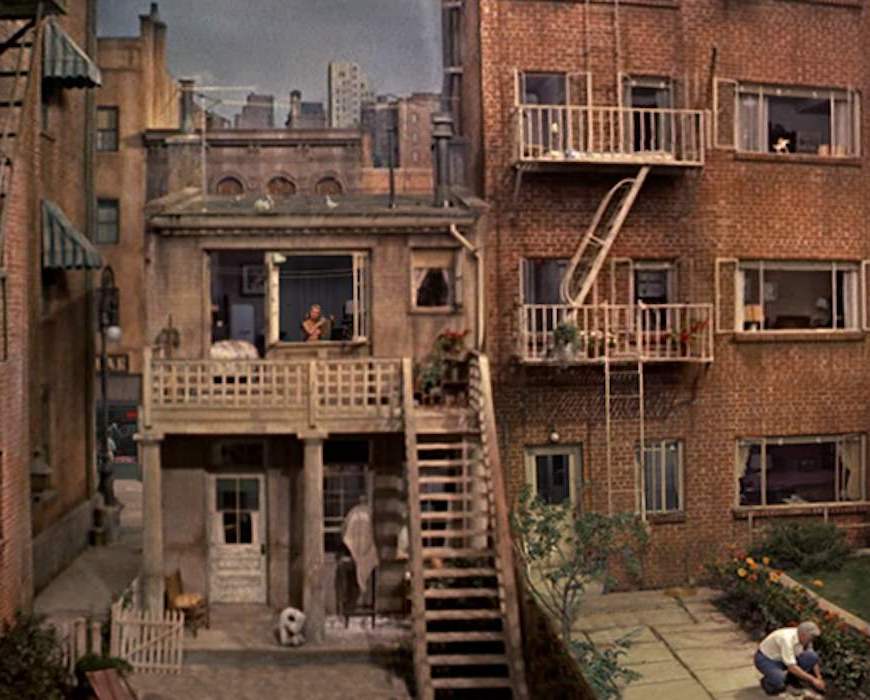
In spite of being set in the most cramped of city-based fictional areas, Alfred Hitchcock’s Rear Window (1954) successfully presents the bustling aesthetics of a whole metropolis while managing to retain an almost claustrophobic isolation.  In the film, Hitchcock presents a temporarily wheelchair-bound photographer who becomes obsessed with a neighbour. He suspects the unusual man to have murdered his wife.  Rear Window presents a number … Continue reading Sounds of the City – Defining the Metropolis in Alfred Hitchcock’s Rear Window (1954).

The Music of Folk Horror – Part 2 (Folk Horror Chain and Witchfinder General).

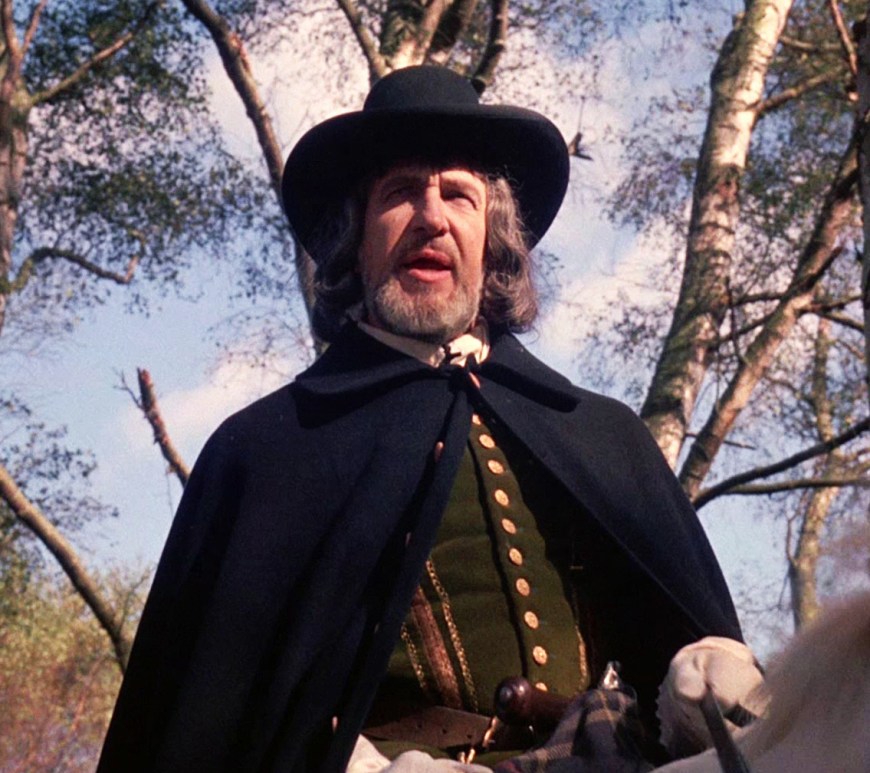
Part 1. Thematic Material of the Folk Horror Chain. “Grendel was the name of this grim demon, haunting the marches, marauding round the heath and the desolate fens; he had dwelt for a time in misery among the banished monsters, Cain’s clan, whom the creator had outlawed and condemned as outcasts.” (Heaney, p.6, 1999). Though the historic and cultural factors around why folk horror was … Continue reading The Music of Folk Horror – Part 2 (Folk Horror Chain and Witchfinder General).

Bastards (Claire Denis, 2014) – Oily Depths and Blank Walls.

Terrible things can happen in environments that allow people to step-back from consequences; this is the first step in most types of crime and film noir pictures.  But to simply place Claire Denis’ latest film, Bastards (2014), into one of these categories just for the ease of categorisation does it little justice.  Denis’ film has more to its narrative than its surface layer shadow but … Continue reading Bastards (Claire Denis, 2014) – Oily Depths and Blank Walls.

Elemental Chaos and Eternal Return in Scriabin and Andrei Tarkovsky – Part 4 (Zarathustra).

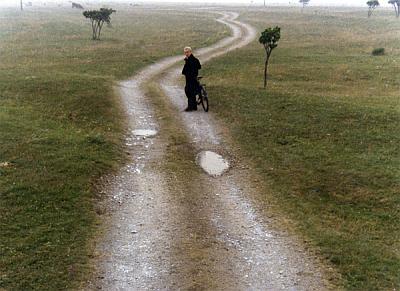
Part 1. Part 2. Part 3. The Eternal Return and Zarathustra’s Gift. “-and must we not return down that other lane out before us, down that long, terrible lane – must we not return eternally?” – Nietzsche (1883/1986, p.241). The final section of this argument refers back to Nietzsche and his writing on the Eternal Return.  His work on the subject, both philosophically in The … Continue reading Elemental Chaos and Eternal Return in Scriabin and Andrei Tarkovsky – Part 4 (Zarathustra).

L’Avventura (Michelangelo Antonioni, 1960) – A Curious Distance.

For a film that, on the surface, appears to be held in such high regard, Michelangelo Antonioni’s L’Avventura (1960) seems to have distanced itself from a number of its audience.  While I often wish to adhere to the third person in criticism, this article cannot help but revert to a personal reception of the film and also refer to recent personal reflections shared online.  After … Continue reading L’Avventura (Michelangelo Antonioni, 1960) – A Curious Distance.