The Loneliness of the Long Distance Runner – Use of Music and Sound In British Working Class Film (Part 4).


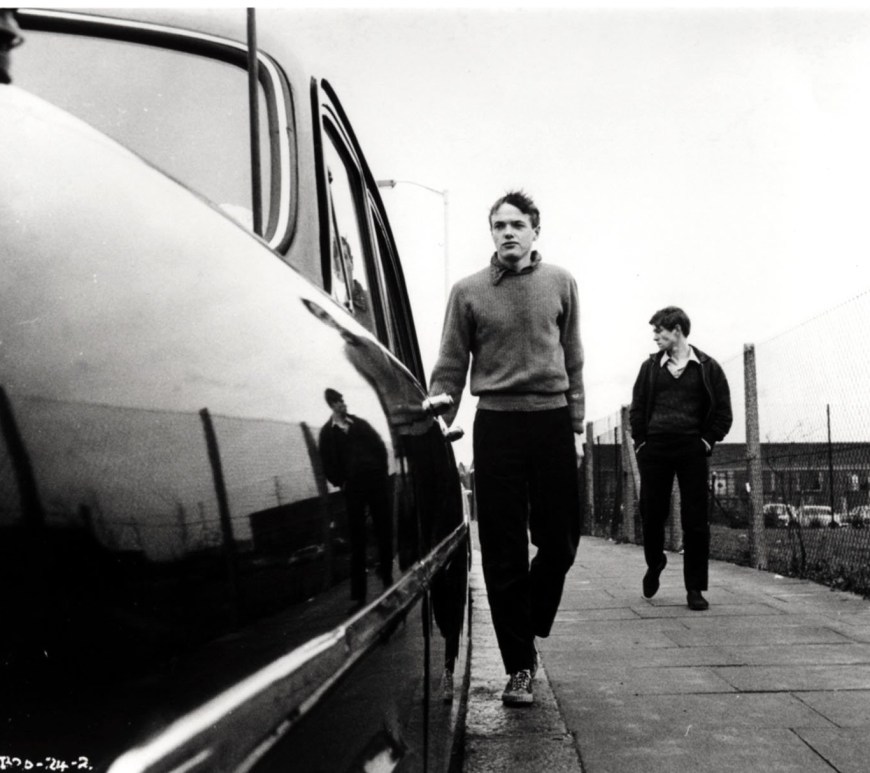
Part 1 Part 2 Part 3 The Loneliness of the Long Distance Runner. The Metaphorical Use of Diegetic Sound and Music. The Loneliness of the Long Distance Runner has several different uses of sound; two of which aren’t musical.  The title perhaps gives a hint that the sound of running feet on a hard ground will play a vital role in the film.  This rhythmic, … Continue reading The Loneliness of the Long Distance Runner – Use of Music and Sound In British Working Class Film (Part 4).

The Problematic Reception of Derek Jarman’s Blue – Part 3 (Cinematic Screenings).

Part 1 Part 2 Blue’s cinematic screening – Readings, Reception and Contradictions. “Whilst homosexuals die, many heterosexuals reach for the remote control and simply turn up the volume.  Does it come in stereo?” (Jarman, 1993, p.138) The screening of Blue in cinemas during its 1993 release date is its most typical form though screenings were rare and often film festival based rather than through a … Continue reading The Problematic Reception of Derek Jarman’s Blue – Part 3 (Cinematic Screenings).

The Early Short Films of David Gladwell.

David Gladwell may be more well known as Lindsay Anderson’s editor on such cinematic masterpieces as If…. (1968) and O Lucky Man! (1973) but his own directorial endeavours are equally worthy of discussion and analysis, especially in their relation to both his editorial work and his own creative trajectories. Whether it is the, very English, visual language of his first four short films or the … Continue reading The Early Short Films of David Gladwell.

South Korean Film Scores and Ease of Distribution – Part 5 (Blades of Blood and Conclusions)

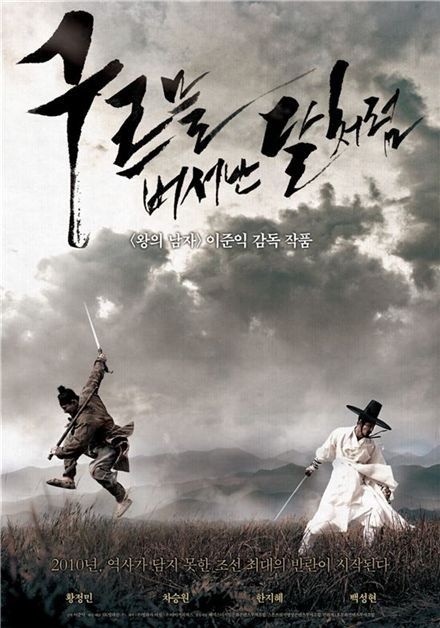
Part 1 Part 2 Part 3 Part 4 Blades of Blood (2010) – Joon-Ik Lee Joon-ik Lee’s 2010 film Blades of Blood shares a number of similarities with both the previously mentioned examples. The film is a modern, violent period picture based on a graphic novel. It is stylistically similar to Oldboy, especially within its colour palate though rarely recreates the standard set by Park. … Continue reading South Korean Film Scores and Ease of Distribution – Part 5 (Blades of Blood and Conclusions)

The Use of Sound & Music in British Working Class Film – Part 3 (British New Wave Cinema).

Part 1. Part 2. Metaphorical Music and British New Wave Film. “But who could describe the delicious sensation produced in me by the delicate harmony and angelic singing of that song which finally did! What an awakening, what bliss, what ecstasy when I opened my ears and my eyes together!” (Rousseau, 1781, p.294). British New Wave Film. The British New Wave movement, like so many … Continue reading The Use of Sound & Music in British Working Class Film – Part 3 (British New Wave Cinema).

Salò (1975) and the Potential for an Adornian Film (Pier Paolo Pasolini).

Reading through some of the writing of Frankfurt school philosopher, Theodor Adorno, it becomes extremely clear that mass culture is what he believes to be the fault of many of the world’s problems as well as symptom of them too; a false enlightenment perhaps, which is the product of simply being unable to accept a world after the end of the Second World War and, … Continue reading Salò (1975) and the Potential for an Adornian Film (Pier Paolo Pasolini).

South Korean Film Scores and Ease of Distribution – Part 4 (Asia Extreme and Westernisation)

Part 1. Part 2. Part 3. Asia Extreme and the Westernisation of South Korean Film Music. The most popular avenue for South Korean cinema to enter the West, outside of the art-house festival circuit, is in the form that has loosely been dubbed “Asia Extreme”.  This isn’t just South Korean film but also Japanese cinema as well as a number of others.  The sub-genre is … Continue reading South Korean Film Scores and Ease of Distribution – Part 4 (Asia Extreme and Westernisation)

South Korean Film Scores and Ease of Consumption – Part 3 (Seopyeonje’s P’ansori and Soo-Chul Kim).

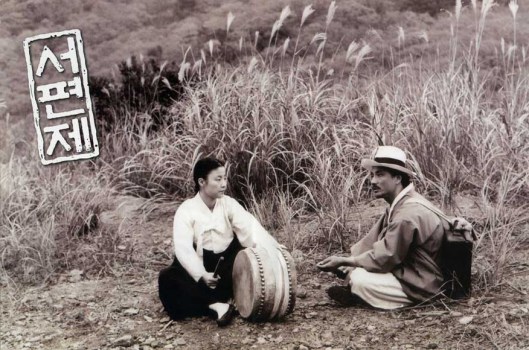
Part 1. Part 2. The Music of Soo-Chul Kim and the P’ansori aesthetic. Soo-Chul Kim is the composer of the nondiegetic score for Seopyeonje, though it is unclear how much influence he had on the other musical aspects of the film.  Looking at the film’s score, it can at first seem quite sparse once the diegetic P’ansori music is ignored.  Soo-Chul Kim’s music recurs throughout … Continue reading South Korean Film Scores and Ease of Consumption – Part 3 (Seopyeonje’s P’ansori and Soo-Chul Kim).

Berberian Sound Studio – Part 3 (Sound as Narrative and Conclusions).

Part 1 Part 2 Sound As Narrative The narrative ambiguity of Berberian begins to kick in during the last quarter of the film.  The sound within the narrative gradually eases over the line and starts to become part of the narrative affecting a number of the characters and not simply Gilderoy.  The first hint that the sound is entering reality comes when the previously abused … Continue reading Berberian Sound Studio – Part 3 (Sound as Narrative and Conclusions).

Chi-hwa-seon (2002) – Im Kwon-Taek.

The preservation and evolution of South Korean cultural traditions became the dominant focus of Im Kwon-Taek’s films after the ease of censorship in a change of government regime.  A number of his post-genre cinema began to address this though the real cultural reactions can be found in later work which can effectively be called post-Cannes; meaning the cinema he made during his currently slow but … Continue reading Chi-hwa-seon (2002) – Im Kwon-Taek.