Accumulation in Jacques Rivette’s La Belle Noiseuse (1991)

For a while after watching Jacques Rivette’s La Belle Noiseuse (The Beautiful Troublemaker, 1991), I repeatedly heard the sound of ink scratching from a nib onto rough paper and canvas. This action occurs throughout the almost four hour long film, to the point where the process of painting – from its earliest preparatory sketches to a devilish, unseen final canvas – feels almost conveyed in … Continue reading Accumulation in Jacques Rivette’s La Belle Noiseuse (1991)


Skin On Stone – Grief in Three Colours: Blue (1994)

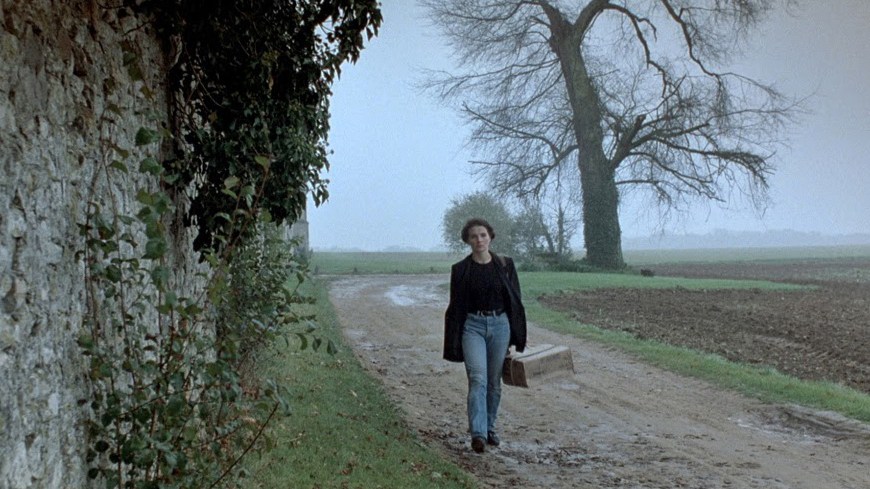
One of my favourite scenes in cinema is, in fact, not really a scene at all but a moment; a collection of three shots that has very little to do with the overall narrative but everything to do with the humanity questioned in the film.  The film is Krzysztof Kieślowski’s Three Colours: Blue (1994) and the moment is when Juliette Binoche, playing a woman in … Continue reading Skin On Stone – Grief in Three Colours: Blue (1994)

Heart Of Glass (1976) – Optimism in Destruction

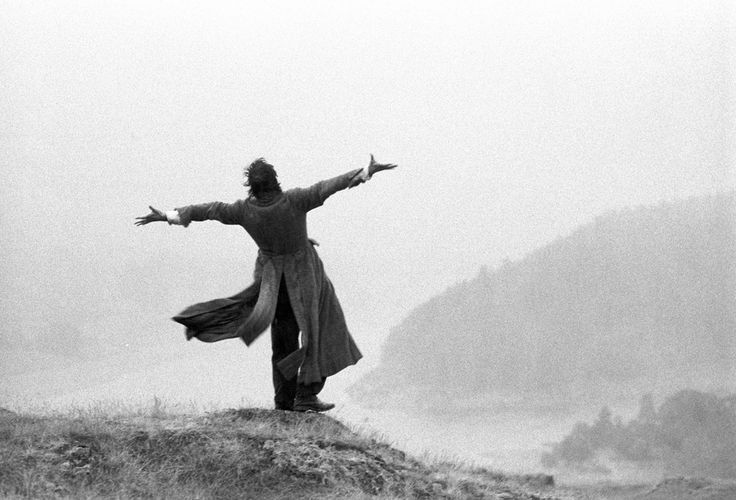
On a rock, there sits a man lost in thought.  Or perhaps he is not thinking at all and is instead letting the landscape around him fill his thoughts unconsciously.  Werner Herzog’s 1976 film, Heart of Glass (Herz aus Glas), has one of the director’s strongest opening set of images as the main character of the film sits in a foggy Bavarian landscape with life … Continue reading Heart Of Glass (1976) – Optimism in Destruction

Sex and the Landscape

Once I loved a man who was a lot like the desert, and before that I loved the desert. – Rebecca Solnit Late last year, I watched two films back-to-back that effectively spoke of one very particular theme. Viewing Michelangelo Antonioni’s Zabriskie Point (1970) followed by Dennis Hopper’s directorial debut The Last Movie (1971) highlighted a number of unavoidable connections between the films. Both films … Continue reading Sex and the Landscape

Stasis In London (1994) – Patrick Keiller.

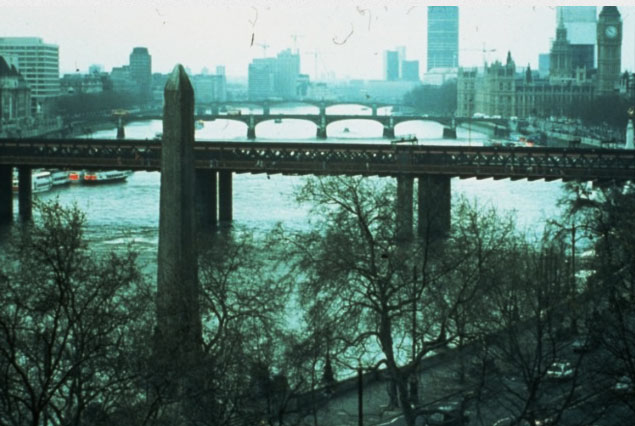
On watching all of Patrick Keiller’s “Robinson” trilogy of films recently, it struck home how effectively stillness within a visual frame can traverse the geographical plain and recreate a journey that is both political and sociological.  This, of course, goes to the heart filmmaking itself, the relationships with cuts especially and its portrayal of time, space and movement within a diegetic reality all being key … Continue reading Stasis In London (1994) – Patrick Keiller.

The Nowhere Road in The Discreet Charm Of The Bourgeoisie (1972)

The Discreet Charm Of The Bourgeoisie (1972) is a perfect example of a narrative film fragmenting into surreal dreamscapes. From its title alone, Luis Buñuel’s obvious target is middle-class idolatry but, for a film full of incredibly stark images, there is one visual motif which stands out from the other surrealist political attacks. Discreet is punctuated, whether in dreams or reality (or perhaps both), by … Continue reading The Nowhere Road in The Discreet Charm Of The Bourgeoisie (1972)

Ghosts in the Ice

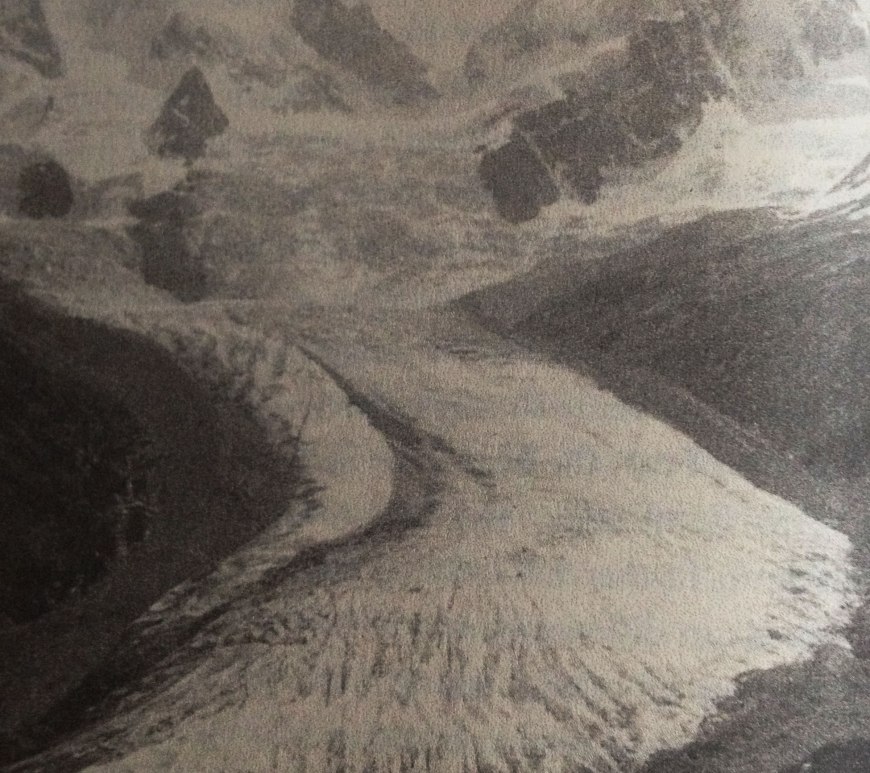
On finishing W.G. Sebald’s novel The Emigrants (1992), it felt as if some loose connection to a recent film or book was left hanging mid-air. The narrative of Sebald’s novel is split into the stories of four émigrés, all seemingly interconnected by a multitude of strange images but chiefly by their fleeing from the rise of Nazi Germany. The connection didn’t seem to be so … Continue reading Ghosts in the Ice

Libidinal Circuits

Jean-Luc Godard always had an interest in the relationship between politics and the spaces it influences. The topographies of modernity happened to coincide with his sharp turn towards cinematic political questioning, in films such as Tout Va Bien (1972), La Chinoise (1967), and Week-end (1967), looking in particular at a factory, an inner-city flat/Maoist commune, and a busy roadway. These spaces provided more than a backdrop for Godard’s political arguments: they seemed to actually … Continue reading Libidinal Circuits

Fear And Loathing In The Countryside – Withnail And I (1987).

British cinema is obsessed with the effect of location upon the individual.  In fact, it wouldn’t be so sweeping to suggest that large swaths of culture born on these isles stems from the idea that the individual can be deeply molded by their surroundings and any fictional drama from Albion will be bare the aesthetics of its areas as far more than a setting.  While … Continue reading Fear And Loathing In The Countryside – Withnail And I (1987).