Philip Larkin’s Spirit in Requiem For A Village (1976)

I thought it would last my time – The sense that, beyond the town, There would always be fields and farms, Where the village louts could climb Such trees as were not cut down; I knew there’d be false alarms – Going, Going, Philip Larkin. Above is the opening stanza of Philip Larkin’s 1972 poem, Going, Going. The poem captures the sense of a world being lost. The … Continue reading Philip Larkin’s Spirit in Requiem For A Village (1976)

Falconry, H Is For Hawk, and Powell & Pressburger.

After recently finishing Helen Macdonald’s excellent book, H Is For Hawk, a number of connections and synchronicities emerged that all seemed in some way to tie in to its various chapters and ideas.  Whilst many of these were of a more personal, emotional nature, the chief connection of interest lay in the presence of hawks in Powell and Pressburger’s 1944 film, A Canterbury Tale.  This … Continue reading Falconry, H Is For Hawk, and Powell & Pressburger.

The Urban Wyrd

One of the key criticisms of theories surrounding the genre Folk Horror is its emphasis upon the rural landscape. How can a genre really encompass such rural horror films as Witchfinder General (1968) and The Wicker Man (1973) while also discussing more urban-set horrors such as Quatermass and the Pit (1967)? While key works of Folk Horror cinema seem to broadly focus on rural landscapes to set … Continue reading The Urban Wyrd

Death And The Urban Landscape Of Herostratus (1967).

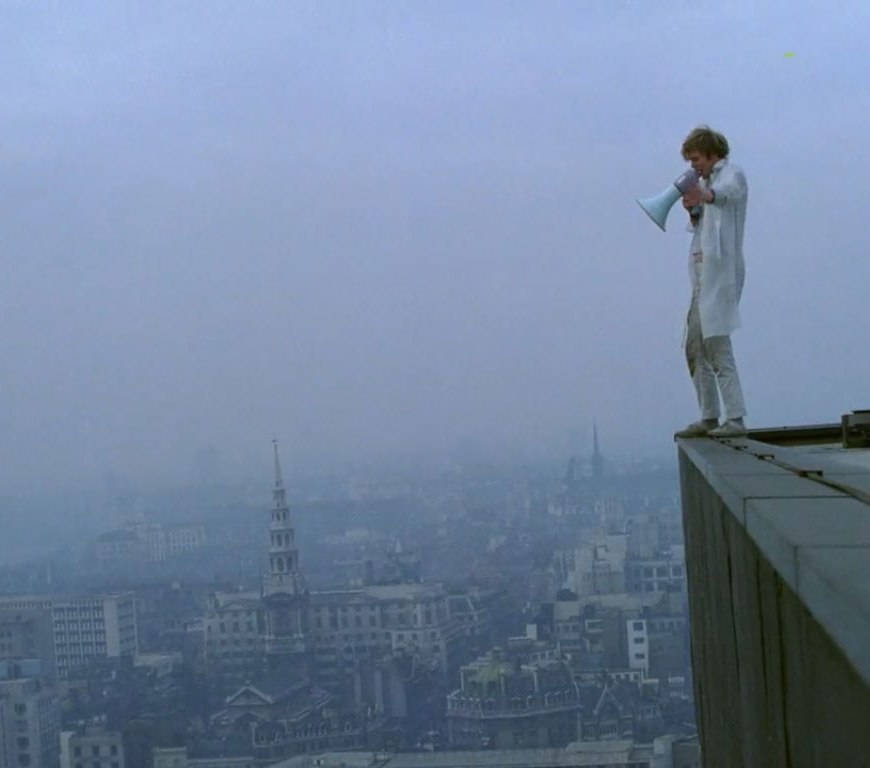
In spite of many British films in late 1960s playing along with the optimistic idea of the counter-culture, free loving dream, several films from era stuck out for their adherence to the harsher reality of late 1960s, urban life.  This is a trait often more associated with the early 1970s, in particular, where all the ideals came crashing down, creating films such as Get Carter … Continue reading Death And The Urban Landscape Of Herostratus (1967).

Questioning Nostalgia In Folk Horror.

As the Folk Horror canon expands into more forms of media and territory, the Folk Horror Chain becomes less useful as a tool for looking at thematic material.  This is partly due to it being derived as an idea from one medium and one that is explicitly narrative based.  Yet, some of its ideas can be loosely translated into the area of reception studies of … Continue reading Questioning Nostalgia In Folk Horror.

The Ritual Of Craft In Folk Horror.

With the ideas of the Folk Horror Chain starting to seem incomplete as the sub-genre grows in popularity and is more analysed, it’s about time further facets, themes, ideas and traits were added to the conversation.  This will be the first in a number of pieces about other traits not accounted for or addressed in the initial idea of the chain (which itself was only … Continue reading The Ritual Of Craft In Folk Horror.

Fear of the Outsider in Quatermas II

The characters of Nigel Kneale’s work rarely like an outsider. The drama of his plays is often built around small groups of people at odds with some concept of an outsider. The oppositional group will be diametrically opposed for a variety of reasons; sometimes for more pulp tendencies such as aliens in a space invasion scenario, but also more recognisable images of townspeople entering closed … Continue reading Fear of the Outsider in Quatermas II

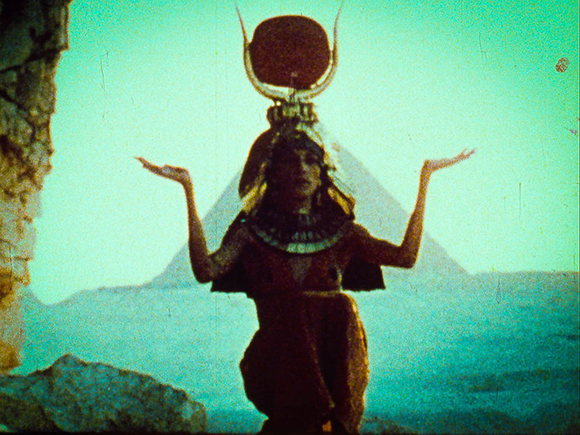
The Ancient And The Otherworldly In Lucifer Rising (1970) – Kenneth Anger.

Much has been written about Kenneth Anger’s final counter-culture outpouring, Lucifer Rising.  So often the discussion of its history, its constantly evolving final form, and its links with Charles Manson’s “Family”, overshadow the real thematic content of the short film.  Whilst all of these elements are of great interest, especially in regards to Bobby Beausoleil’s score which seems highly prescient in the context of his … Continue reading The Ancient And The Otherworldly In Lucifer Rising (1970) – Kenneth Anger.

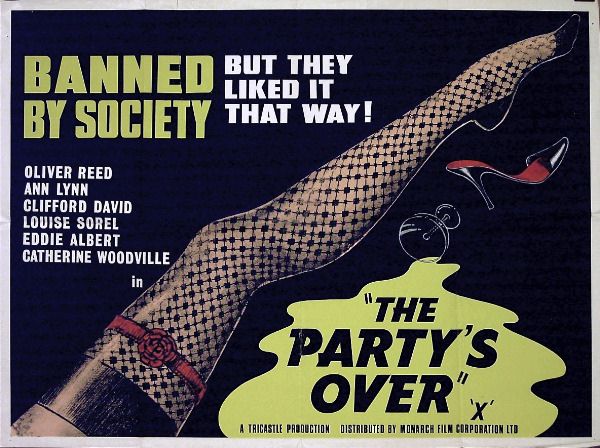
Objectification As Desire In The 1960s British Youth Film.

On a recent exploration of several films from the 1960s, some startling realisations occurred.  A change in moral values is pretty easy to distinguish within any given time-frame but the casual representation of the era’s moral values were surprising to behold.  In the 1960s, the concept of the teenager was barely a decade old; a new refreshing lease of life for a generation of people but … Continue reading Objectification As Desire In The 1960s British Youth Film.

Perception Of Landscape in A Journey To Avebury (1971) – Derek Jarman.

Out of all of Derek Jarman’s pre-feature length film work, his short capture of a 1971 walking trip, A Journey To Avebury, is perhaps his most interesting and subtly complex piece of short film work.  These were the early days of Jarman’s experimentation when his work as a painter and even a set designer still seemed to dominate over his purely cinematic interests.  This was … Continue reading Perception Of Landscape in A Journey To Avebury (1971) – Derek Jarman.