Mothlight (Film)

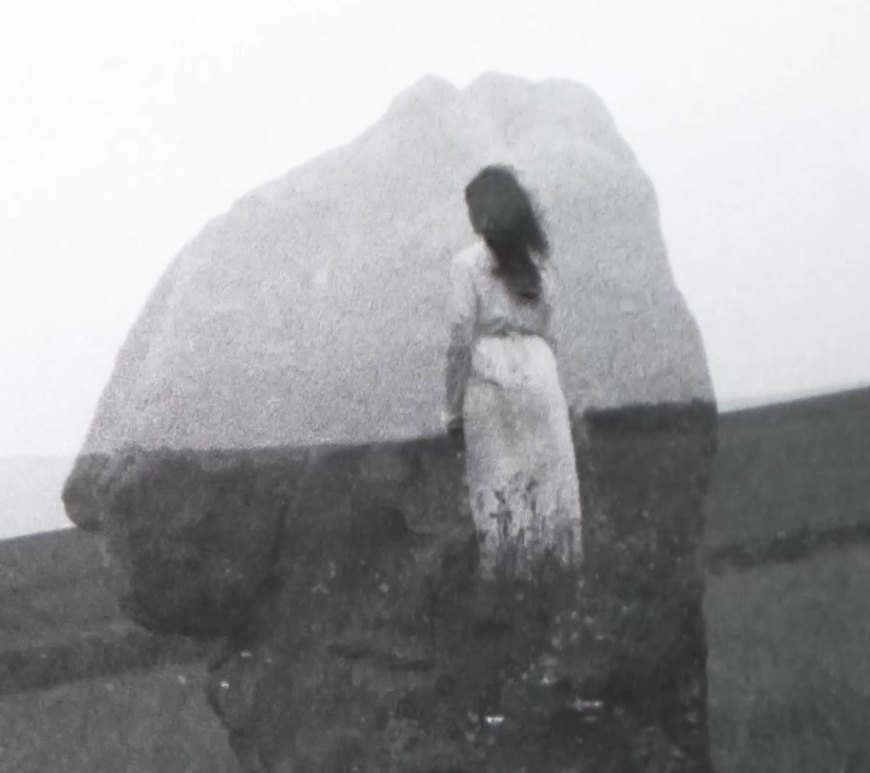
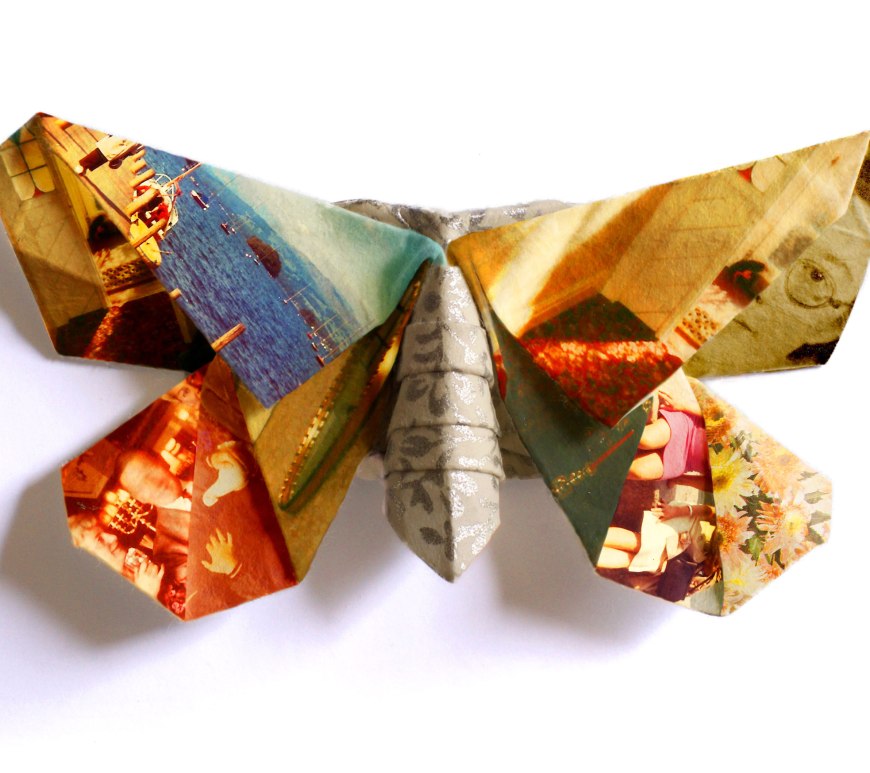
Above is a short film made with Influx Press all about my next book, Mothlight. Running back and forth between London and Merseyside, the film features me waffling on a little and also revisiting the original locations up north that inspired the book. Also featured, for which I’m incredibly lucky, are some readings by my previous voice-over collaborator Paul Carmichael who lends his rich tones … Continue reading Mothlight (Film)

Winter Waves: Marguerite Duras And Trouville

Marguerite Duras lived in a little flay in what was once the Hôtel des Roches Noires in Trouville on the Normandy coast for over thirty years. She spent long periods of time there from 1963 to 1996. She would stare out of the window towards the horizon line, or at least was photographed often staring out of the window towards the horizon line. Though undoubtedly … Continue reading Winter Waves: Marguerite Duras And Trouville

Short Film – Weather Words (Colin Riley feat. Robert Macfarlane)

Having already written about the Weather Words film for Caught By The River (link here), I won’t add much more about the project. For more specific details, read that piece. It’s the first and probably only film project of mine in 2018, partly due to funding problems and partly due to other big projects taking time (finishing my PhD, editing first novel, drafting second, selling … Continue reading Short Film – Weather Words (Colin Riley feat. Robert Macfarlane)

Responses: Albrecht Dürer’s St. Jerome (1521)

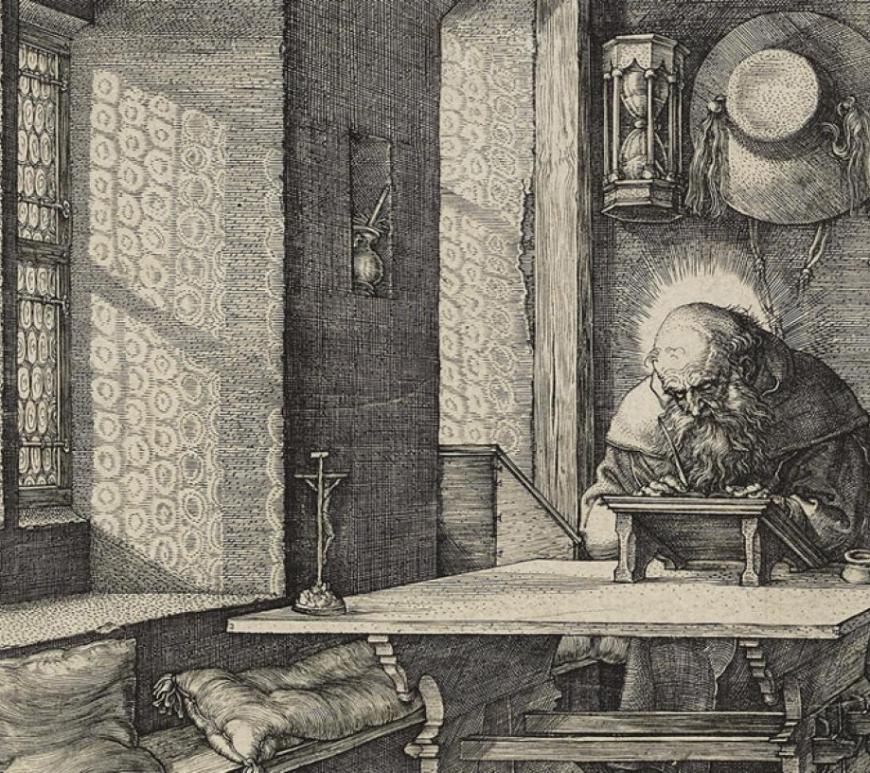
An old man is sat at a desk. His intelligence burns brightly above is head like a white halo as he writes in ink on a raised platform. His room is filled with things; measuring equipment and scientific apparatus, a skull, cushions, a lion, a dog and many books. The light from outside translates the designs of the glass windows onto the adjacent wall while … Continue reading Responses: Albrecht Dürer’s St. Jerome (1521)

Accumulation in Jacques Rivette’s La Belle Noiseuse (1991)

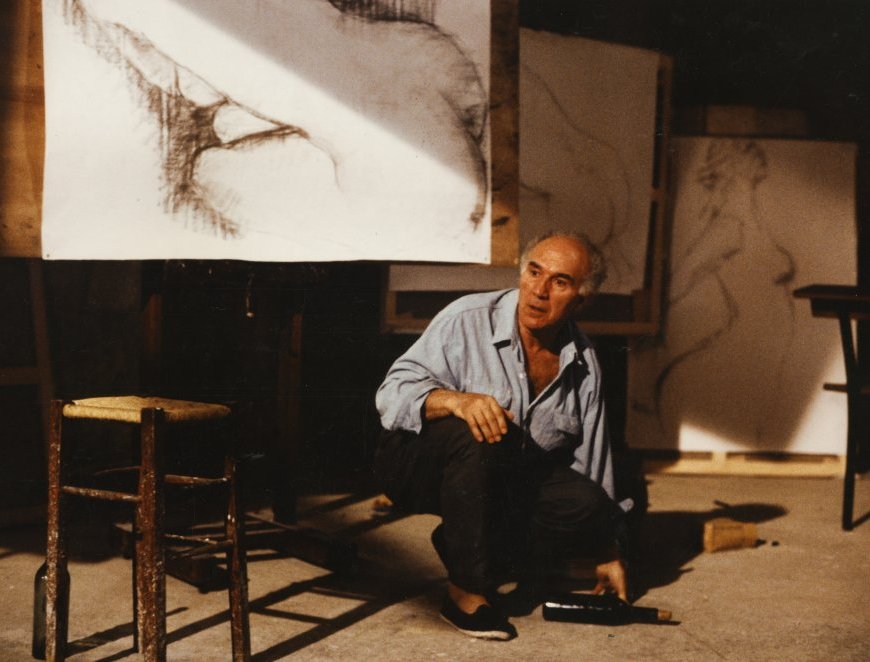
For a while after watching Jacques Rivette’s La Belle Noiseuse (The Beautiful Troublemaker, 1991), I repeatedly heard the sound of ink scratching from a nib onto rough paper and canvas. This action occurs throughout the almost four hour long film, to the point where the process of painting – from its earliest preparatory sketches to a devilish, unseen final canvas – feels almost conveyed in … Continue reading Accumulation in Jacques Rivette’s La Belle Noiseuse (1991)

Marcel Proust Turns Away

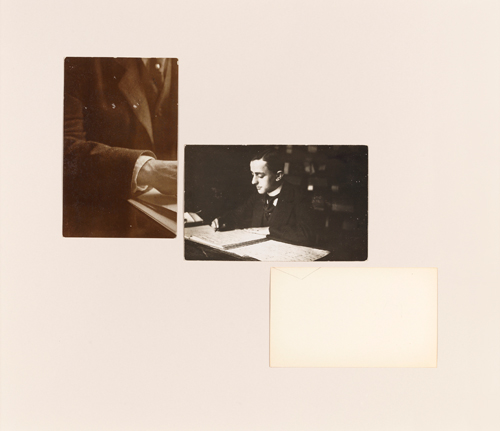
“What the Photograph reproduces to infinity has occurred only once: the Photograph mechanically repeats what could never be repeated existentially.” – Roland Barthes Marcel Proust turns away. His head is straight but not quite obscured. It could be considered a picture in profile if not for the angle of his body, crumpled and creating the illusion of multiple positions. His hand weakly grips his lapel, … Continue reading Marcel Proust Turns Away

Horror’s Pleasure of Distance

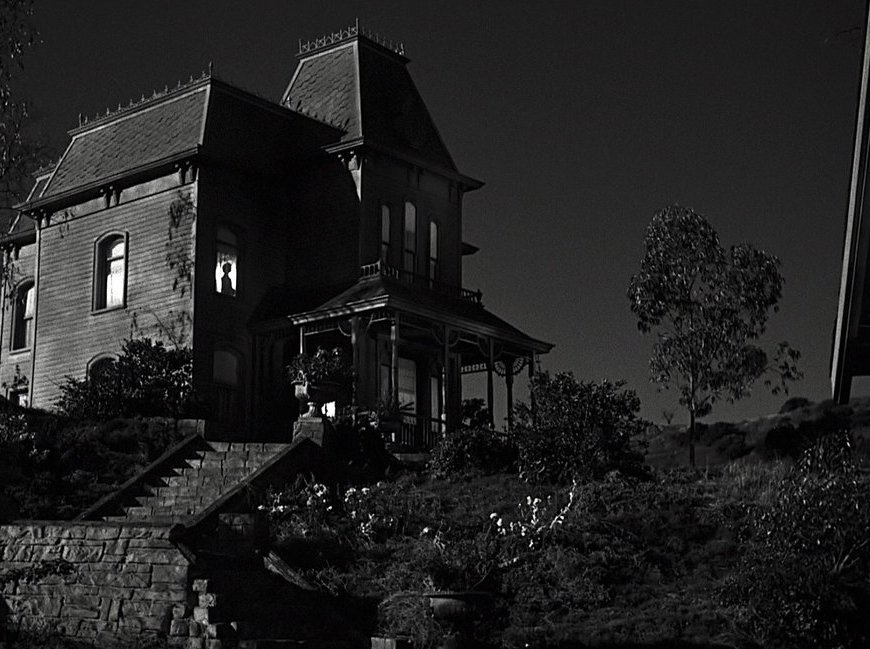
One of my favourite moments from Alfred Hitchcock’s Psycho (1960) is not a typical choice considering the film’s many infamous scenes. Rather than showers, murders and other more memorable images, I particularly love a relatively bland scene later on in the film. It has narrative development in its eerie punch line but has little else on screen in terms of Hitchcock more generally: it is utterly perfunctory … Continue reading Horror’s Pleasure of Distance

Responses: Tacita Dean’s Berlin And The Artist (2012)

Chance played a huge role in the writing of Robert Walser. I can picture his slow meanderings around towns and valleys, spotting something that fired his brief need to write before getting distracted by something else entirely. I can see him getting excited by the way sunlight reflects off a lake’s water, by the fustiness of a suited man coming out of a bank, by … Continue reading Responses: Tacita Dean’s Berlin And The Artist (2012)

Responses: Cindy Sherman’s Untitled Film Stills (1977)

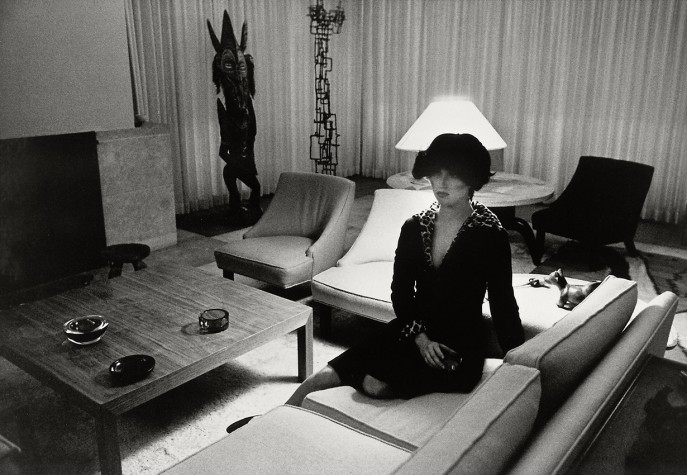
I first came across Cindy Sherman’s photographic series, Untitled Film Stills (1977), when looking for photos of film noir titles. The series is designed around fakery, seeking to recreate the feeling of stills from 1950s and 1960s American films but also, in producing the illusion with general key-notes as to the roles of women in these films, comment upon the basic norms prescribed in Hollywood … Continue reading Responses: Cindy Sherman’s Untitled Film Stills (1977)