Short Film – Heavy Water.

I remember being sat on a bench on Dunwich Heath in September last year and seeing the dome of Sizewell B for the first time as an adult.  I had just walked a little way down the coast, after a day of filming further down at Orford Ness, from Dunwich beach through to the heath.  I simply was not expecting to be greeted by such … Continue reading Short Film – Heavy Water.

Wanders: The Magnet and The Last Resort (New Brighton).

As a last hurrah of being on Merseyside before moving, I decided to revisit a place just down the road from where I’d lived on The Wirral; armed with a desire to dig up some of its surprising past glories.  I’ve been going to the seaside resort of New Brighton for as long as I can remember, often as a place to sit off and … Continue reading Wanders: The Magnet and The Last Resort (New Brighton).

Responses: Richard Long’s A Line Made By Walking (1967).

Like the work of sculptor Andy Goldsworthy, Richard Long’s work immediately asks an intriguing question: which part of the work is the official segment of “art”?  Is it the very process of making it and performing which constitutes the work or is it the documentation of such a process?  It needn’t be such a binary state of affairs; the two potential options have a fluid … Continue reading Responses: Richard Long’s A Line Made By Walking (1967).

Rurality In Folk Horror And The Films of David Gladwell.

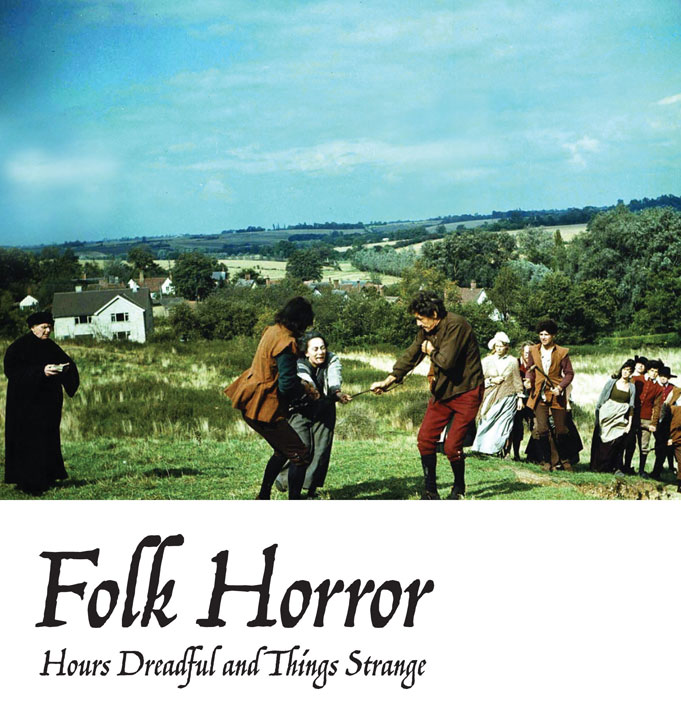
This paper was originally given at The Alchemical Landscape conference at Girton College Cambridge, 07/07/2016. Though more well known for work as a film editor associated with the Free Cinema Movement of the late 1950s, and for cutting work on several films by Lindsay Anderson including If…. (1968) and O’ Lucky Man! (1973), David Gladwell is a director in his own right; a cinematic outsider … Continue reading Rurality In Folk Horror And The Films of David Gladwell.

Wire and Grass Landscapes

At the recent Alchemical Landscape conference in Cambridge, there was some interesting discussion of the landscape seen in the opening segment of Alan Clarke and David Rudkin’s Play for Today episode, Penda’s Fen (1974). The point of the discussion was to show the subversive nature of the opening titles of the film in regards to its melding of two potentially differing realities of English landscape. … Continue reading Wire and Grass Landscapes

Wanders: Ian Nairn’s Pimlico (London).

I’ve always had a slight relationship with Victoria and Pimlico in London.  As central London areas go, it has always represented two things to me: the awful feeling of leaving the city and the sense of dread at having to wander around somewhere largely built of private buildings, houses and hotels (not the ideal place to burn an hour in wait for a coach or … Continue reading Wanders: Ian Nairn’s Pimlico (London).

Trailer – Heavy Water.

Above is the trailer for the next short film, Heavy Water.  This is to be the longest film this year and the most ambitious in terms of scope in spite of future projects containing narratives and actors.  Heavy Water ‘s difficulty is the connection of its two main themes represented by adjacent places on the Suffolk coast; the strange, liminal landscape surrounding Sizewell nuclear power … Continue reading Trailer – Heavy Water.

Place and Youth in Margaret Tait’s A Portrait Of Ga (1952)

“My mother lives in the windy Orkney Islands.  It’s certainly a wonderful place to be brought up in.” In making a short film about her mother, Scottish experimental filmmaker Margaret Tait also explored the interesting relationship between place and youth. In A Portrait of Ga (1952), a 4 minute short film shot on 16mm with a voice-over by the filmmaker, a fragment of biography becomes … Continue reading Place and Youth in Margaret Tait’s A Portrait Of Ga (1952)

Interview: Mike Hodges on Get Carter (1971).

Mike Hodges’ debut feature film, Get Carter (1971), was one of the key shifts in British cinema of the period.  With its total lack of hope, an earnest presence of violence and a hugely detailed topography, the film is one of the definitive shifts to the more gritty, unremitting cinema produced in the early Heath years alongside the likes of Stanley Kubrick’s A Clockwork Orange … Continue reading Interview: Mike Hodges on Get Carter (1971).

A Last Glimpse of the Land

“The contours of the Sizewell power plant, its Magnox block a glowering mausoleum, begin to loom upon an island far out in the pallid waters where one believes the Dogger Bank to be, where once shoals of herring spawned and earlier still, a long, long time ago, the delta of the Rhine flowed out into the sea and where green forests grew from silting sands.” … Continue reading A Last Glimpse of the Land