Sex and the Landscape

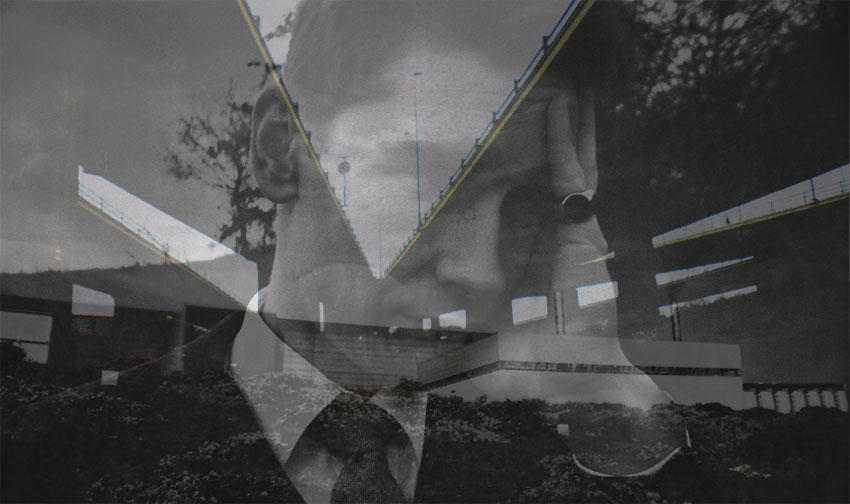
Once I loved a man who was a lot like the desert, and before that I loved the desert. – Rebecca Solnit Late last year, I watched two films back-to-back that effectively spoke of one very particular theme. Viewing Michelangelo Antonioni’s Zabriskie Point (1970) followed by Dennis Hopper’s directorial debut The Last Movie (1971) highlighted a number of unavoidable connections between the films. Both films … Continue reading Sex and the Landscape

Showreel 2016

I was initially struggling to put together a showreel for 2016.  I don’t think my film work has ever been so reliant on its varied soundworlds for their full context and so pulling the strongest images out of that context doesn’t quite work.  I’ve tried my best to make something vaguely cohesive from these moments though, looking back at the five films I’ve made this … Continue reading Showreel 2016

Tales of Mystery (1961-1963) – What Was It Like? (Algernon Blackwood).

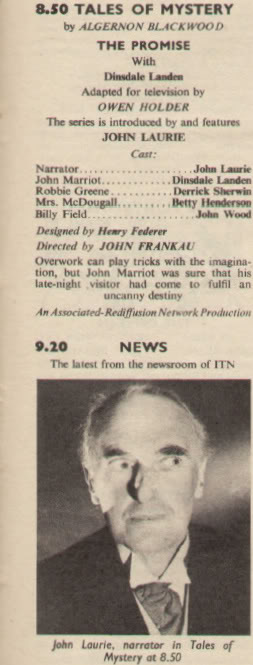
Out of all of the archive television currently missing, presumed destroyed, I think the most exciting and saddening loss is a little-advertised series called Tales of Mystery.  Even though the rumours currently flying around of the potential finds of Philip Morris and TIEA are mostly grounded in the likes of Doctor Who and Dad’s Army, a small part of me hopes for this archive gem … Continue reading Tales of Mystery (1961-1963) – What Was It Like? (Algernon Blackwood).

Forest (Short Film) and A Screaming Breeze (Book).

For some time now I have been involved in a collaborative arts project with local illustrator and artist Katie Craven.  Before the first stage of the project could be unleashed onto the unsuspecting public, the project collapsed in on itself thanks to a Belgian art gallery among other things.  To show just how close it got to being finished, there’s even a stop press advert … Continue reading Forest (Short Film) and A Screaming Breeze (Book).

Eroticism in the Music of Béla Bartók – Part 5 (Post-Modern Pulp).

Part 1. Part 2. Part 3. Part 4. Though of course subjective, the natural Kierkegaardian immediacy of the music is instantly on show.  Several sections of brooding along these themes can be read almost as seductions, with the build-ups working easily as well as the seduction segments from The Miraculous Mandarin.  The pairs of strings that seem to roll over each other as they begin … Continue reading Eroticism in the Music of Béla Bartók – Part 5 (Post-Modern Pulp).

Eroticism in the Music of Béla Bartók – Part 4 (Kierkegaard’s Immediacy)

Part 1. Part 2. Part 3. Kierkegaard’s Erotic Immediacy and the Atonal Manifestation of Complex Erotic Identity in Music for Strings, Percussion and Celesta. “Sensuous immediacy has its absolute medium in music, and this also explains why music in the ancient world did not become properly developed but is linked to the Christian world.” – Kierkegaard (1843, p.71). Unlike the other pieces of music by … Continue reading Eroticism in the Music of Béla Bartók – Part 4 (Kierkegaard’s Immediacy)

Eroticism in the Music of Béla Bartók – Part 3 (The Modernist Jungle)

Part 1. Part 2. On the other hand, The Miraculous Mandarin presents a set of characters who are, by contrast, in the aesthetic stage; satisfied with the quick, disposable type of pleasures and unconcerned with future development.  Carlisle states that ” The aesthetic mode of existence is characterized by the pursuit of personal satisfaction.  The aesthete lives for the pleasures of the moment, and tends … Continue reading Eroticism in the Music of Béla Bartók – Part 3 (The Modernist Jungle)

Eroticism in the Music of Béla Bartók – Part 2 (Post-Wagnerian).

Part 1. Bartók as a Post-Wagnerian Composer and The Confronting of Eroticism in The Miraculous Mandarin. “Thus, at first, there came a weariness of the productions of the Romantic Period, and then, as a consequence of this weariness, a search for points of departure which represented the greatest possible contrast to those of the Romantic mode of expression.” – Bartók (1976, p.331) In the context … Continue reading Eroticism in the Music of Béla Bartók – Part 2 (Post-Wagnerian).

Eroticism In The Music Of Béla Bartók – Part 1 (Introduction).

The Insertion and Removal Through Post-Wagnerian Ideals and New Media of Eroticism in the Music of Béla Bartók. Introduction. The music of Béla Bartók sits with some uncertainty between the last dying cries of Romanticism and the encroaching presence of Modernism.  With this clash of ideals producing the composer’s early work, Bartók’s music appears to have no choice but to address another line of interest … Continue reading Eroticism In The Music Of Béla Bartók – Part 1 (Introduction).