Fear of the Outsider in Quatermas II

The characters of Nigel Kneale’s work rarely like an outsider. The drama of his plays is often built around small groups of people at odds with some concept of an outsider. The oppositional group will be diametrically opposed for a variety of reasons; sometimes for more pulp tendencies such as aliens in a space invasion scenario, but also more recognisable images of townspeople entering closed … Continue reading Fear of the Outsider in Quatermas II

The Aural Aesthetics Of Ghosts in BBC Ghost Stories – Part 9 (Conclusions).

Part 1. Part 2. Part 3. Part 4. Part 5. Part 6. Part 7. Part 8. Conclusions. “If its central characteristics remained immune to change, the ghost story did keep pace with the times through progressive modernization of settings and language.” – Cox (xix, 1991). From analysis of the BBC Ghost Stories, it is clear that the narrative function of the supernatural has a natural … Continue reading The Aural Aesthetics Of Ghosts in BBC Ghost Stories – Part 9 (Conclusions).

The Aural Aesthetics Of Ghosts In BBC Ghost Stories – Part 7 (Haunted Objects).

Part 1. Part 2. Part 3. Part 4. Part 5. Part 6. “The Ghost In The Machine”: The Haunting Nature Of Unnatural Diegetic Sound. “M.R. James’ objects are imbued with our deepest fears, deepest terrors and resonances.  The whistle can bring up a storm or bring a monster from the deep.  The crown, that if you touch, its guardian will tear you to pieces.” – … Continue reading The Aural Aesthetics Of Ghosts In BBC Ghost Stories – Part 7 (Haunted Objects).

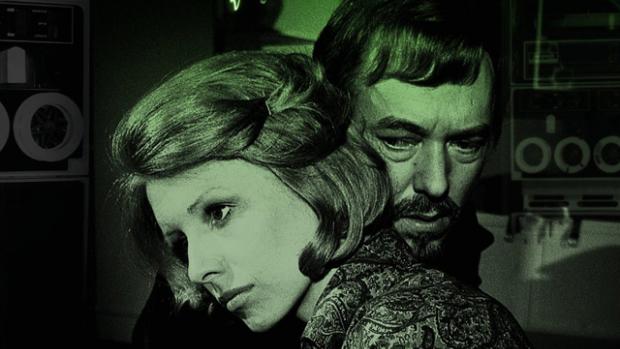
Technological Hysteria in Nigel Kneale’s The Stone Tape (1972).

The following article contains plot twists. Hysteria and Nigel Kneale’s Baby. A very particular and often quoted segment from Freud’s summations of hysterical patients will be used here to begin the contextualisation our analysis.  Whilst writing about the generalities surrounding such cases of hysteria and eventually compulsion neurosis, Freud came up with a short but rather useful sound-bite to describe every patient he had seen.  … Continue reading Technological Hysteria in Nigel Kneale’s The Stone Tape (1972).

Hysteria and Curses in Nigel Kneale’s Baby (Beasts, 1976).

When watching Nigel Kneale’s infinitely weird TV series, Beasts (1976), there’s a great sense of underlying currents behind what appear to be strange amalgamations of the everyday with something of the Other.  Though the links between the episodes are often animalistic, ranging the ghost of a dolphin in Buddyboy to the hoards of rats in During Barty’s Party, the majority of the episodes all, at … Continue reading Hysteria and Curses in Nigel Kneale’s Baby (Beasts, 1976).

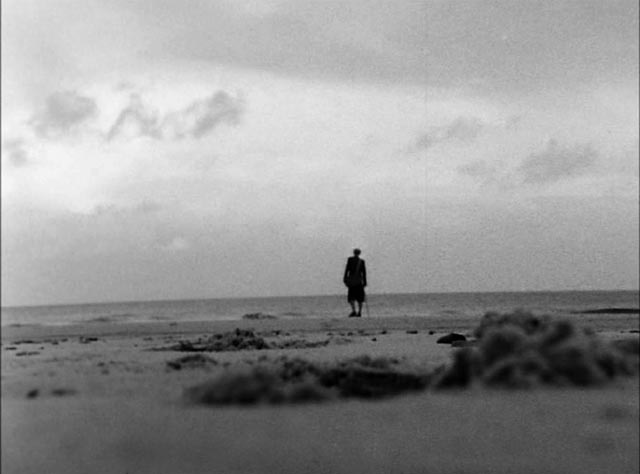
The Aural Aesthetics of Ghosts in BBC Ghost Stories – Part 6 (Excavation).

Part 1. Part 2. Part 3. Part 4. Part 5. Human Interaction With The Landscape And Its Soundscape. “The wind was bitter from the north, but was at his back when he set out for the Globe.  He quickly rattled and clashed through the shingle and gained the sand, upon which, but for the groynes which had to be got over every few yards, the … Continue reading The Aural Aesthetics of Ghosts in BBC Ghost Stories – Part 6 (Excavation).

The Aural Aesthetics of Ghosts in BBC Ghost Stories – Part 5 (Landscape).

Part 1. Part 2. Part 3. Part 4. Natural Diegesis And Aural Interaction With Landscape. One of M.R. James’ most recognisable writing traits is his emphasis on rural settings.  From his own personal experience, of both exploring the churches of France on holiday bike-rides and living and holidaying in Suffolk and Norfolk, the rural landscape became almost as much of a story trope as the … Continue reading The Aural Aesthetics of Ghosts in BBC Ghost Stories – Part 5 (Landscape).

The Aural Aesthetics of Ghosts in BBC Ghost Stories – Part 4 (Music).

Part 1. Part 2. Part 3. Nondiegetic Musical Themes And Textures. “Indeed, the celestial voices of film music do resemble a phantom in several significant ways.  They are ephemeral, they are not ‘substantial’ or do not constitute part of what audiences cognise as important in the film, and have an effect that is not apparent.” – Donnelly (p.8, 2005). Though looking at nondiegetic scores for … Continue reading The Aural Aesthetics of Ghosts in BBC Ghost Stories – Part 4 (Music).

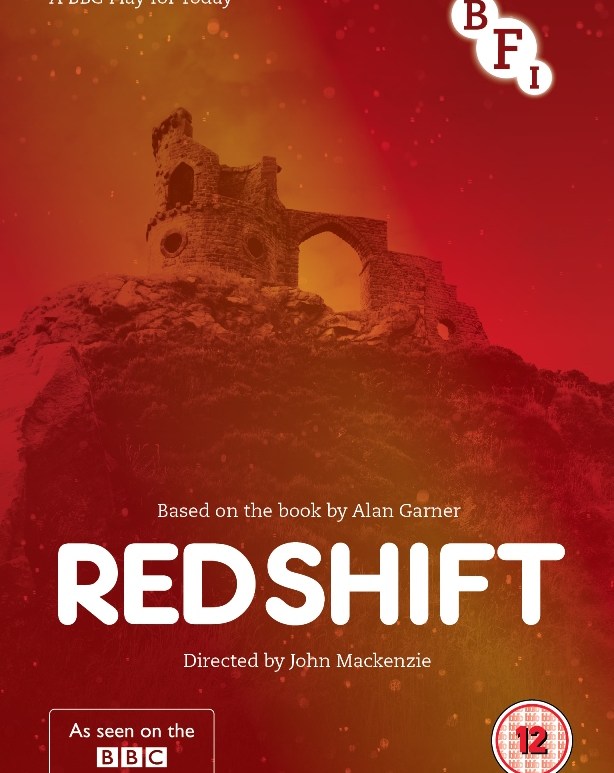
Red Shift (Play For Today, 1978) – John Mackenzie (BFI).

A shifting sense of time, space, and place can bring huge advantages to fantastical works of fiction.  The feeling that time is a folded concept, repeating and resetting in a quasi-ritualistic ceremony of life adds a sheen of the monumental to even the smallest and most intimate of dramas.  This sheen is the absolute embodiment of the work of writer, Alan Garner, and is never … Continue reading Red Shift (Play For Today, 1978) – John Mackenzie (BFI).

The Aural Aesthetics of Ghosts in BBC Ghost Stories – Part 3 (William Ager).

Part 1. Part 2. A “Disembodied Voice” of some form is a clear norm for representing a creature that, by its very definition, is now bodiless.  This means that, as an aural technique, it is used frequently throughout many other ghost stories as well.  In Lawrence Gordon Clark’s films, the aural trait occurs several times with different and varying effects, though never with the layered … Continue reading The Aural Aesthetics of Ghosts in BBC Ghost Stories – Part 3 (William Ager).