The Aural Aesthetics of Ghosts in BBC Ghost Stories – Part 2 (The Disembodied Voice).

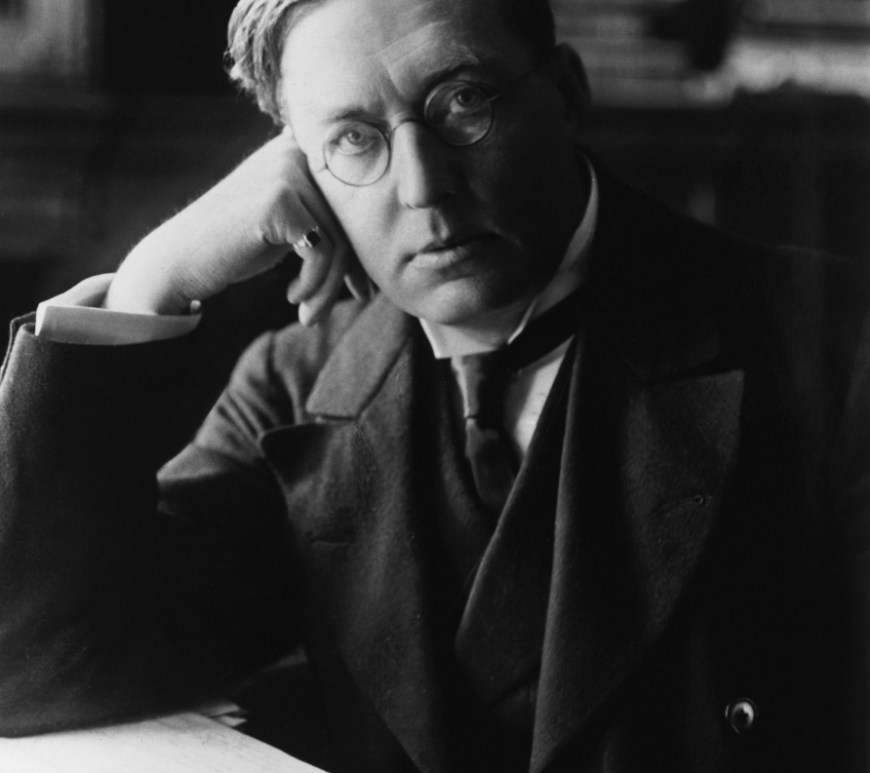
Part 1. The Aural-Thematic Ties In BBC Ghost Stories. “He first began to write the ghost stories for which he is now famous in late 1892 or early 1893 while he was a fellow of King’s.  They were composed initially to be read aloud in his college rooms as a Christmas treat for his friends.”-  Oliver (p.15, 2012). When looking at the source material for … Continue reading The Aural Aesthetics of Ghosts in BBC Ghost Stories – Part 2 (The Disembodied Voice).

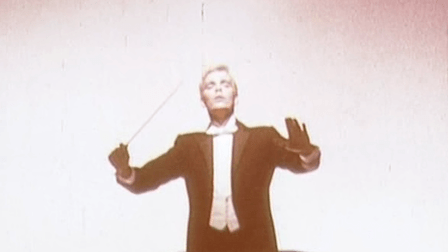
A Musicological Study of Ken Russell’s Composer Films – Part 5 (Dance of the Seven Veils).

Part 1. Part 2. Part 3. Part 4.  When approaching a cinematic portrayal of Richard Strauss, Russell is, for the first time in his biographical canon, openly honest about its position within cultural texts.  Dance of the Seven Veils has a sub-heading that reads “A comic strip in 7 episodes on the life of Richard Strauss” which is the first open admission that this is … Continue reading A Musicological Study of Ken Russell’s Composer Films – Part 5 (Dance of the Seven Veils).

The Aural Aesthetics of Ghosts in BBC Ghost Stories – Part 1 (Introduction).

Manifesting The Supernatural: The Aural Aesthetics Of Ghosts In BBC Ghost Stories. Introduction. “When Monty first began to write them, with the intention of inducing a pleasing terror in his listeners, he did so as an avid and discerning reader and connoisseur of the genre, keenly aware of his precedents and of the characteristics, objectives, and limitations of the ghost story as he understood the … Continue reading The Aural Aesthetics of Ghosts in BBC Ghost Stories – Part 1 (Introduction).

A Musicological Study of Ken Russell’s Composer Films – Part 2 (Monitor and Bartok).

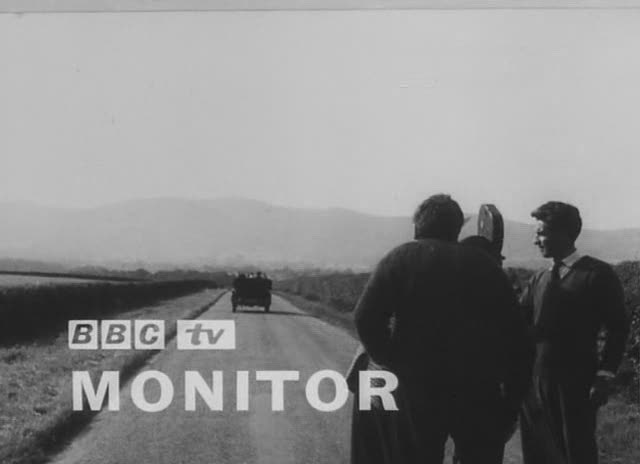
Part 1. BBC Monitor and the Use of Audio-Visual Form as Musicological Comment. The medium that Russell first gained traction in was not in fact film but in television documentaries.  The flop of his first feature film, French Dressing (1964), marks the advent of his daring creativity entering into his work as television director; a role he had begun at the BBC for their documentary … Continue reading A Musicological Study of Ken Russell’s Composer Films – Part 2 (Monitor and Bartok).

Tales of Mystery (1961-1963) – What Was It Like? (Algernon Blackwood).

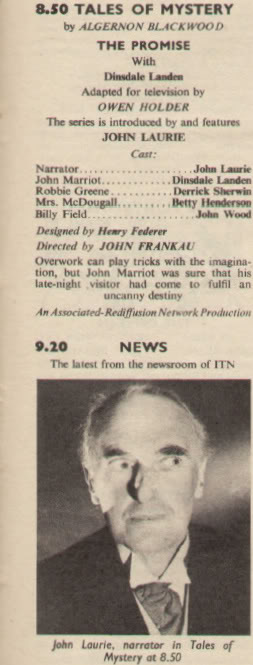
Out of all of the archive television currently missing, presumed destroyed, I think the most exciting and saddening loss is a little-advertised series called Tales of Mystery.  Even though the rumours currently flying around of the potential finds of Philip Morris and TIEA are mostly grounded in the likes of Doctor Who and Dad’s Army, a small part of me hopes for this archive gem … Continue reading Tales of Mystery (1961-1963) – What Was It Like? (Algernon Blackwood).

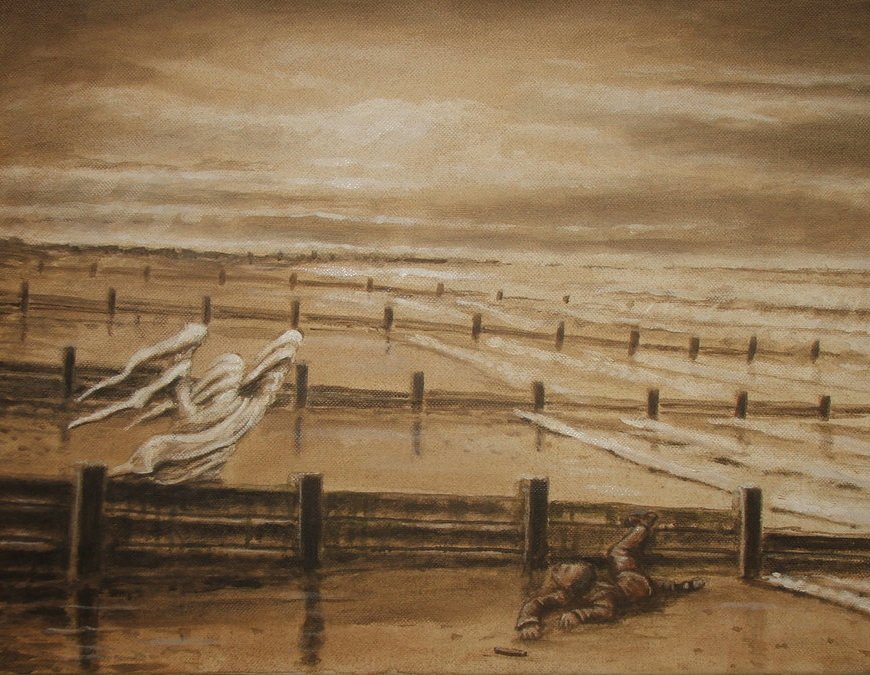
Films On The Strange British Coastline.

While many British films take full advantage of the rural potential that “this spectered isle” can provide, there seems to be another sub-sect to this branch film, often finding its way into British horror cinema.  Of course, this isn’t as clear cut as simply analysing films under the guise of “Rural Horror” or “Folk Horror” but there is a small batch of British horror films … Continue reading Films On The Strange British Coastline.

The Tractate Middoth – Mark Gatiss (BBC Ghost Story at Christmas).

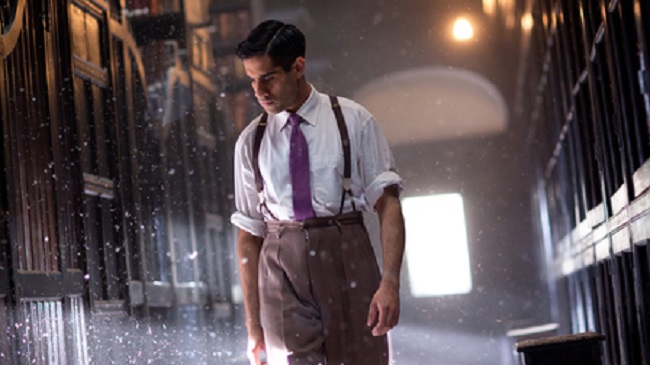
This article contains minor spoilers. It has taken a while for the traditional BBC ghost story to make a fully formed return in the 21st century.  This is surprising considering the popularity of the return of other genre television traditions from Doctor Who to Battlestar Galactica, but the singular ghost story at Christmas has taken some time to get right.  Before this recent M.R. James … Continue reading The Tractate Middoth – Mark Gatiss (BBC Ghost Story at Christmas).

An Ancient Evil: M.R. James and Nigel Kneale.

Two writers who could be said to epitomise the ideas of Folk Horror, M.R. James and Nigel Kneale, while addressing these ideals through different media, are writers whose work often crept into the same realm.  This has lead to both of their work having a natural relationship with each other, with one almost being a reincarnation of the other.  Of course, to imply such things … Continue reading An Ancient Evil: M.R. James and Nigel Kneale.

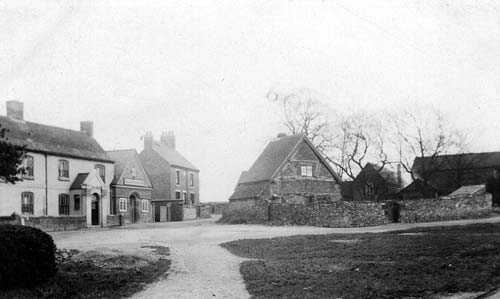
Village Green Repression in Film, Television and Philip Larkin.

Mythological Introduction by Philip Larkin. A white girl lay on the grass With her arms held out for love; her goldbrown hair fell down her face, And her two lips move: See, I am the whitest cloud that strays Through a deep sky: I am your senses’ crossroads, where the four seasons lie. She rose up in the middle of the lawn And spread her … Continue reading Village Green Repression in Film, Television and Philip Larkin.

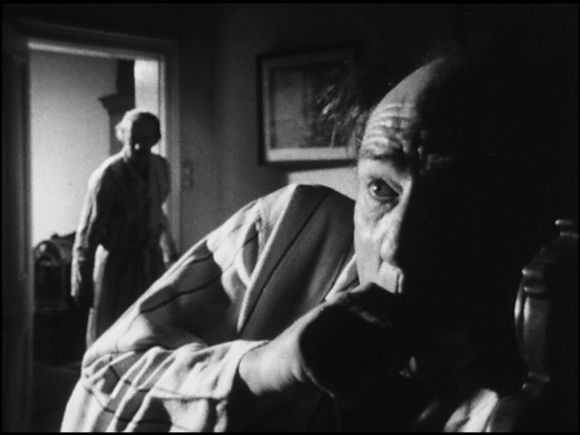
BBC Dead of Night (1972) – BFI

The BBC experienced a real golden age for television horror during the late 1960s and 1970s.  Almost every year seems to have produced an array of horror delights, ranging from ghost stories of all types to full blown, psychological nightmares.  Though now over half of the series is missing from the archives, 1972’s horror anthology Dead of Night and its surviving three episodes represent a … Continue reading BBC Dead of Night (1972) – BFI