The Urban Wyrd

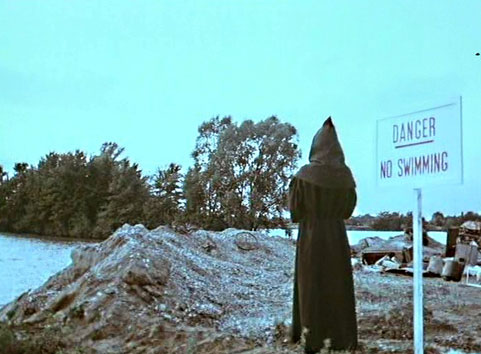
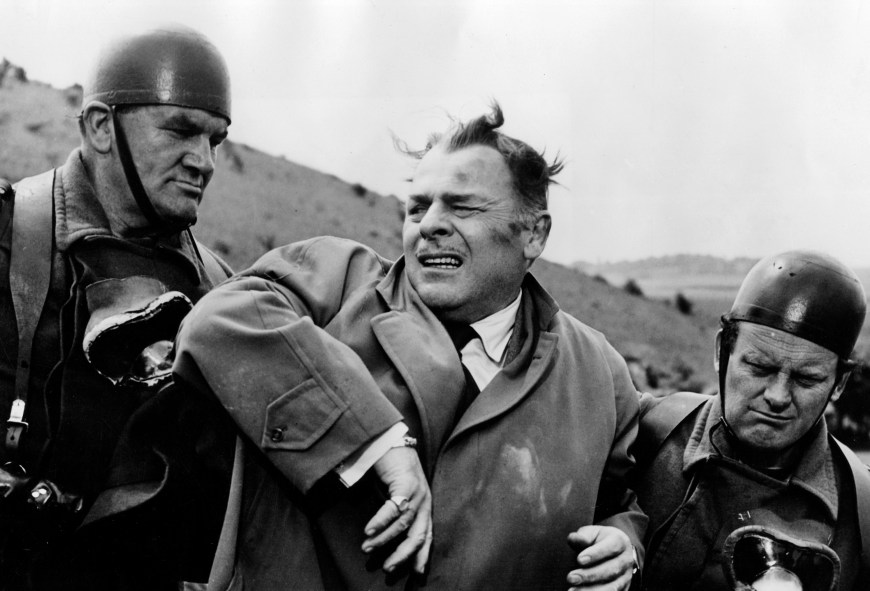
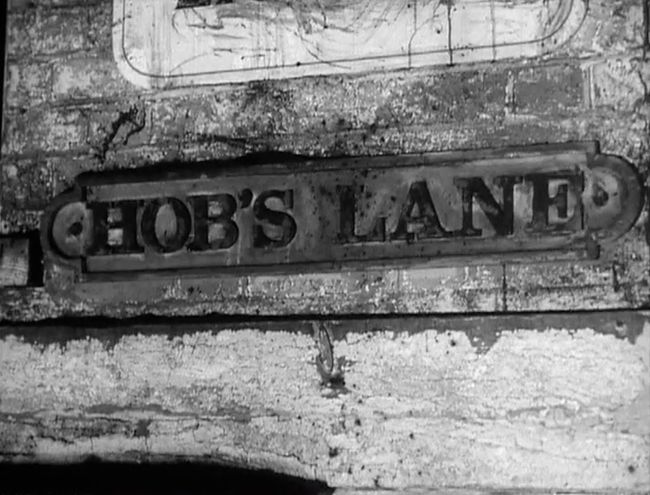
One of the key criticisms of theories surrounding the genre Folk Horror is its emphasis upon the rural landscape. How can a genre really encompass such rural horror films as Witchfinder General (1968) and The Wicker Man (1973) while also discussing more urban-set horrors such as Quatermass and the Pit (1967)? While key works of Folk Horror cinema seem to broadly focus on rural landscapes to set … Continue reading The Urban Wyrd

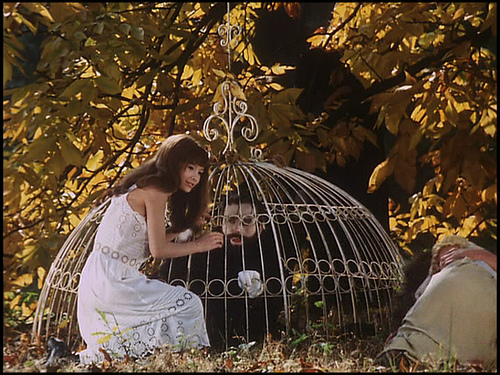
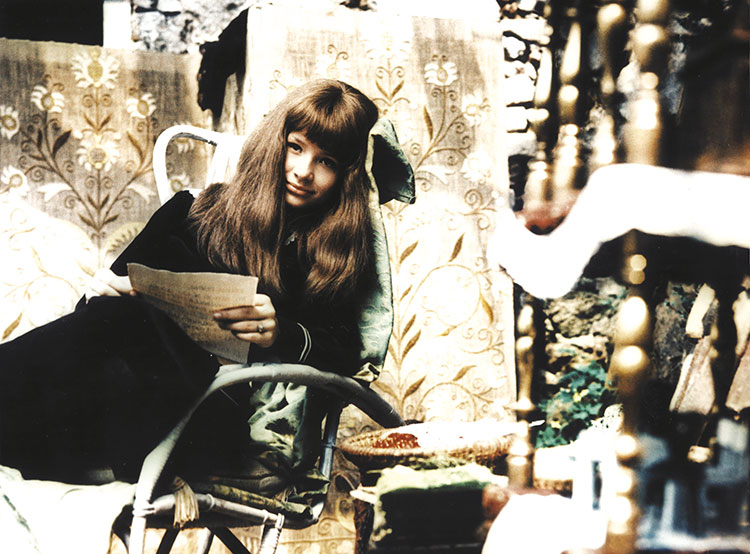
Valerie And Her Week Of Wonders (1970) – Duality Through Sound and Vision (Part 3).

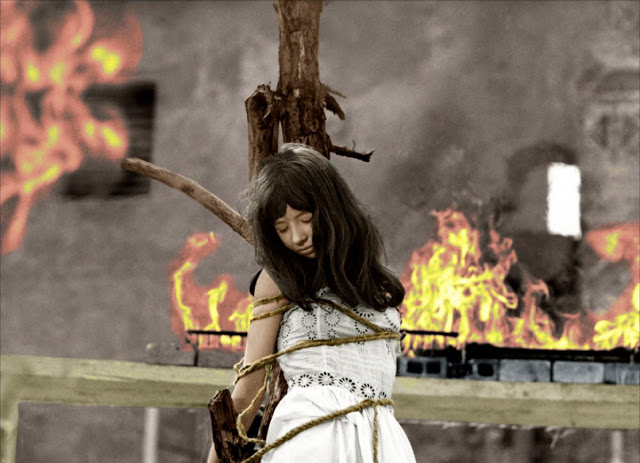
Part 1. Part 2. Belief And Ritual. The power of belief and its will in the distortion of reality is one of Valerie‘s more crucial cinematic aspects.  This isn’t simply a belief in the sense of a religious doctrine and all of the aesthetics that accompany it, but the moral belief of the main character whose fantasies dictate the narrative ruptures within the film.  However, … Continue reading Valerie And Her Week Of Wonders (1970) – Duality Through Sound and Vision (Part 3).

Questioning Nostalgia In Folk Horror.

As the Folk Horror canon expands into more forms of media and territory, the Folk Horror Chain becomes less useful as a tool for looking at thematic material.  This is partly due to it being derived as an idea from one medium and one that is explicitly narrative based.  Yet, some of its ideas can be loosely translated into the area of reception studies of … Continue reading Questioning Nostalgia In Folk Horror.

Valerie And Her Week Of Wonders (1970) – Duality Through Sound And Vision (Part 2).

Part 1. Innocence and Sexuality. As already suggested, Valerie is first and foremost about the links, barriers and cross-over between innocence and sexuality.  Whilst some characters (for example, the religious fundamentalists), believe there to be a strict differentiation between the two, the film and Valerie herself know that this is not the case; if anything, it is the watermark of the patriarchy that such a … Continue reading Valerie And Her Week Of Wonders (1970) – Duality Through Sound And Vision (Part 2).

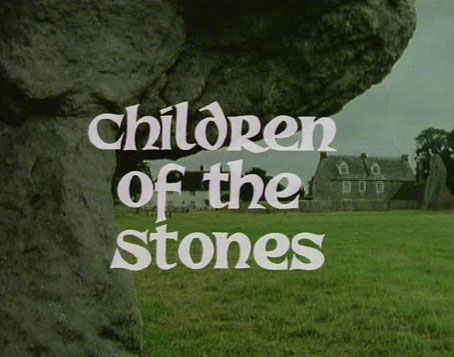
Interview With Jeremy Burnham (Children Of The Stones, 1977).

Alongside Trevor Ray, Jeremy Burnham co-created the fantastical Folk Horror drama, Children Of The Stones (1977). Now considered a key text in 1970s Folk Horror and possibly one of the scariest programs ever conceived for children, I caught up with Jeremy to ask him about the ideas behind the show, the process of filming it and its subsequent novelisation. Where did the initial ideas for … Continue reading Interview With Jeremy Burnham (Children Of The Stones, 1977).

The Ritual Of Craft In Folk Horror.

With the ideas of the Folk Horror Chain starting to seem incomplete as the sub-genre grows in popularity and is more analysed, it’s about time further facets, themes, ideas and traits were added to the conversation.  This will be the first in a number of pieces about other traits not accounted for or addressed in the initial idea of the chain (which itself was only … Continue reading The Ritual Of Craft In Folk Horror.

Valerie And Her Week Of Wonders (1970) – Duality Through Sound and Vision (Part 1).

Valerie And Her Week Of Wonders (1970) – Duality Through Sound and Vision. Jaromil Jireš’ Valerie And Her Week Of Wonders (1970) is a cornucopia of images and sound.  Its vision is of a complex blossoming of sexuality amidst the visual and thematic realisations of a Freudian dreamscape, driven primarily by the lack of understanding and misinterpretation caused by social naivety.  The narrative rarely ascends to … Continue reading Valerie And Her Week Of Wonders (1970) – Duality Through Sound and Vision (Part 1).

Short Film – Weirdstone (For Alan Garner).

“It is for this reason that we find that co-existence, which could neither be in time alone, for time has no contiguity, nor in space alone, for space has no before, after, or now, is established through matter.” (p.12, 1891) – Schopenhauer, The World As Will And Idea Volume 1. It seems fitting to open with this quote from Schopenhauer when discussing the themes behind … Continue reading Short Film – Weirdstone (For Alan Garner).

Fear of the Outsider in Quatermas II

The characters of Nigel Kneale’s work rarely like an outsider. The drama of his plays is often built around small groups of people at odds with some concept of an outsider. The oppositional group will be diametrically opposed for a variety of reasons; sometimes for more pulp tendencies such as aliens in a space invasion scenario, but also more recognisable images of townspeople entering closed … Continue reading Fear of the Outsider in Quatermas II

The Ancient And The Otherworldly In Lucifer Rising (1970) – Kenneth Anger.

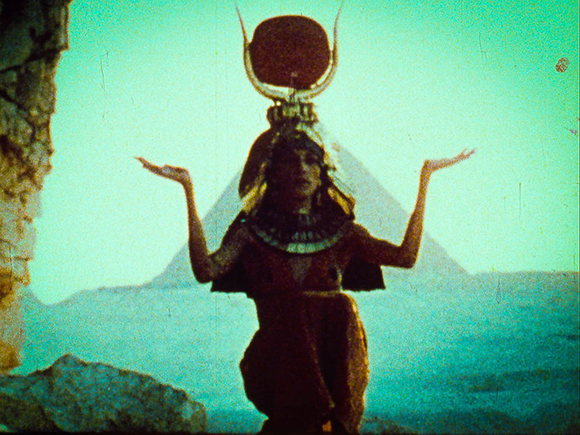
Much has been written about Kenneth Anger’s final counter-culture outpouring, Lucifer Rising.  So often the discussion of its history, its constantly evolving final form, and its links with Charles Manson’s “Family”, overshadow the real thematic content of the short film.  Whilst all of these elements are of great interest, especially in regards to Bobby Beausoleil’s score which seems highly prescient in the context of his … Continue reading The Ancient And The Otherworldly In Lucifer Rising (1970) – Kenneth Anger.