Sex and the Landscape

Once I loved a man who was a lot like the desert, and before that I loved the desert. – Rebecca Solnit Late last year, I watched two films back-to-back that effectively spoke of one very particular theme. Viewing Michelangelo Antonioni’s Zabriskie Point (1970) followed by Dennis Hopper’s directorial debut The Last Movie (1971) highlighted a number of unavoidable connections between the films. Both films … Continue reading Sex and the Landscape

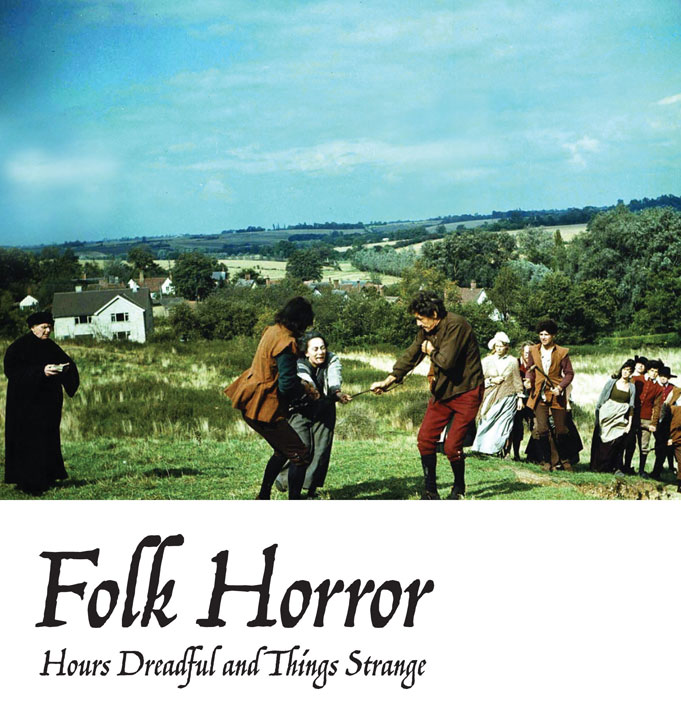
Folk Horror: Hours Dreadful and Things Strange (January, 2017)

As recently announced, I have a book being released in January all about Folk Horror and its many related areas of interest.  The book has been in the works for the last year or so though many of the arguments within have been growing now for several years.  Though I’ll undoubtedly being doing the usual interview-esque things to coincide with the release in December and … Continue reading Folk Horror: Hours Dreadful and Things Strange (January, 2017)

Interview: John Rogers on London Overground and Psychogeography.

John Rogers has been one of the most prominent psychogeographical writers and filmmakers of the last decade.  Fiercely independent and with a strong DIY sensibility towards his creative responses to London, his work is a vital component and documentation of a city still in a phase of hyper-development and gentrification.  Ahead of his adaptation/response to Iain Sinclair’s most recent book, London Overground, I met up … Continue reading Interview: John Rogers on London Overground and Psychogeography.

Wanders: The Magnet and The Last Resort (New Brighton).

As a last hurrah of being on Merseyside before moving, I decided to revisit a place just down the road from where I’d lived on The Wirral; armed with a desire to dig up some of its surprising past glories.  I’ve been going to the seaside resort of New Brighton for as long as I can remember, often as a place to sit off and … Continue reading Wanders: The Magnet and The Last Resort (New Brighton).

Place and Youth in Margaret Tait’s A Portrait Of Ga (1952)

“My mother lives in the windy Orkney Islands.  It’s certainly a wonderful place to be brought up in.” In making a short film about her mother, Scottish experimental filmmaker Margaret Tait also explored the interesting relationship between place and youth. In A Portrait of Ga (1952), a 4 minute short film shot on 16mm with a voice-over by the filmmaker, a fragment of biography becomes … Continue reading Place and Youth in Margaret Tait’s A Portrait Of Ga (1952)

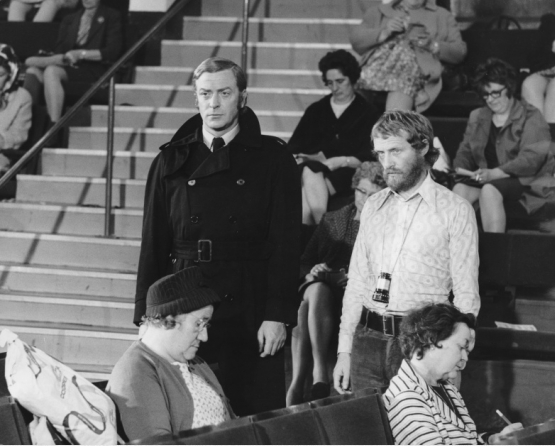
Interview: Mike Hodges on Get Carter (1971).

Mike Hodges’ debut feature film, Get Carter (1971), was one of the key shifts in British cinema of the period.  With its total lack of hope, an earnest presence of violence and a hugely detailed topography, the film is one of the definitive shifts to the more gritty, unremitting cinema produced in the early Heath years alongside the likes of Stanley Kubrick’s A Clockwork Orange … Continue reading Interview: Mike Hodges on Get Carter (1971).

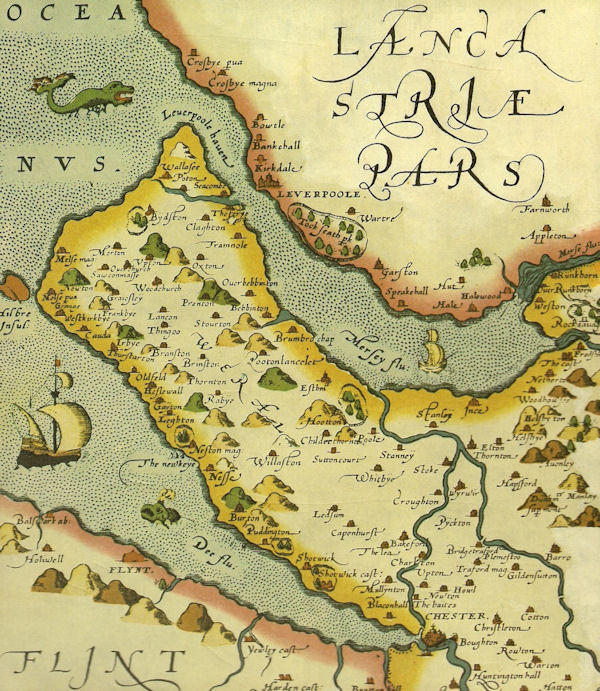
“Wyrd” Wirral – Spirits Of Place (02/04/2016)

This is an edited version of the paper given at Spirits Of Place in Calderstones Park, Liverpool 02/04/2016.  My thanks to John Reppion and Leah Moore for organising the event and for to the other excellent speakers (Gill Hoffs, David Southwell, Gary Budden, Kenneth Brophy, Richard Macdonald, Ian “Cat” Vincent and Ramsey Campbell).  Here’s to the next one. There is strange landmass on the opposite … Continue reading “Wyrd” Wirral – Spirits Of Place (02/04/2016)

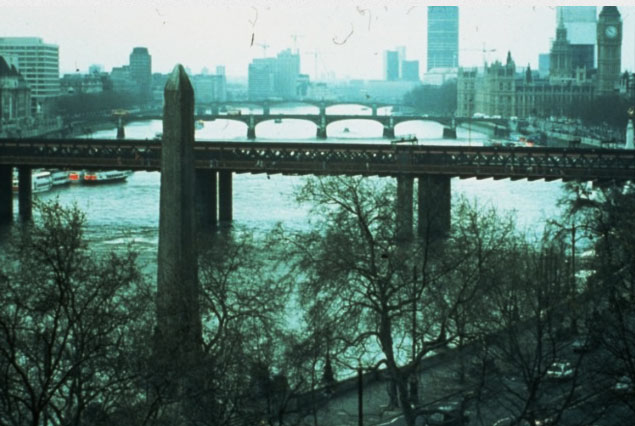
Stasis In London (1994) – Patrick Keiller.

On watching all of Patrick Keiller’s “Robinson” trilogy of films recently, it struck home how effectively stillness within a visual frame can traverse the geographical plain and recreate a journey that is both political and sociological.  This, of course, goes to the heart filmmaking itself, the relationships with cuts especially and its portrayal of time, space and movement within a diegetic reality all being key … Continue reading Stasis In London (1994) – Patrick Keiller.

The Nowhere Road in The Discreet Charm Of The Bourgeoisie (1972)

The Discreet Charm Of The Bourgeoisie (1972) is a perfect example of a narrative film fragmenting into surreal dreamscapes. From its title alone, Luis Buñuel’s obvious target is middle-class idolatry but, for a film full of incredibly stark images, there is one visual motif which stands out from the other surrealist political attacks. Discreet is punctuated, whether in dreams or reality (or perhaps both), by … Continue reading The Nowhere Road in The Discreet Charm Of The Bourgeoisie (1972)

Ghosts in the Ice

On finishing W.G. Sebald’s novel The Emigrants (1992), it felt as if some loose connection to a recent film or book was left hanging mid-air. The narrative of Sebald’s novel is split into the stories of four émigrés, all seemingly interconnected by a multitude of strange images but chiefly by their fleeing from the rise of Nazi Germany. The connection didn’t seem to be so … Continue reading Ghosts in the Ice