Ligeti’s Atmosphères as a Musical Foreshadowing of Kubrick’s 2001- Part 2 (The Musical Past)

Part 1. Musical Techniques of Atmosphères and Disassociations with the Past. “Seen from this angle, with Atmosphères I was consciously reacting against the refinement of serialism.  Musical texture in Atmosphères is also refined but in quite a different dimension.” -Ligeti (1983, p.38). Before even looking in any depth at the notational content of Ligeti’s Atmosphères, it becomes clear to the reader when looking over the … Continue reading Ligeti’s Atmosphères as a Musical Foreshadowing of Kubrick’s 2001- Part 2 (The Musical Past)

Under The Skin (Jonathan Glazer) – The Human Landscape.

This article contains minor spoilers. Jonathan Glazer’s Under The Skin (2013) is a film that is structured around the different landscapes and their collected norms to such an extent that it comes to resemble a strange, erotic and surreal travelogue.  While the film’s ambiguous nature is one of its defining features, its portrayal of specific locations and, vitally, their effect on the people within them, … Continue reading Under The Skin (Jonathan Glazer) – The Human Landscape.

Elemental Chaos and Eternal Return in Scriabin and Andrei Tarkovsky – Part 2 (Chaos)

Part 1. Elemental Chaos. “The Mountains, Fields, Meadows, Forest, and Wilderness of the Preparatory Act text symbolize the mineral kingdom and natural kingdoms of the Earth, the first three “Rounds” of the Wheel of Cosmic life.” (1998, p.303) – Stephen Morris. It is not revolutions and upheavals That clear the road to new and better days, But revelations, lavishness and torments Of someone’s soul, inspired … Continue reading Elemental Chaos and Eternal Return in Scriabin and Andrei Tarkovsky – Part 2 (Chaos)

L’Avventura (Michelangelo Antonioni, 1960) – A Curious Distance.

For a film that, on the surface, appears to be held in such high regard, Michelangelo Antonioni’s L’Avventura (1960) seems to have distanced itself from a number of its audience.  While I often wish to adhere to the third person in criticism, this article cannot help but revert to a personal reception of the film and also refer to recent personal reflections shared online.  After … Continue reading L’Avventura (Michelangelo Antonioni, 1960) – A Curious Distance.

Ligeti’s Atmosphères as a Musical Foreshadowing of Kubrick’s 2001- Part 1 (Introduction)

Ligeti’s Atmosphères as a Musical Foreshadowing of Stanley Kubrick’s 2001: A Space Odyssey. Introduction. “First in Cologne in 1957 and later during my long stay in Vienna in the ’60s, I gradually evolved a musical style in which I abandoned structures conceived in terms of bars, melodies, lines and conventional forms.  In this respect my first two orchestral works, Apparitions and Atmosphères, are the most … Continue reading Ligeti’s Atmosphères as a Musical Foreshadowing of Kubrick’s 2001- Part 1 (Introduction)

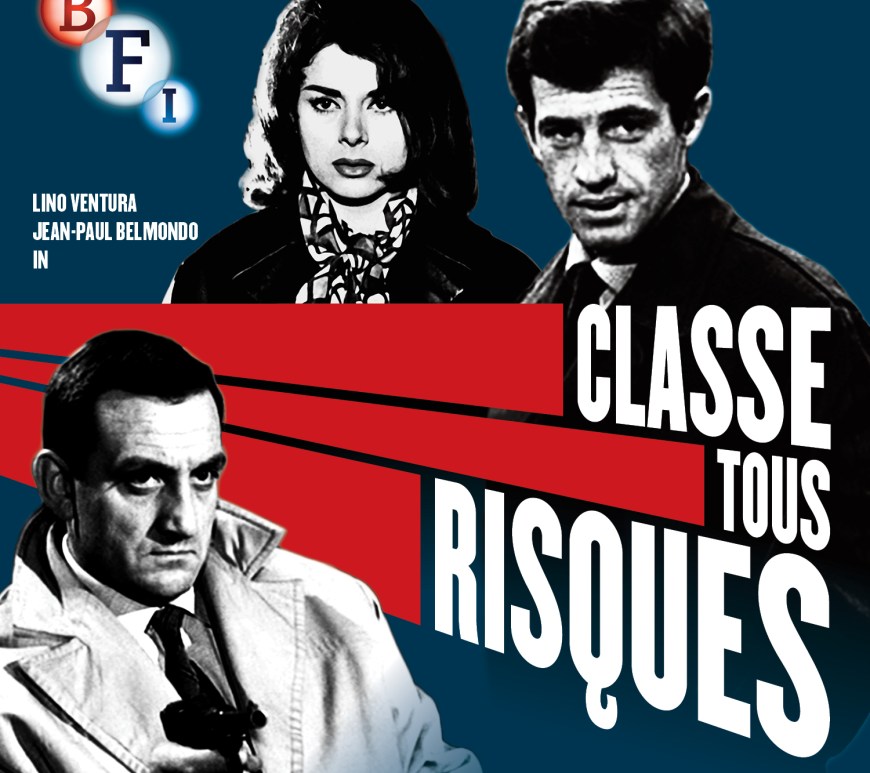
Classe Tous Risques (1960) – Claude Sautet (BFI)

In spite of working wearily outside of the French New Wave movement, Claude Sautet’s debut feature, Classe Tous Risques (1960), cannot help but evoke the cinematic environment bursting forth around it.  While it may seem crass to spend time discussing more well known work in an article about a director whose work has been largely ignored outside of his national audience, it should also aim … Continue reading Classe Tous Risques (1960) – Claude Sautet (BFI)

Forest (Short Film) and A Screaming Breeze (Book).

For some time now I have been involved in a collaborative arts project with local illustrator and artist Katie Craven.  Before the first stage of the project could be unleashed onto the unsuspecting public, the project collapsed in on itself thanks to a Belgian art gallery among other things.  To show just how close it got to being finished, there’s even a stop press advert … Continue reading Forest (Short Film) and A Screaming Breeze (Book).

Eroticism in the Music of Béla Bartók – Part 6 (Kubrick and Conclusions).

Part 1. Part 2. Part 3. Part 4. Part 5. Music for Strings, Percussion and Celesta in Stanley Kubrick’s The Shining (1980). Though not as fuelled by repression and eroticism as The Miraculous Mandarin, Music for Strings, Percussion and Celesta also made the slight transition from eroticism to horror.  With its use on Doctor Who, the very basic groundwork for the piece was laid for … Continue reading Eroticism in the Music of Béla Bartók – Part 6 (Kubrick and Conclusions).

Elemental Chaos and Eternal Return in Scriabin and Andrei Tarkovsky – Part 1 (Introduction)

Elemental Chaos and Nietzsche’s Eternal Return in the Music of Alexander Scriabin and the Films of Andrei Tarkovsky. Introduction “It is as natural to die as to be born; and to a little infant, perhaps, the one is as painful as the other.” (1625/2002, p.344) – Francis Bacon. The cyclic nature of life and the process of destruction and rejuvenation has been a subject of … Continue reading Elemental Chaos and Eternal Return in Scriabin and Andrei Tarkovsky – Part 1 (Introduction)

Peeping Tom (Michael Powell,1960) – Aural Perspectives of Murder.

In spite of its very energetic reappraisal and various analyses, Michael Powell’s career destroying masterpiece, Peeing Tom (1960), is a film whose musical eccentricities and sound design contain hidden depths. For a film that appears on the surface to be almost excessively Freudian, this was normal yet, when looking at some of the detailed reappraisals and even some of the high-end re-evaluations of its narrative … Continue reading Peeping Tom (Michael Powell,1960) – Aural Perspectives of Murder.