

I recently finished a draft of a novel which follows a lone woman mentally cast adrift by the news of her father’s suicide. Her grief manifests in a strange obsession with the town of Strasbourg where she decides on a whim to stay over the winter. In one part of the novel, my character looks into the concept of Fernweh, though really it was as much for my benefit as for hers.
The concept, roughly speaking, is the feeling of those who feel the need to travel and not feel attached to home, even though home is where everyone at some points ends up. It is neither an opposite of unheimlich nor simply another way of addressing wanderlust; its twee and optimistic cousin. Instead, it is somewhere in between and not always in a positive psychological position.
In my book, this feeling is negative, and I believe that the momentary characterising of the term as such came for me when watching Éric Rohmer’s film The Green Ray (1986) during the writing.
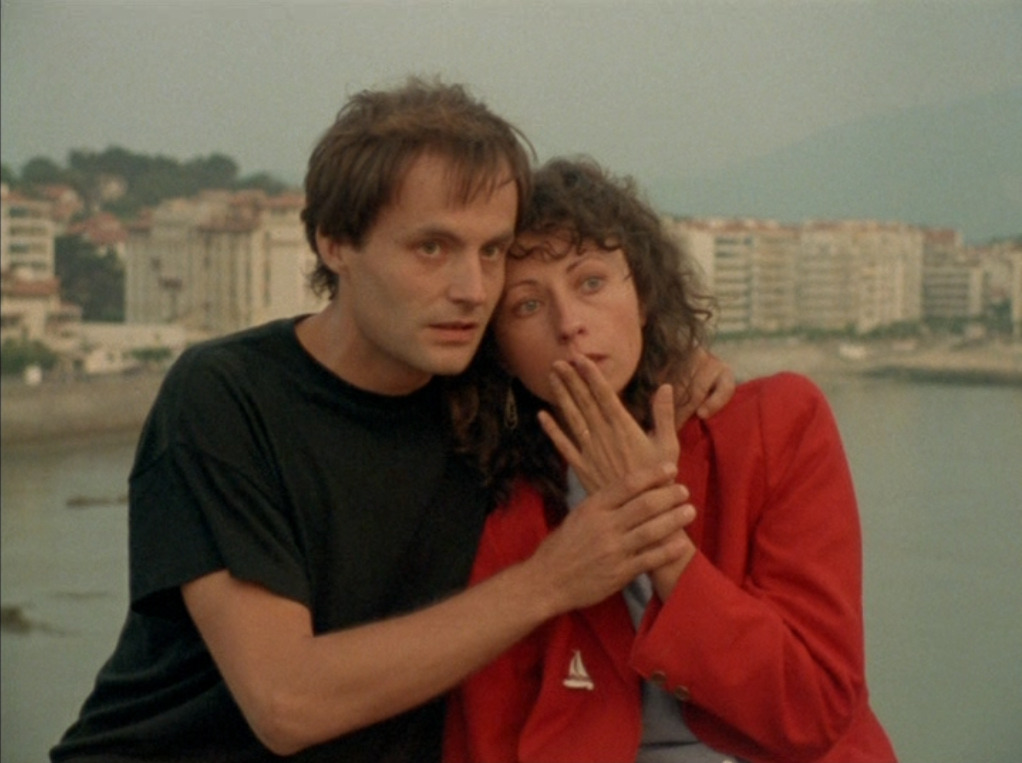
Rohmer’s film follows a young, nervous woman called Delphine (Marie Rivière) who has been left hanging in more ways than one. It is summer, and all of her plans to travel are in tatters. Her relationship has recently collapsed and her best friend has dropped her from their planned trip to Greece as she has a new boyfriend she wants to take instead. The film follows Delphine on her three attempts to get away from Paris to various differing holiday destinations before reluctantly admitting defeat and returning earlier than planned each time.
She is first stuck awkwardly with a group of couples near the sea and is unable to fit in. She then visits the Alps but is put off by busy tourists. Her final trip to a beach resort finds her frustrated at the role she is forced into as a lone woman on holiday. Even Paris is unable to satiate her changing emotions in between; the need to get away growing again each time.
The film then jumps track to her final failed holiday departure back to Paris where she meets a man she instantly connects with. She decides to travel with him and finally sees ‘the green ray’; a rare optical phenomenon that sometimes occurs just before the sun rises or sets where a green spot or flash can be seen. The ray has esoteric qualities, with Delphine having earlier overheard a conversation about Jules Verne’s writing on the subject.
In the film’s final moments, she cries at the sight of this light and a whole host of emotions and realisations overwhelm the character. It is one of Rohmer’s strongest, most beautiful conclusions.
However, the mentality that led up to her seeing green ray itself is more interesting than the finale. Delphine spends most of her time feeling on edge, suffering from anxiety attacks as much as the frustrations at the mechanics of flirting when newly single. Single life seems pointless when fresh out of a long, serious relationship. The breaking of long term relationships renders the theatre of single life absurd (and vice-versa).
On paper, Delphine could be said to have wanderlust in very general terms but it is too optimistic to do justice to her worries and melancholy. Fernweh is far better diagnosis of Delphine’s state of mind.
She is detached enough from her home in Paris to drift. Anything is better than wasting the warm months in the city, and her break-up has coloured and changed Paris for her anyway. This drifting only returns her home out of unhappiness rather than a longing or homesickness. Unlike the travel blogging appropriation of wanderlust, with its Instagram friendly editing of travelled and filtered vistas, such actions fail to satisfy (and never really can satisfy) the sadness inside Delphine as she carries it with her.
It is only by chance that she meets someone, finally a man that doesn’t turn the pair of them into farcical performers in some elaborate game leading to empty sex. Chance hangs heavy over the film, embedded in the narrative via the overhearing of Verne’s folkloric interpretation of the ray.
The evolution from fernweh to wanderlust is the film’s last shift, but Delphine is still forced to look within herself in the film’s final moment of happiness and chance. Perhaps the tears are flowing at the realisation of further drifting to come.
In that moment, however, she rekindles briefly a youthful daring and chance, even if, by doing so, she is also looking back upon all of the mistakes and loneliness that led there. Finally finding a true escape is overwhelming, even if it only flashes for a second as the sun sets.
 Celluloid Wicker Man