
I was wandering around the National Gallery recently when I came across Jan Trek’s Still Life (1648) and its wonderful rendering of ephemera. Within it sits a skull, some books, manuscripts, the helmet of a suit of armour and other such seemingly random objects. I had been thinking about similar paintings for some time, not least because several books of interest (specifically Robert Burton’s The Anatomy of Melancholy and La Rochfoucauld’s Maxims) had used similar Vanitas paintings of such objects for their cover artwork. The paintings are part of a visual collection of works which examine the transience of life and the absurdity of worldly possessions by placing a variety of objects into a chaotic combination of textures and contrasts. The paintings are dealing with the same themes (the “Vanity of vanities” as the term was coined from Ecclesiastes) but, aside from concluding that it was an ideal I wanted myself to transpose onto my own writing in particular, I began to think of how other forms, especially film, had addressed this. The first name that came to mind after some time was Margaret Tait.
Tait’s work has often sought poetry in the most everyday of places. The rooms of her house, the streets in the cities where she lived, and even her own family members were all quaint raw material for working in a playful form of portraiture. Her work is akin to that of a diarist in its earnest capture of the world around her, building an incredibly intimate portrait of herself over a number of short films. Searching through her films available online, especially on the excellent Moving Image archive, I came across her short film My Room (1951), which seems to get close to a more innocent sense of Vanitas, acknowledging the portrait that could be created by showing the objects we choose to have around us.
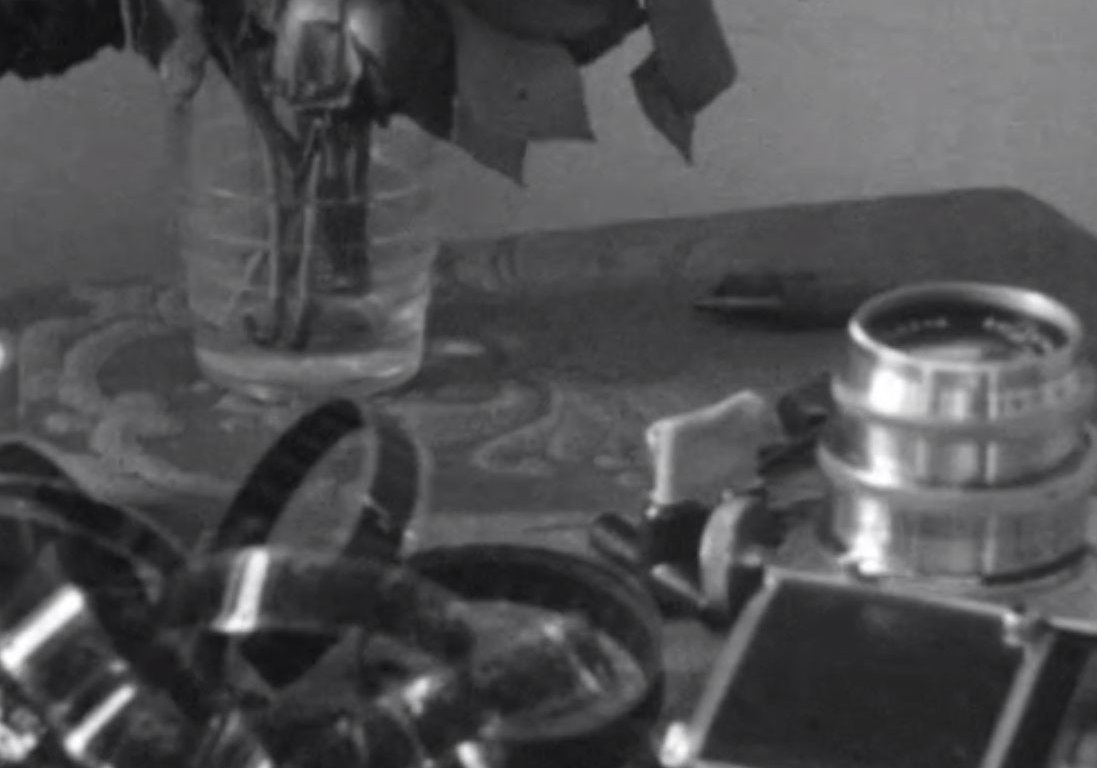
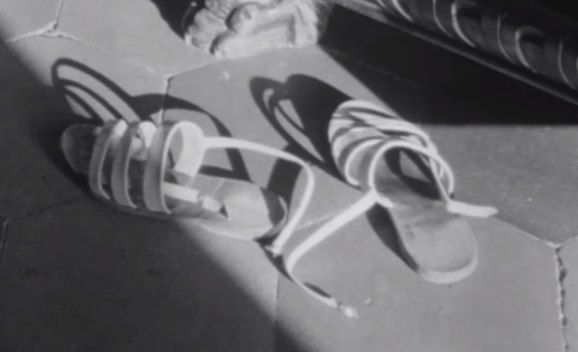
My Room is a very short film indeed, barely hitting the two minute mark, and yet I find something wordlessly interesting in it, perhaps more so than her longer films, especially those which overtly poeticise the visuals via voice-over. The film is one of her earliest works, made when she was a student in Rome and probably merely an experiment to test out the newly acquired 16mm camera rather than to explore anything specifically thematic. Yet Tait accidently captures herself in filming the objects of her room even if it really is just a camera test. She opens with filming her possessions; a pile of books sat on top of a multitude of suitcases. Already we know that the space we’re in is either that of a traveller or someone who is far from home. Her time in the place is clearly transient. The place is warm as there are sandals on the floor with sun streaming onto the tiles. Cans of film, photographic and 16mm stock, is equally piled up while an editing machine, marker pencils and even a dark-room bulb can all be seen. It’s the cinematic equivalent of a portrait of an artist as a young woman if anything.
The film reels spool out into bands, almost resembling flowers kept in jars and on tables. It’s as chaotic as any of the Vanitas paintings, albeit without the skulls or other ominous signs of death. The difference is that, within the moving image, the sense of loss found in the paintings is virtually impossible to recreate. The movement alone breathes life into the images; especially in the sense that Tait has just filmed her room in the middle of the day with objects sat around as they are (and in use). There isn’t the feeling that the owner of such objects has died, unlike in the Vanitas paintings which heavily imply that the owner of such objects (usually the skull) is now part of the vast collection of things that they gathered in their lifetime, merely reduced to another curio gathering dust.
I think Tait comes as close as any filmmaker to exploring the Vanitas potential in film even if only by accident and by highlighting why the medium doesn’t quite fit the form. Like so many of Tait’s films, life is there being lived to its fullest. It’s not backwards looking nor concerned with anything but the now (the best example of this being A Portrait of Ga). It instead gives a sense of vitality to her work, that the filming was essentially “of the moment” so as to capture the rhythm of being alive as much as for any sense of prosperity. Looking backwards comes afterwards in Tait’s work, never influencing the moment when it was made. La Rochefoucauld wrote that ‘Neither the sun nor death can be looked at with a steady eye.’ Such a statement highlights the considerations that underpin Vanitas paintings perfectly. For an artist like Tait, however, neither aspect is given consideration and why should it have when the sun gleamed so warmly and happily on the terracotta tiles of a Rome apartment that morning?
 Celluloid Wicker Man