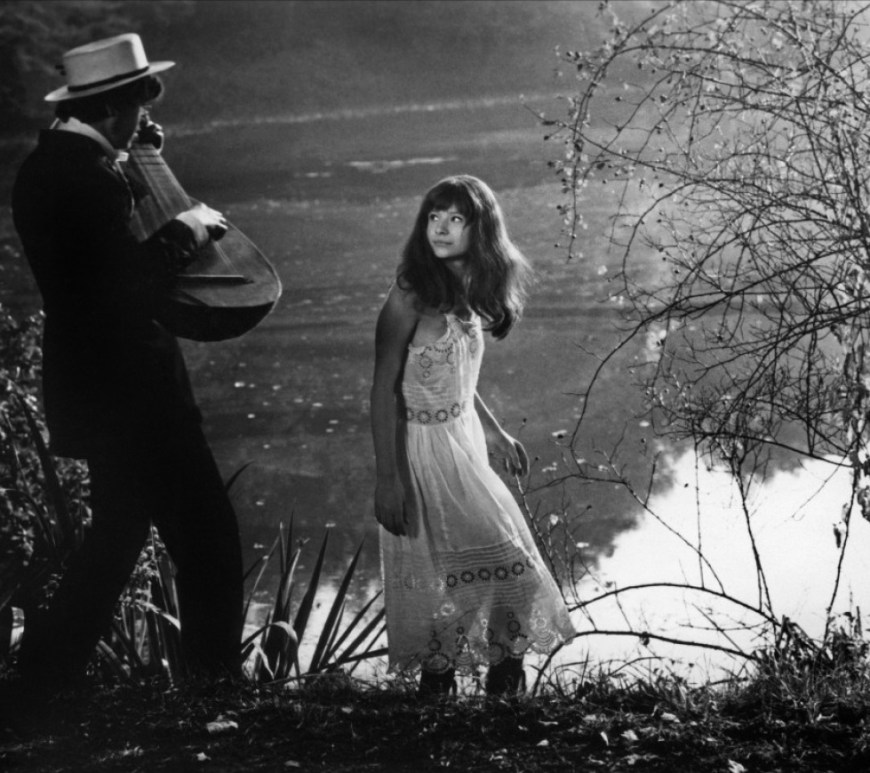
Valerie And Her Week Of Wonders (1970) – Duality Through Sound And Vision (Part 4).

Part 1. Part 2. Part 3. Conclusions. Whilst this essay has attempted to be as detailed as possible in its readings of Valerie And Her Week Of Wonders, there’s little doubt that covering every aspect of the film would be an infinite task.  Three aspects have been considered quite deliberately in order to show the strong musical framework in which the film is built upon but … Continue reading Valerie And Her Week Of Wonders (1970) – Duality Through Sound And Vision (Part 4).

Philip Larkin’s Spirit in Requiem For A Village (1976)

I thought it would last my time – The sense that, beyond the town, There would always be fields and farms, Where the village louts could climb Such trees as were not cut down; I knew there’d be false alarms – Going, Going, Philip Larkin. Above is the opening stanza of Philip Larkin’s 1972 poem, Going, Going. The poem captures the sense of a world being lost. The … Continue reading Philip Larkin’s Spirit in Requiem For A Village (1976)

The Urban Wyrd

One of the key criticisms of theories surrounding the genre Folk Horror is its emphasis upon the rural landscape. How can a genre really encompass such rural horror films as Witchfinder General (1968) and The Wicker Man (1973) while also discussing more urban-set horrors such as Quatermass and the Pit (1967)? While key works of Folk Horror cinema seem to broadly focus on rural landscapes to set … Continue reading The Urban Wyrd

Valerie And Her Week Of Wonders (1970) – Duality Through Sound and Vision (Part 3).

Part 1. Part 2. Belief And Ritual. The power of belief and its will in the distortion of reality is one of Valerie‘s more crucial cinematic aspects.  This isn’t simply a belief in the sense of a religious doctrine and all of the aesthetics that accompany it, but the moral belief of the main character whose fantasies dictate the narrative ruptures within the film.  However, … Continue reading Valerie And Her Week Of Wonders (1970) – Duality Through Sound and Vision (Part 3).

Questioning Nostalgia In Folk Horror.

As the Folk Horror canon expands into more forms of media and territory, the Folk Horror Chain becomes less useful as a tool for looking at thematic material.  This is partly due to it being derived as an idea from one medium and one that is explicitly narrative based.  Yet, some of its ideas can be loosely translated into the area of reception studies of … Continue reading Questioning Nostalgia In Folk Horror.

Valerie And Her Week Of Wonders (1970) – Duality Through Sound And Vision (Part 2).

Part 1. Innocence and Sexuality. As already suggested, Valerie is first and foremost about the links, barriers and cross-over between innocence and sexuality.  Whilst some characters (for example, the religious fundamentalists), believe there to be a strict differentiation between the two, the film and Valerie herself know that this is not the case; if anything, it is the watermark of the patriarchy that such a … Continue reading Valerie And Her Week Of Wonders (1970) – Duality Through Sound And Vision (Part 2).

The Ritual Of Craft In Folk Horror.

With the ideas of the Folk Horror Chain starting to seem incomplete as the sub-genre grows in popularity and is more analysed, it’s about time further facets, themes, ideas and traits were added to the conversation.  This will be the first in a number of pieces about other traits not accounted for or addressed in the initial idea of the chain (which itself was only … Continue reading The Ritual Of Craft In Folk Horror.

Valerie And Her Week Of Wonders (1970) – Duality Through Sound and Vision (Part 1).

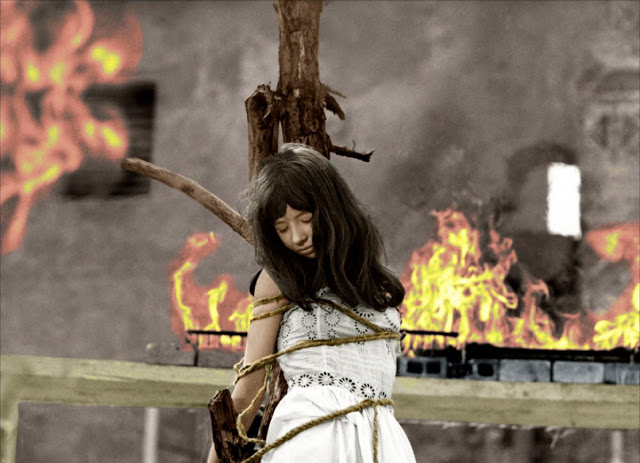
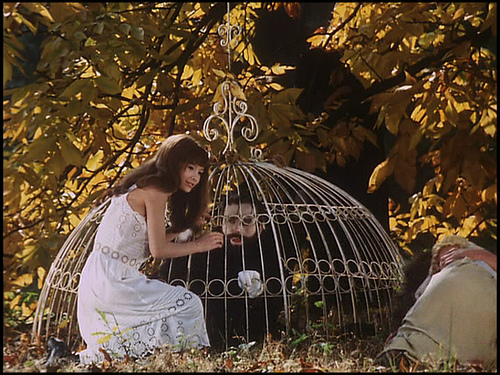
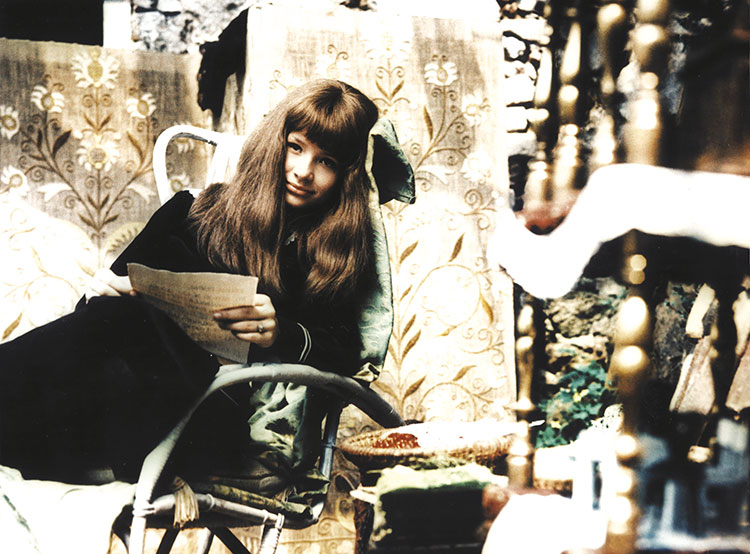
Valerie And Her Week Of Wonders (1970) – Duality Through Sound and Vision. Jaromil Jireš’ Valerie And Her Week Of Wonders (1970) is a cornucopia of images and sound.  Its vision is of a complex blossoming of sexuality amidst the visual and thematic realisations of a Freudian dreamscape, driven primarily by the lack of understanding and misinterpretation caused by social naivety.  The narrative rarely ascends to … Continue reading Valerie And Her Week Of Wonders (1970) – Duality Through Sound and Vision (Part 1).

The Aural Aesthetics Of Ghosts in BBC Ghost Stories – Part 9 (Conclusions).

Part 1. Part 2. Part 3. Part 4. Part 5. Part 6. Part 7. Part 8. Conclusions. “If its central characteristics remained immune to change, the ghost story did keep pace with the times through progressive modernization of settings and language.” – Cox (xix, 1991). From analysis of the BBC Ghost Stories, it is clear that the narrative function of the supernatural has a natural … Continue reading The Aural Aesthetics Of Ghosts in BBC Ghost Stories – Part 9 (Conclusions).

Technological Hysteria in Nigel Kneale’s The Stone Tape (1972).

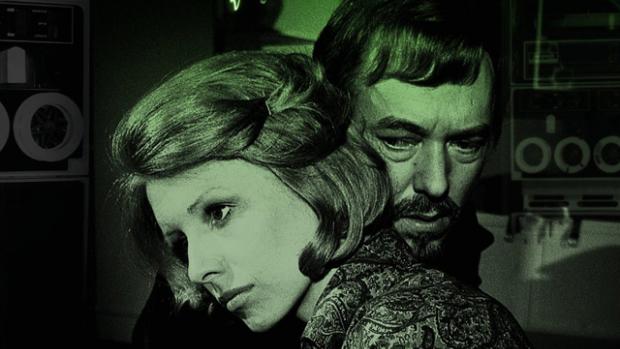
The following article contains plot twists. Hysteria and Nigel Kneale’s Baby. A very particular and often quoted segment from Freud’s summations of hysterical patients will be used here to begin the contextualisation our analysis.  Whilst writing about the generalities surrounding such cases of hysteria and eventually compulsion neurosis, Freud came up with a short but rather useful sound-bite to describe every patient he had seen.  … Continue reading Technological Hysteria in Nigel Kneale’s The Stone Tape (1972).