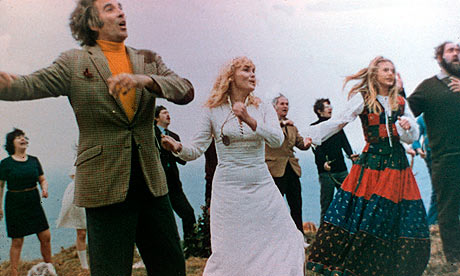
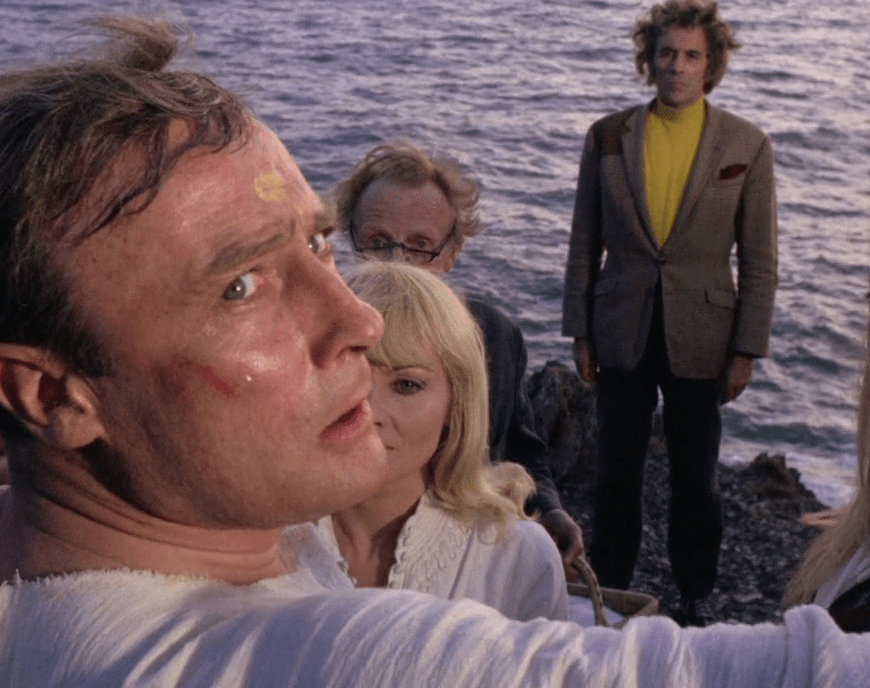
Hysteria and Curses in Nigel Kneale’s Baby (Beasts, 1976).

When watching Nigel Kneale’s infinitely weird TV series, Beasts (1976), there’s a great sense of underlying currents behind what appear to be strange amalgamations of the everyday with something of the Other.  Though the links between the episodes are often animalistic, ranging the ghost of a dolphin in Buddyboy to the hoards of rats in During Barty’s Party, the majority of the episodes all, at … Continue reading Hysteria and Curses in Nigel Kneale’s Baby (Beasts, 1976).

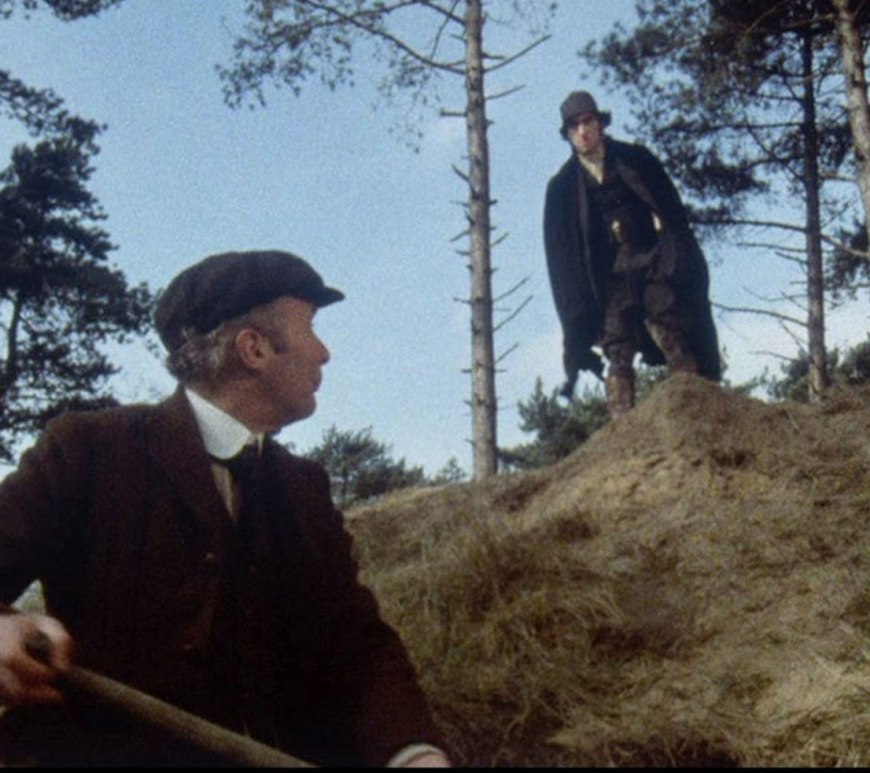
The Aural Aesthetics of Ghosts in BBC Ghost Stories – Part 6 (Excavation).

Part 1. Part 2. Part 3. Part 4. Part 5. Human Interaction With The Landscape And Its Soundscape. “The wind was bitter from the north, but was at his back when he set out for the Globe.  He quickly rattled and clashed through the shingle and gained the sand, upon which, but for the groynes which had to be got over every few yards, the … Continue reading The Aural Aesthetics of Ghosts in BBC Ghost Stories – Part 6 (Excavation).

Short Film – Tarot.

For my last film of the year, I wanted to put into practice some of ideas that I explored in my presentation at this year’s Folk Horror conference, held at Queens University Belfast in September.  I had already filmed the footage before I presented my paper (though didn’t get it developed until a good few weeks after that) but had already been forming the ideas … Continue reading Short Film – Tarot.

The Folk Horror Chain

The Folk Horror Chain The following is a rough transcript of a paper delivered at the A Fiend in the Furrows conference, held at Queens University, Belfast on the 20th of September, 2014. Introduction Folk horror is a strange form of media. There’s an unusual craving for defining and canonising in spite of being a sub-genre which seems inherently intuitive. This unusual combination of shared thematic … Continue reading The Folk Horror Chain

The Aural Aesthetics of Ghosts in BBC Ghost Stories – Part 1 (Introduction).

Manifesting The Supernatural: The Aural Aesthetics Of Ghosts In BBC Ghost Stories. Introduction. “When Monty first began to write them, with the intention of inducing a pleasing terror in his listeners, he did so as an avid and discerning reader and connoisseur of the genre, keenly aware of his precedents and of the characteristics, objectives, and limitations of the ghost story as he understood the … Continue reading The Aural Aesthetics of Ghosts in BBC Ghost Stories – Part 1 (Introduction).

The Music of Folk Horror – Part 8 (Conclusions).

Part 1. Part 2. Part 3. Part 4. Part 5. Part 6. Part 7. Conclusions From the analysis of only a handful of British folk horror films, it has been shown that they rely heavily on their music in order to achieve their full cinematic effect.  Altman states the following when discussing genre theory: “Constantly opposing cultural values to counter-culture values, genre films regularly depend on … Continue reading The Music of Folk Horror – Part 8 (Conclusions).

The Music of Folk Horror – Part 7 (Musical Anachronisms).

Part 1. Part 2. Part 3. Part 4. Part 5. Part 6. Musical Anachronisms – Naturally and Overtly. “Let’s just say there aren’t many films set in the reign of William and Mary in which the devil rebuilds his body by harvesting the skin of children…” (Gatiss, 2010, BBC). To address the presence of musical anachronisms in films of all types is a tricky subject … Continue reading The Music of Folk Horror – Part 7 (Musical Anachronisms).

The Music of Folk Horror – Part 6 (Blood on Satan’s Claw).

Part 1. Part 2. Part 3. Part 4. Part 5. Musical Avant-Garde and Overt Anachronisms in Blood on Satan’s Claw (1971). “I think the other thing that appealed to me was the rural setting.  The nooks and crannies of woodland, the edges of fields the ploughing, the sense of soil was something I tried to bring into the picture” –  Piers Haggard (Gatiss, 2010, BBC). … Continue reading The Music of Folk Horror – Part 6 (Blood on Satan’s Claw).

The Music of Folk Horror – Part 5 (The Wicker Man’s Diegesis).

Part 1. Part 2. Part 3. Part 4. Diegesis in The Wicker Man. Some of the music assessed in the last section raised further questions besides their thematic and narrative content.  Though this element was an important part of the analysis, another aspect almost appeared to be ignored; that of the diegesis of such performances.  For a horror film, The Wicker Man presents the viewer … Continue reading The Music of Folk Horror – Part 5 (The Wicker Man’s Diegesis).

The Music of Folk Horror – Part 4 (The Wicker Man’s Narrative Functionality).

Part 1. Part 2. Part 3. Narrative Functionality. The music of The Wicker Man, while having few boundaries in terms of the effect of its various functions on its narrative content, is split into several different types.  For this section, the specific type of music to be looked at is the folk song; a form that makes several appearance in the film with original compositions … Continue reading The Music of Folk Horror – Part 4 (The Wicker Man’s Narrative Functionality).