Protected: The Aural Aesthetics Of Ghosts in BBC Ghost Stories – Part 9 (Conclusions).
There is no excerpt because this is a protected post. Continue reading Protected: The Aural Aesthetics Of Ghosts in BBC Ghost Stories – Part 9 (Conclusions).

There is no excerpt because this is a protected post. Continue reading Protected: The Aural Aesthetics Of Ghosts in BBC Ghost Stories – Part 9 (Conclusions).
The following article contains plot twists. Hysteria and Nigel Kneale’s Baby. A very particular and often quoted segment from Freud’s summations of hysterical patients will be used here to begin the contextualisation our analysis. Whilst writing about the generalities surrounding such cases of hysteria and eventually compulsion neurosis, Freud came up with a short but rather useful sound-bite to describe every patient he had seen. … Continue reading Technological Hysteria in Nigel Kneale’s The Stone Tape (1972).

When watching Nigel Kneale’s infinitely weird TV series, Beasts (1976), there’s a great sense of underlying currents behind what appear to be strange amalgamations of the everyday with something of the Other. Though the links between the episodes are often animalistic, ranging the ghost of a dolphin in Buddyboy to the hoards of rats in During Barty’s Party, the majority of the episodes all, at … Continue reading Hysteria and Curses in Nigel Kneale’s Baby (Beasts, 1976).
There is no excerpt because this is a protected post. Continue reading Protected: The Aural Aesthetics of Ghosts in BBC Ghost Stories – Part 6 (Excavation).

For my last film of the year, I wanted to put into practice some of ideas that I explored in my presentation at this year’s Folk Horror conference, held at Queens University Belfast in September. I had already filmed the footage before I presented my paper (though didn’t get it developed until a good few weeks after that) but had already been forming the ideas … Continue reading Short Film – Tarot.

The Folk Horror Chain The following is a rough transcript of a paper delivered at the A Fiend in the Furrows conference, held at Queens University, Belfast on the 20th of September, 2014. Introduction Folk horror is a strange form of media. There’s an unusual craving for defining and canonising in spite of being a sub-genre which seems inherently intuitive. This unusual combination of shared thematic … Continue reading The Folk Horror Chain
There is no excerpt because this is a protected post. Continue reading Protected: The Aural Aesthetics of Ghosts in BBC Ghost Stories – Part 1 (Introduction).

Alone, alone, all, all alone, Alone on a wide wide sea! And never a saint took pity on My soul in agony. He despiseth the creatures of the calm, The many men, so beautiful! And they all dead did lie: And a thousand thousand slimy things Lived on; and so did I. – Samuel Taylor Coleridge, The Rime of the Ancient Mariner. Paul Wright’s debut … Continue reading For Those In Peril (Paul Wright, 2013) – The Reality of Lore.
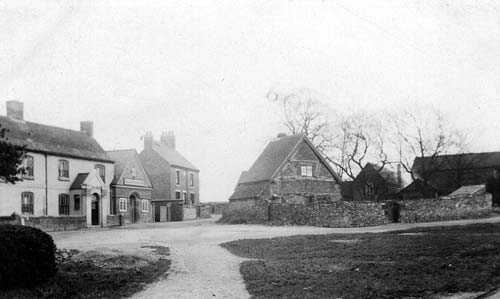
Mythological Introduction by Philip Larkin. A white girl lay on the grass With her arms held out for love; her goldbrown hair fell down her face, And her two lips move: See, I am the whitest cloud that strays Through a deep sky: I am your senses’ crossroads, where the four seasons lie. She rose up in the middle of the lawn And spread her … Continue reading Village Green Repression in Film, Television and Philip Larkin.
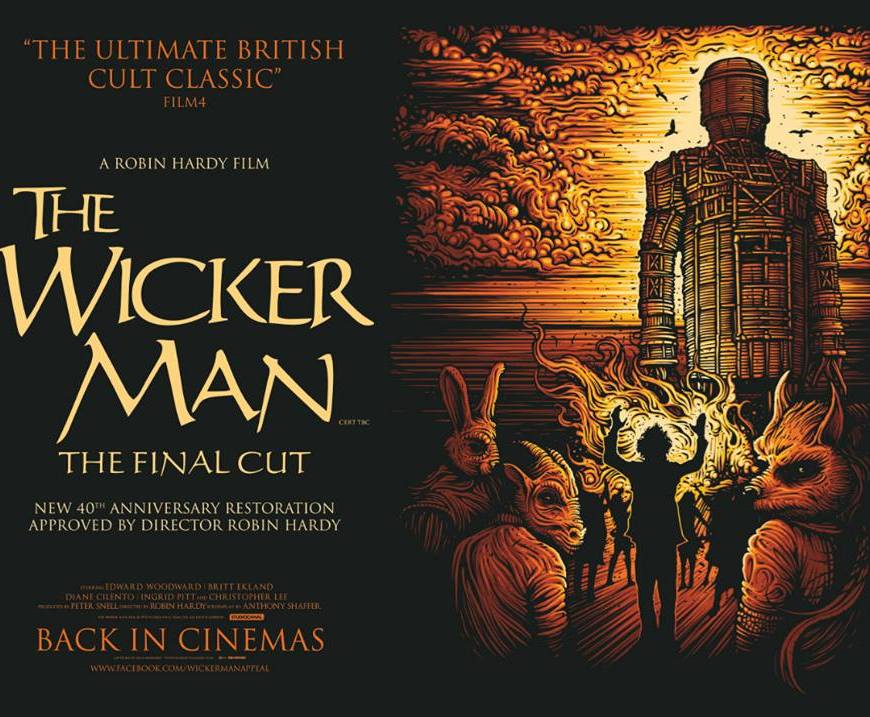
Its geography is stark, rugged and eerily inviting, its characters are sickly happy and lying through their teeth and its narrative is immersive and questioning to the point where its finale is deeply affecting and horrifying. It’s a crying shame that viewers of The Wicker Man (1973) will never fully see the film as its director intended. Having been slashed to bits by the studio … Continue reading The Wicker Man (1973) – Defining Of The Folk Horror.

 Celluloid Wicker Man