The Use of Sound & Music in British Working Class Film – Part 3 (British New Wave Cinema).

Part 1. Part 2. Metaphorical Music and British New Wave Film. “But who could describe the delicious sensation produced in me by the delicate harmony and angelic singing of that song which finally did! What an awakening, what bliss, what ecstasy when I opened my ears and my eyes together!” (Rousseau, 1781, p.294). British New Wave Film. The British New Wave movement, like so many … Continue reading The Use of Sound & Music in British Working Class Film – Part 3 (British New Wave Cinema).

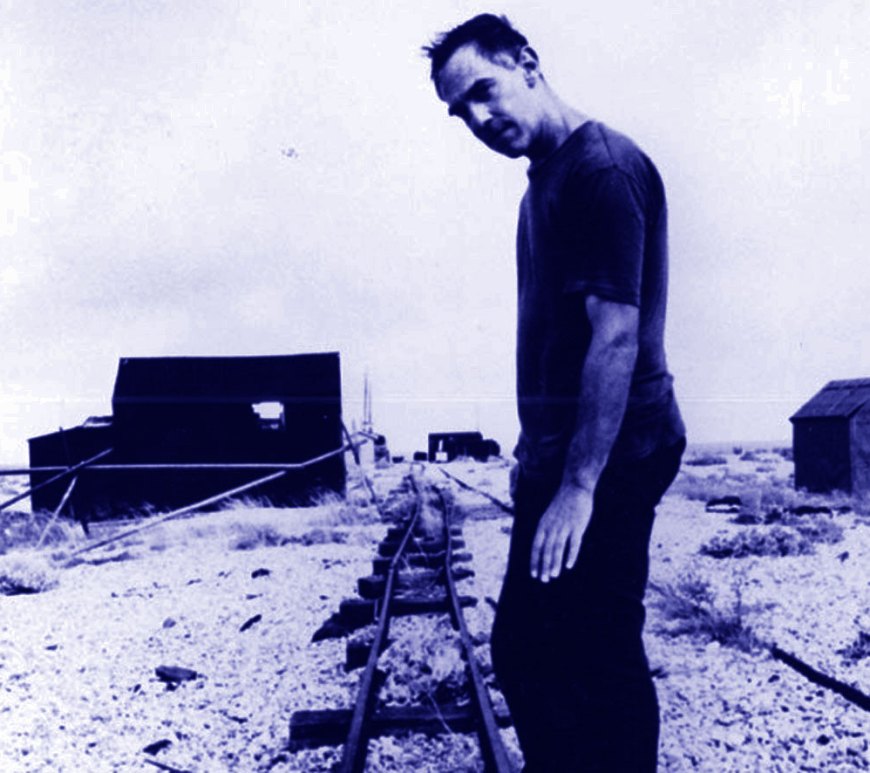
The Problematic Reception of Derek Jarman’s Blue – Part 2 (Early Forms of Blue)

Part 1 The Reception of Blue in its Original Forms. Blue in Written Form and Early Performances. “The difference between formalist and realist philosophies is not in the possibility of affecting the spectator but in what the cinema ought to do, its prescriptive work.  Cinema either organizes the world or duplicates the experience of perceiving of it for the spectator.” (Staiger, 1992, p.51) Though Blue … Continue reading The Problematic Reception of Derek Jarman’s Blue – Part 2 (Early Forms of Blue)

South Korean Film Scores and Ease of Distribution – Part 4 (Asia Extreme and Westernisation)

Part 1. Part 2. Part 3. Asia Extreme and the Westernisation of South Korean Film Music. The most popular avenue for South Korean cinema to enter the West, outside of the art-house festival circuit, is in the form that has loosely been dubbed “Asia Extreme”.  This isn’t just South Korean film but also Japanese cinema as well as a number of others.  The sub-genre is … Continue reading South Korean Film Scores and Ease of Distribution – Part 4 (Asia Extreme and Westernisation)

Berberian Sound Studio – Part 3 (Sound as Narrative and Conclusions).

Part 1 Part 2 Sound As Narrative The narrative ambiguity of Berberian begins to kick in during the last quarter of the film.  The sound within the narrative gradually eases over the line and starts to become part of the narrative affecting a number of the characters and not simply Gilderoy.  The first hint that the sound is entering reality comes when the previously abused … Continue reading Berberian Sound Studio – Part 3 (Sound as Narrative and Conclusions).

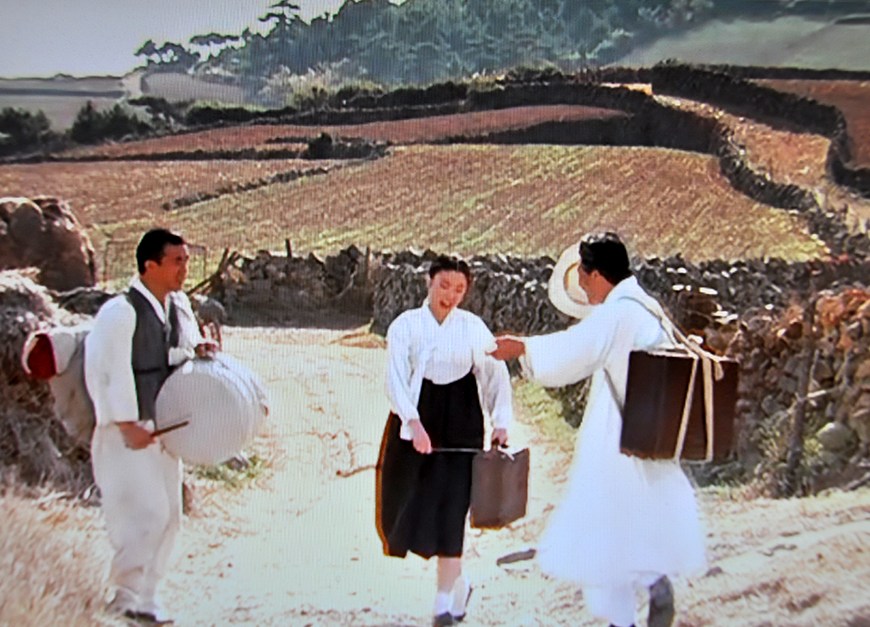
South Korean Film Scores and Ease of Distribution – Part 2 (Im Kwon-Taek and Seopyeonje).

Part 1. Im Kwon-Taek – Reluctant Traditionalist or Radical Experimenter? “Despite its ideological shortcomings and male-centred stance, Im’s cinematic sublimation of ‘Korean-ness’ still focuses on the contradictions between tradition and modernity among precarious lives existing on the periphery of a capitalist society.” (Lee, 2005, p.69) It is somewhat difficult to gage the cultural impact of a director’s films on a country outside of your own.  … Continue reading South Korean Film Scores and Ease of Distribution – Part 2 (Im Kwon-Taek and Seopyeonje).

The Problematic Reception of Sound And Vision in Derek Jarman’s Blue – Part 1 (Introduction).

When is a Film Not a Film? The Problematic Reception of Sound And Vision in Derek Jarman’s Blue. Introduction “I don’t think of myself as avant-garde. I think avant-garde died in the last revolution before the war.” – Derek Jarman (1994) For a director whose visual flair and heightened sense of style became a sickly, heady trademark of his work, Derek Jarman knew perfectly well … Continue reading The Problematic Reception of Sound And Vision in Derek Jarman’s Blue – Part 1 (Introduction).

The Use of Sound & Music in British Working Class Film – Part 2 (This Happy Breed – David Lean)

Part 1. Propaganda and David Lean’s This Happy Breed. “The war years saw a revival of English romanticism in response to the need for an idealized reaffirmation of British history and shared values (as perceived within the dominant ideology) and, on the other, for the release into fantasy and dream to relieve the stress, hardship, and agony of war.” (Wollen, 1993 p.41) David Lean’s 1944 … Continue reading The Use of Sound & Music in British Working Class Film – Part 2 (This Happy Breed – David Lean)

Sound And Music In Cinema About The British Working Class (Part 1).

Propaganda, Metaphor And Nostalgia:  Sound And Music In Cinema About The British Working Class. Introduction – Class and the Arts “The collective function of music has become transformed into the function of ensnaring the customer.” (Adorno, 1947, p.61). Class is an ever pervasive issue in British society. While manifesting into many forms around the world, the British flavour of delineation appears to draw the most … Continue reading Sound And Music In Cinema About The British Working Class (Part 1).

The Persistence of Modernity in Japanese Film Scores – Part 1 (Ozu, Tradition and Silent Film)

The Persistence of Modernity in Japanese Film Scores. Introduction The scores and music produced for Japanese cinema highlight a constant change of values within the country; a relationship rarely mirrored so accurately in the cinema of anywhere else.  Whereas the film scores of other countries can be looked at as a product of the trends and studio directions, the evolution and changes found within the … Continue reading The Persistence of Modernity in Japanese Film Scores – Part 1 (Ozu, Tradition and Silent Film)

David Lynch + Assimilation of Avant-Garde Aesthetics in Subversive, Mainstream Soundtracks (Part 1)

Introduction – The Boundaries Of Criteria. “He was the most original director in 1980s cinema, its only surrealist” – Mark Cousins on David Lynch (2004, p.394). The Avant-Garde is like a spark or a flash of quick-fire creative ideals.  The idea of Avant-Garde cinema is not so much to present an experience or escapism, but is there instead to quickly question the ideals of the audience … Continue reading David Lynch + Assimilation of Avant-Garde Aesthetics in Subversive, Mainstream Soundtracks (Part 1)