Peeping Tom (Michael Powell,1960) – Aural Perspectives of Murder.

In spite of its very energetic reappraisal and various analyses, Michael Powell’s career destroying masterpiece, Peeing Tom (1960), is a film whose musical eccentricities and sound design contain hidden depths. For a film that appears on the surface to be almost excessively Freudian, this was normal yet, when looking at some of the detailed reappraisals and even some of the high-end re-evaluations of its narrative … Continue reading Peeping Tom (Michael Powell,1960) – Aural Perspectives of Murder.

Eyes Wide Shut (1999) – Occult Sexuality

Strange undercurrents of sexuality pervade the films of Stanley Kubrick. Though not always present explicitly, the raw presence of dark desire and physical wanting seems scattered throughout his work. From Dr Strangelove‘s ideas of selective breeding based on the “sexual characteristics that will have to be of a highly stimulating nature” to The Shining‘s most surreal haunting of a man receiving oral sex from another … Continue reading Eyes Wide Shut (1999) – Occult Sexuality

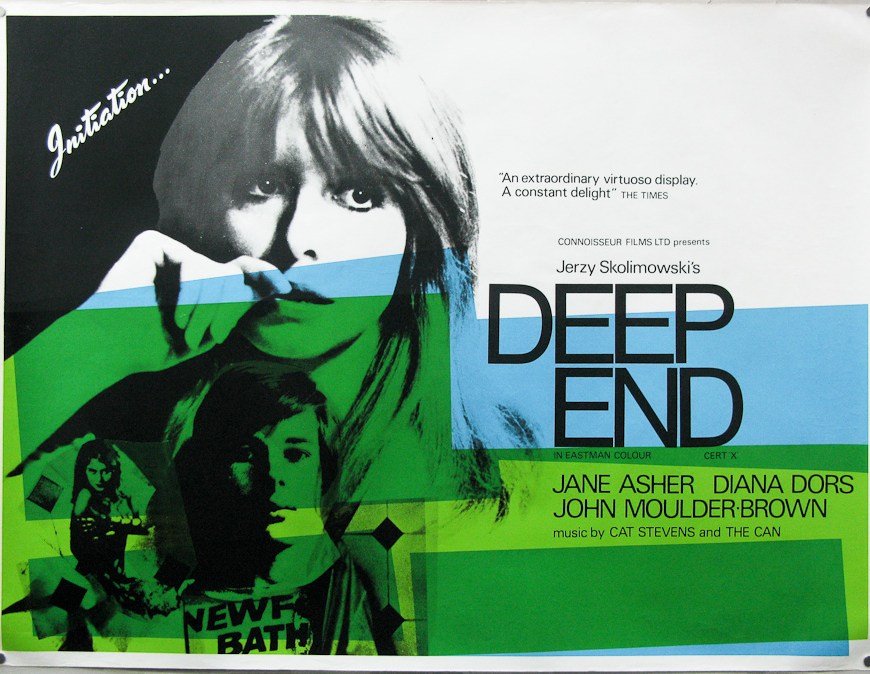
Deep End (1970) and the Musical Emphasising of Narrative (Jerzy Skolimowski).

This article contains spoilers. There are many aspects of distraction within Jerzy Skolimowski’s 1970 film, Deep End.  Its highly sexualised, sometimes seedy narrative, its vast array of colours and its crisp, sharp direction are only a handful of its hyper-active eccentricities.  Even David Lynch, a long-time pessimist about colour cinema, is on record as a fan of Deep End‘s array of powerful colours, and styles.  … Continue reading Deep End (1970) and the Musical Emphasising of Narrative (Jerzy Skolimowski).

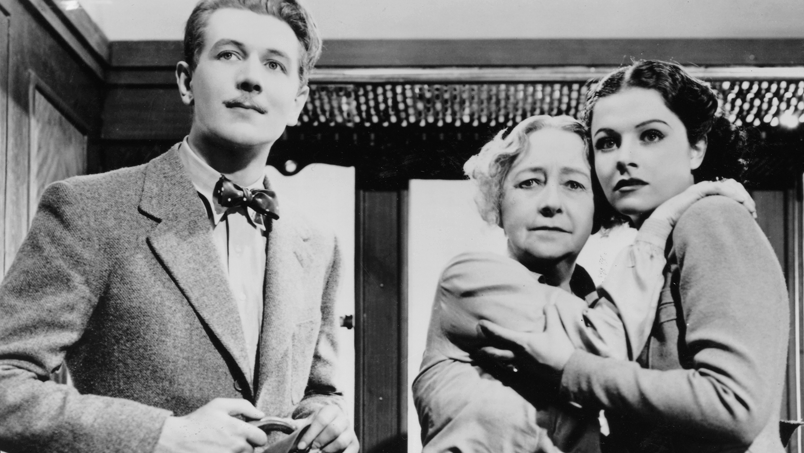
The Lady Vanishes (Alfred Hitchcock, 1938) – Early Uses of Musical, Narrative Tools.

Hitchcock’s early British films tend largely to be devoid of the interesting, endlessly analysable scores his later films have, (thanks mainly to Bernard Herrmann being sat at the musical helm).  It seems to have been an almost standard practice to use a handful of musical scores or fragments in the occasional scene but to largely leave the films musically blank outside of their opening and … Continue reading The Lady Vanishes (Alfred Hitchcock, 1938) – Early Uses of Musical, Narrative Tools.

David Lynch’s Musical Formations of Cinematic Ideas (The Big Dream).

David Lynch has a very clear and obvious interest in music. This interest finds its way into his films via a number of different methods and often build upon the director’s main recurring themes and ideas. What makes David Lynch distinct from other American directors with interests in music such as Martin Scorsese and Woody Allen is that Lynch’s interest has peaked at a point … Continue reading David Lynch’s Musical Formations of Cinematic Ideas (The Big Dream).

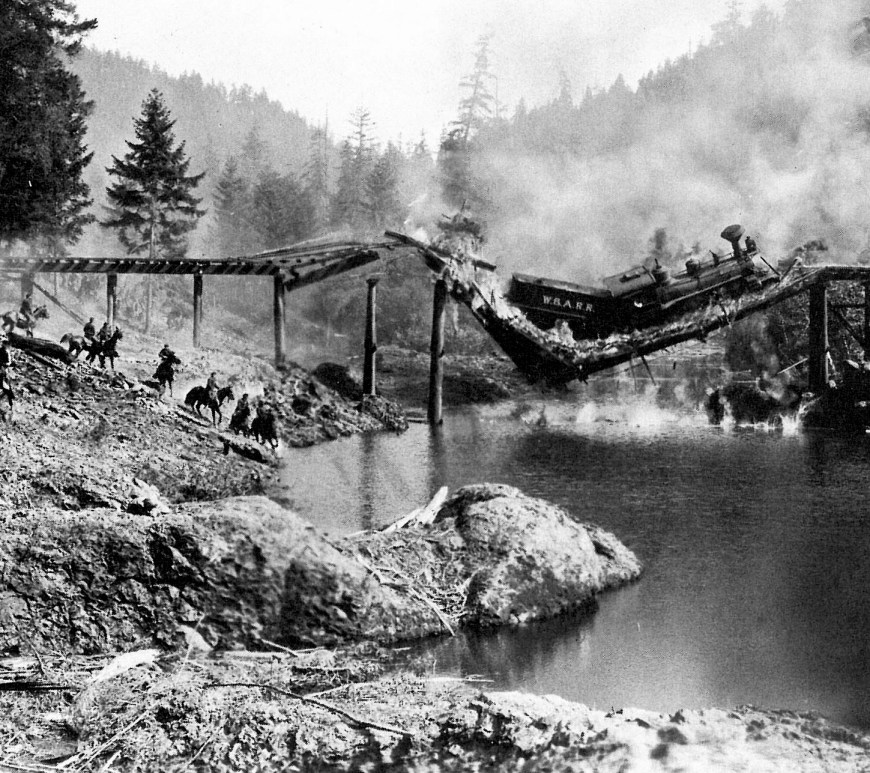
Train to Train – Early Rhythms of Silent Film (Lumière and Keaton)

During the first quarter of film history, film language very quickly cemented itself into forms that would stay that way in mainstream cinema until the middle of the 20th century. Looking back at the surviving imagery of the first era of film (i.e. the silent era), it’s easy to see how these forms quickly solidified and became the norm for the typical and the innovative … Continue reading Train to Train – Early Rhythms of Silent Film (Lumière and Keaton)

Silence (Pat Collins, 2012) – Landscape and Nostalgia.

Nostalgia can manifest in many forms at the cinema.  Sometimes it can be overt, sometimes it can be unconscious but film is most definitely the medium to explore its inner workings.  A number of films have recently used sound, not just in an interesting way, but as a major part of the narrative and character focus whilst touching upon nostalgia.  These range from the superb … Continue reading Silence (Pat Collins, 2012) – Landscape and Nostalgia.

Persona (1966) – Consequences of a Silent World (Ingmar Bergman)

This article contains spoilers. Though drenched in visual complexities and sharp, hap-hazard editing, Ingmar Bergman’s Persona (1966) is film that is aurally interesting as it is exhilarating to view.  Its opening segment of film footage from all corners of cinematic life, spliced together to form a montage of passing thoughts and nightmares, is actually a beautifully put together piece of sound editing as well.  This … Continue reading Persona (1966) – Consequences of a Silent World (Ingmar Bergman)