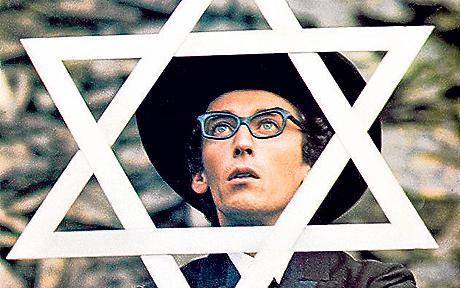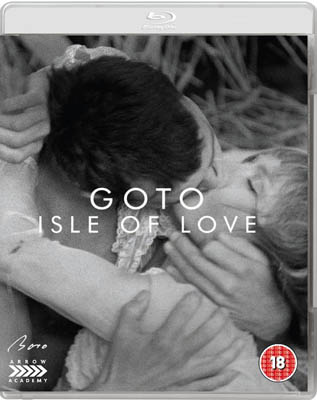
Goto, Isle of Love (1969) – Walerian Borowczyk (Arrow Video).

Viewing several films by Walerian Borowczyk allows certain traits and patterns to form in regard to his filmmaking.  From the extreme polar ends of Blanche (1971) to The Beast (1975), he’s a difficult to pin-down creator, though the man’s style has several factors that appear to gradually come into play.  Goto, Isle of Love (1969) already conjures images simply from its title though it’s doubtful … Continue reading Goto, Isle of Love (1969) – Walerian Borowczyk (Arrow Video).

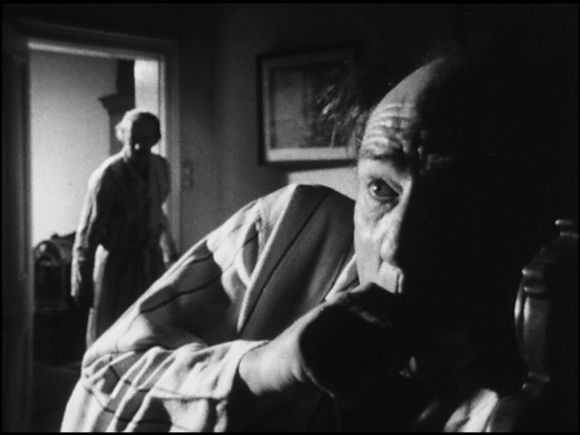
Le Jour Se Léve (1939) – Marcel Carné (Studio Canal).

This article contains plot spoilers. Innovation lies at the heart of Marcel Carné’s fifth film, Le Jour Se Léve (Daybreak, 1939).  The innovation of narrative and how to visually interpret it; the innovation of provocative material and how to deal with it; and the innovation of producing creatively expressive work in a time where expression was the enemy of the regime.  Carné’s film isn’t simply a … Continue reading Le Jour Se Léve (1939) – Marcel Carné (Studio Canal).

The Aural Aesthetics of Ghosts in BBC Ghost Stories – Part 4 (Music).

Part 1. Part 2. Part 3. Nondiegetic Musical Themes And Textures. “Indeed, the celestial voices of film music do resemble a phantom in several significant ways.  They are ephemeral, they are not ‘substantial’ or do not constitute part of what audiences cognise as important in the film, and have an effect that is not apparent.” – Donnelly (p.8, 2005). Though looking at nondiegetic scores for … Continue reading The Aural Aesthetics of Ghosts in BBC Ghost Stories – Part 4 (Music).

A Musicological Study of Ken Russell’s Composer Films – Part 7 (Pop Aesthetics).

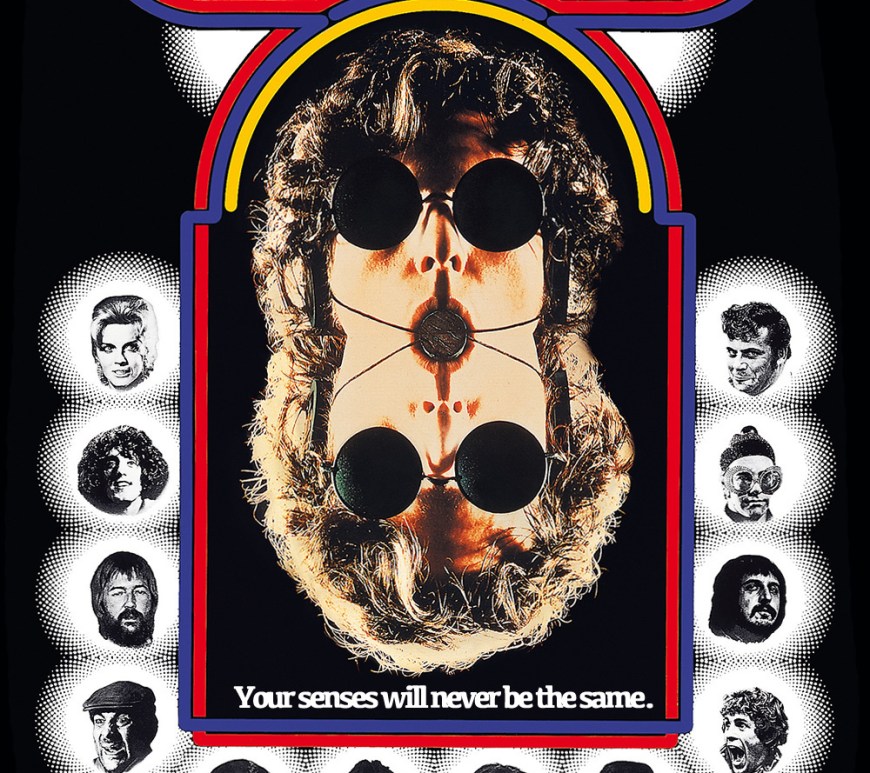
Part 1. Part 2. Part 3. Part 4. Part 5. Part 6.  The Use of Rock and Pop Aesthetics in Lisztomania (1975) and Tommy (1975). While the sociological reaction to classical music is a debatable area, Ken Russell had a very clear vision of how classical composers at least ought to have been received.  A moment in Mahler briefly summarises this idea, where Mahler is … Continue reading A Musicological Study of Ken Russell’s Composer Films – Part 7 (Pop Aesthetics).

The Beast (1975) – Walerian Borowczyk (Arrow Video).
By the mid 1970s, the ease in censorship over large swaths of Europe lead to cinema pushing boundaries and taboo like the medium had never done before.  The decade was awash with cinematic controversy and intelligent but often disturbing treatises on sexuality, drug culture, language, and violence.  1975 seems to be the pinnacle of the boundary pushing that started with films such as Ken Russell’s … Continue reading The Beast (1975) – Walerian Borowczyk (Arrow Video).
Red Shift (Play For Today, 1978) – John Mackenzie (BFI).

A shifting sense of time, space, and place can bring huge advantages to fantastical works of fiction.  The feeling that time is a folded concept, repeating and resetting in a quasi-ritualistic ceremony of life adds a sheen of the monumental to even the smallest and most intimate of dramas.  This sheen is the absolute embodiment of the work of writer, Alan Garner, and is never … Continue reading Red Shift (Play For Today, 1978) – John Mackenzie (BFI).

A Musicological Study of Ken Russell’s Composer Films – Part 6 (Mahler).

Part 1. Part 2. Part 3. Part 4. Part 5. Mahler (1974) and the Balance Between Personal Reception and History. Mahler is an apt end for this period in Ken Russell’s musical exploration for a number of reasons.  It firstly completes the transition in the director’s popularity as well as the full fledgling of creative confidence.  It also manages to amalgamate all of the elements … Continue reading A Musicological Study of Ken Russell’s Composer Films – Part 6 (Mahler).

The Folk Horror Chain

The Folk Horror Chain The following is a rough transcript of a paper delivered at the A Fiend in the Furrows conference, held at Queens University, Belfast on the 20th of September, 2014. Introduction Folk horror is a strange form of media. There’s an unusual craving for defining and canonising in spite of being a sub-genre which seems inherently intuitive. This unusual combination of shared thematic … Continue reading The Folk Horror Chain

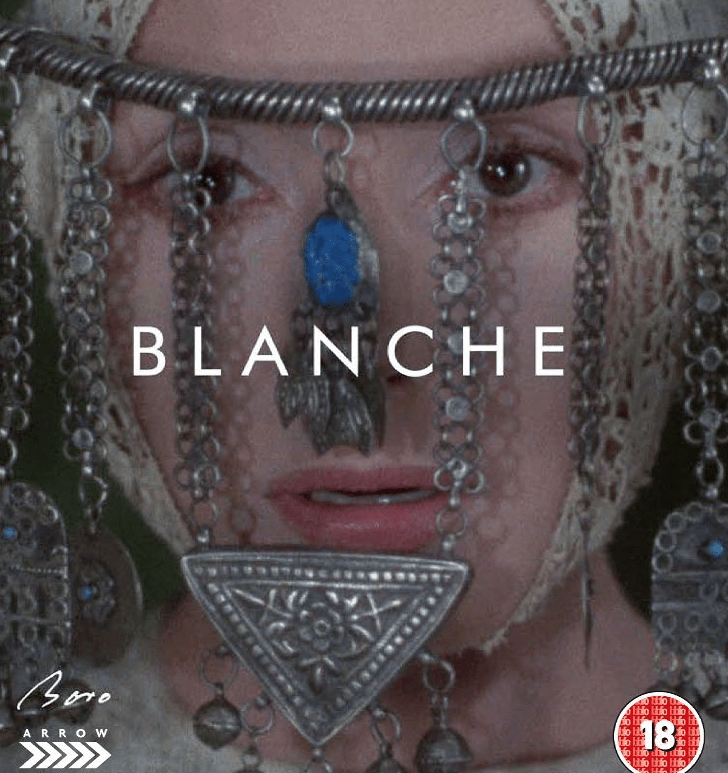
Blanche (1971) – Walerian Borowczyk (Arrow Video).
A palette of strange objects, muted imagery, and medieval oddness awaits the viewer of Walerian Borowczyk’s Blanche (1971); only the third feature film in one of the most surreal and haphazard cinematic careers of all European art house directors.  Though now more infamous as a purveyor of perverted worlds and eventually soft-core titillation (Emmanuelle 5 in 1987 being a complicated low point), Blanche shows the … Continue reading Blanche (1971) – Walerian Borowczyk (Arrow Video).
The Aural Aesthetics of Ghosts in BBC Ghost Stories – Part 2 (The Disembodied Voice).

Part 1. The Aural-Thematic Ties In BBC Ghost Stories. “He first began to write the ghost stories for which he is now famous in late 1892 or early 1893 while he was a fellow of King’s.  They were composed initially to be read aloud in his college rooms as a Christmas treat for his friends.”-  Oliver (p.15, 2012). When looking at the source material for … Continue reading The Aural Aesthetics of Ghosts in BBC Ghost Stories – Part 2 (The Disembodied Voice).