The Problematic Reception of Derek Jarman’s Blue – Part 2 (Early Forms of Blue)

Part 1 The Reception of Blue in its Original Forms. Blue in Written Form and Early Performances. “The difference between formalist and realist philosophies is not in the possibility of affecting the spectator but in what the cinema ought to do, its prescriptive work.  Cinema either organizes the world or duplicates the experience of perceiving of it for the spectator.” (Staiger, 1992, p.51) Though Blue … Continue reading The Problematic Reception of Derek Jarman’s Blue – Part 2 (Early Forms of Blue)


South Korean Film Scores and Ease of Distribution – Part 4 (Asia Extreme and Westernisation)

Part 1. Part 2. Part 3. Asia Extreme and the Westernisation of South Korean Film Music. The most popular avenue for South Korean cinema to enter the West, outside of the art-house festival circuit, is in the form that has loosely been dubbed “Asia Extreme”.  This isn’t just South Korean film but also Japanese cinema as well as a number of others.  The sub-genre is … Continue reading South Korean Film Scores and Ease of Distribution – Part 4 (Asia Extreme and Westernisation)

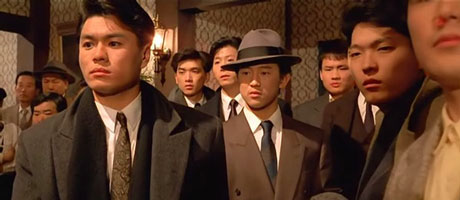
The General’s Son (1990) and Genre-Film Subversion (Im Kwon-Taek).

Im Kwon-Taek’s post Seopyeonje (1993) work perhaps feeds into the more art house desires and pressures from the west but on the cusp of this, his earlier genre film work still managed to show through in his 1990 film The General’s Son.  While on its faded surface is a relatively clichéd crime drama with added kung-fu style violence, in between its more ridiculous and pulpy … Continue reading The General’s Son (1990) and Genre-Film Subversion (Im Kwon-Taek).

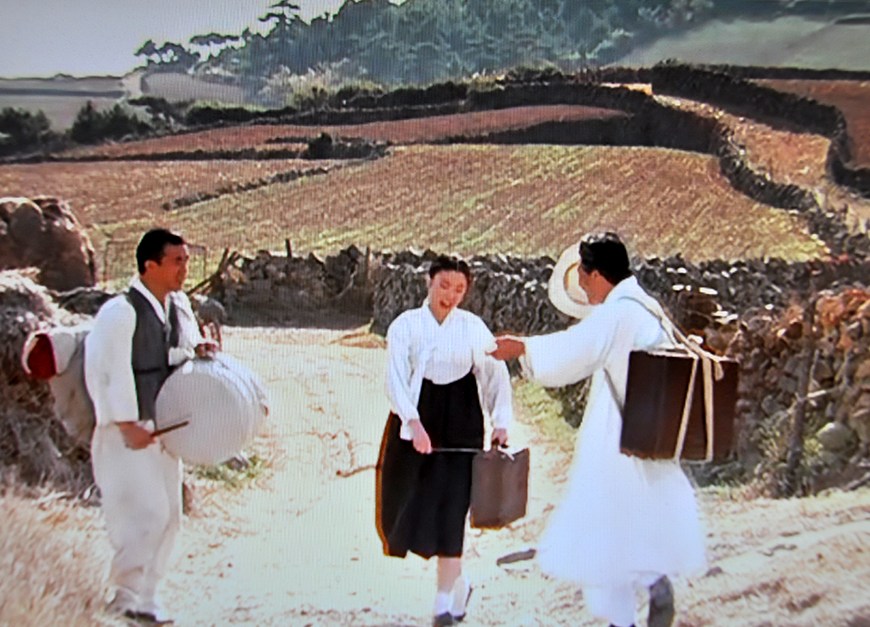
South Korean Film Scores and Ease of Consumption – Part 3 (Seopyeonje’s P’ansori and Soo-Chul Kim).

Part 1. Part 2. The Music of Soo-Chul Kim and the P’ansori aesthetic. Soo-Chul Kim is the composer of the nondiegetic score for Seopyeonje, though it is unclear how much influence he had on the other musical aspects of the film.  Looking at the film’s score, it can at first seem quite sparse once the diegetic P’ansori music is ignored.  Soo-Chul Kim’s music recurs throughout … Continue reading South Korean Film Scores and Ease of Consumption – Part 3 (Seopyeonje’s P’ansori and Soo-Chul Kim).

Berberian Sound Studio – Part 3 (Sound as Narrative and Conclusions).

Part 1 Part 2 Sound As Narrative The narrative ambiguity of Berberian begins to kick in during the last quarter of the film.  The sound within the narrative gradually eases over the line and starts to become part of the narrative affecting a number of the characters and not simply Gilderoy.  The first hint that the sound is entering reality comes when the previously abused … Continue reading Berberian Sound Studio – Part 3 (Sound as Narrative and Conclusions).

Chi-hwa-seon (2002) – Im Kwon-Taek.

The preservation and evolution of South Korean cultural traditions became the dominant focus of Im Kwon-Taek’s films after the ease of censorship in a change of government regime.  A number of his post-genre cinema began to address this though the real cultural reactions can be found in later work which can effectively be called post-Cannes; meaning the cinema he made during his currently slow but … Continue reading Chi-hwa-seon (2002) – Im Kwon-Taek.

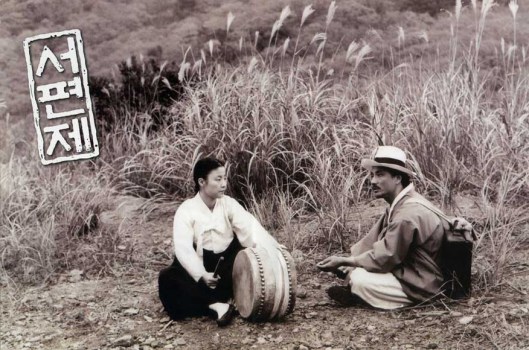
South Korean Film Scores and Ease of Distribution – Part 2 (Im Kwon-Taek and Seopyeonje).

Part 1. Im Kwon-Taek – Reluctant Traditionalist or Radical Experimenter? “Despite its ideological shortcomings and male-centred stance, Im’s cinematic sublimation of ‘Korean-ness’ still focuses on the contradictions between tradition and modernity among precarious lives existing on the periphery of a capitalist society.” (Lee, 2005, p.69) It is somewhat difficult to gage the cultural impact of a director’s films on a country outside of your own.  … Continue reading South Korean Film Scores and Ease of Distribution – Part 2 (Im Kwon-Taek and Seopyeonje).

Andrei Tarkovsky – Polaroids, Mementos and Time

Some directors are very natural auteurs. Their films always seemingly a product of their own conception which seems unavoidable to visually mistake. Viewing all of Andrei Tarkovsky’s films, this is perhaps clearer to see than in the case of most other directors. His distinctive visual style, which morphs into several similar variations, is instantly recognisable. Dripping with faded lights, distinct textures and elemental forces, his … Continue reading Andrei Tarkovsky – Polaroids, Mementos and Time

The Problematic Reception of Sound And Vision in Derek Jarman’s Blue – Part 1 (Introduction).

When is a Film Not a Film? The Problematic Reception of Sound And Vision in Derek Jarman’s Blue. Introduction “I don’t think of myself as avant-garde. I think avant-garde died in the last revolution before the war.” – Derek Jarman (1994) For a director whose visual flair and heightened sense of style became a sickly, heady trademark of his work, Derek Jarman knew perfectly well … Continue reading The Problematic Reception of Sound And Vision in Derek Jarman’s Blue – Part 1 (Introduction).

Festival (1996) and the Acceptance of Loss – Im Kwon-Taek.

Celebrating loss can be a difficult task even for the more optimistic of personas.  The idea of someone being physically and emotionally lost is not a pleasant experience which, at best can provide some cathartic character building in between the tears and complete incomprehension as to what exactly it means to live or die.  It’s a theme familiar in many filmmaker’s auteur driven, thematic catalogues, … Continue reading Festival (1996) and the Acceptance of Loss – Im Kwon-Taek.