The Kaleidoscopic Past of the Counter-Culture Years

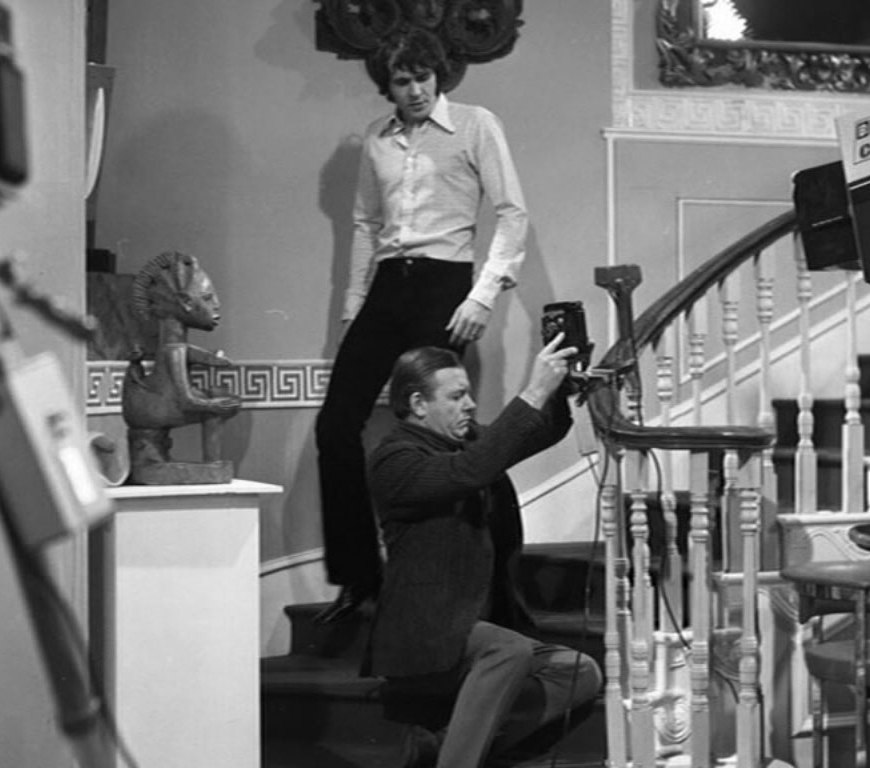
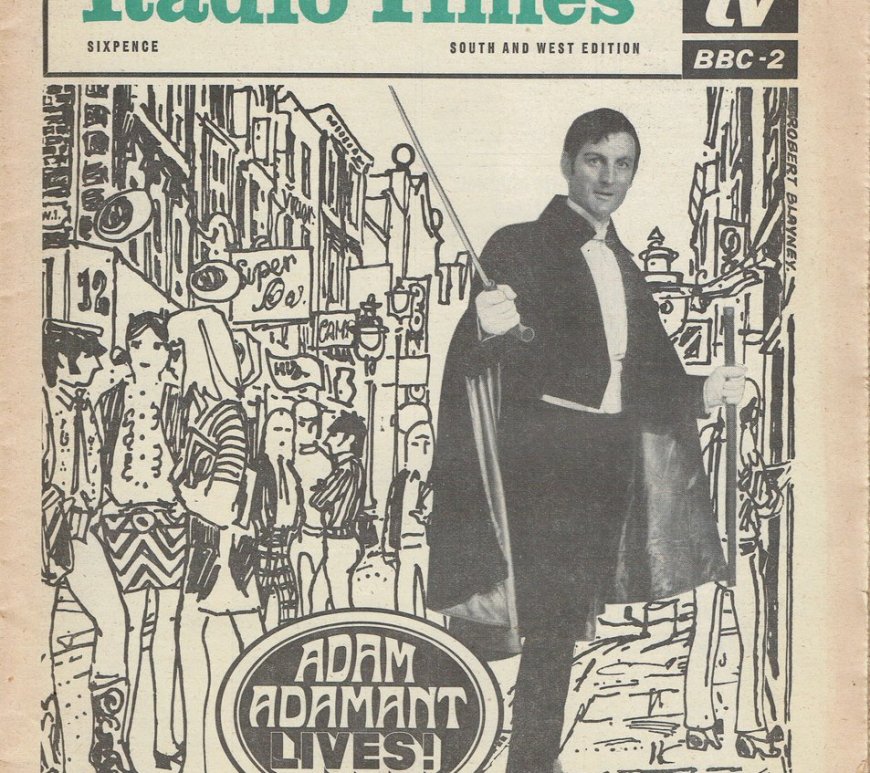
By the time I was growing up in the 1990s, the previous decades of the Post-War years had been heavily codified. The 1950s were very much the 1950s; the 1970s were very much the 1970s, and even the 1980s – the decade I was born in the last year of – were very much the 1980s. The BBC in particular milked this realisation for all … Continue reading The Kaleidoscopic Past of the Counter-Culture Years


Presence, or Polaroid Ghosts (Part 3)

Part 2 ‘We were here, too, once and please take care of us for a while.’ ‘With digital technology,’ wrote memoirist Annie Ernaux, ‘we drained reality dry.’ As digital creatures, we carry out an endless taxidermy upon our experiences in the ever frenzied pursuit of content. Ernaux’s poignant criticism echoes Susan Sontag’s earlier weariness at what cameras had done to our ability to simply live, … Continue reading Presence, or Polaroid Ghosts (Part 3)

The Ghost In The Grain: Analogue Hauntings of the 1970s

This presentation was originally given at the Folk Horror Revival day at The British Museum (16/02/2016).  My thanks to the fellow admins of the Folk Horror Revival, especially Jim Peters and Andy Paciorek. There’s an overt connection between analogue technology and the narratives surrounding paranormal activity in British horror, especially when made during the 1970s.  No doubt there are connections between the interest in such … Continue reading The Ghost In The Grain: Analogue Hauntings of the 1970s

Wire and Grass Landscapes

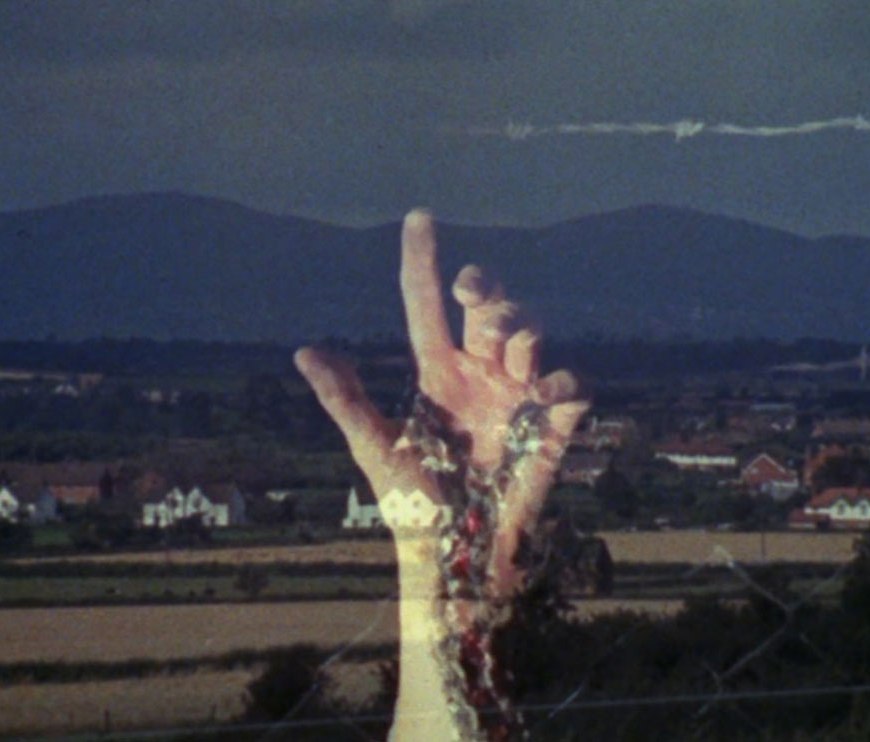
At the recent Alchemical Landscape conference in Cambridge, there was some interesting discussion of the landscape seen in the opening segment of Alan Clarke and David Rudkin’s Play for Today episode, Penda’s Fen (1974). The point of the discussion was to show the subversive nature of the opening titles of the film in regards to its melding of two potentially differing realities of English landscape. … Continue reading Wire and Grass Landscapes

Electronic Music And Mental Illness In Cinema.

This article contains narrative spoilers. From its very earliest occurrences, electronic instrumentation and music has been used in cinema to signpost various aspects of mental health problems and issues within diegetic characters.  Alongside its uses in creating alien worlds, electronic instrumentation seems to, at least in the eyes of the films’ creators, have an ability to go deep within the human psyche as well as … Continue reading Electronic Music And Mental Illness In Cinema.

Questioning Nostalgia In Folk Horror.

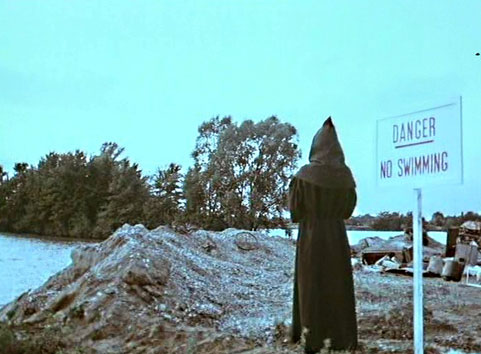
As the Folk Horror canon expands into more forms of media and territory, the Folk Horror Chain becomes less useful as a tool for looking at thematic material.  This is partly due to it being derived as an idea from one medium and one that is explicitly narrative based.  Yet, some of its ideas can be loosely translated into the area of reception studies of … Continue reading Questioning Nostalgia In Folk Horror.

Tales of Mystery (1961-1963) – What Was It Like? (Algernon Blackwood).

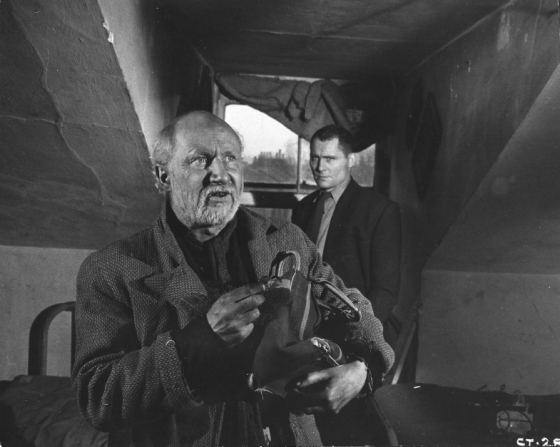
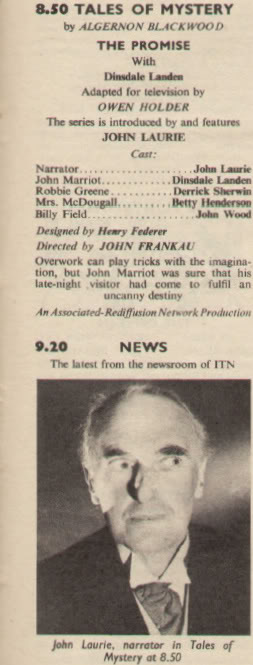
Out of all of the archive television currently missing, presumed destroyed, I think the most exciting and saddening loss is a little-advertised series called Tales of Mystery.  Even though the rumours currently flying around of the potential finds of Philip Morris and TIEA are mostly grounded in the likes of Doctor Who and Dad’s Army, a small part of me hopes for this archive gem … Continue reading Tales of Mystery (1961-1963) – What Was It Like? (Algernon Blackwood).

Eroticism in the Music of Béla Bartók – Part 5 (Post-Modern Pulp).

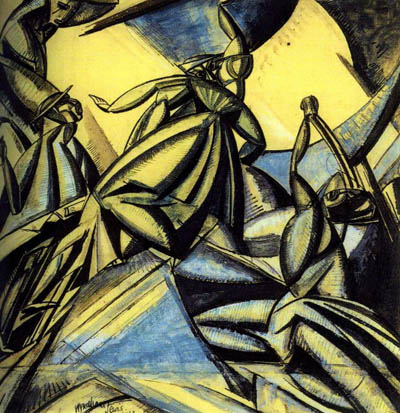
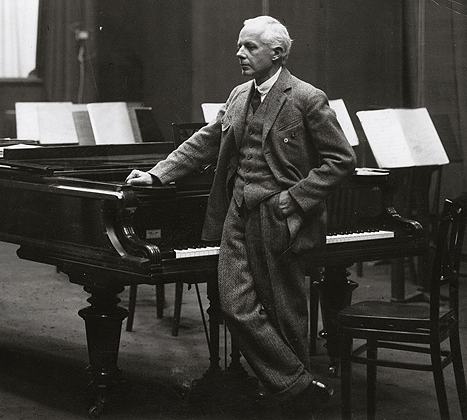
Part 1. Part 2. Part 3. Part 4. Though of course subjective, the natural Kierkegaardian immediacy of the music is instantly on show.  Several sections of brooding along these themes can be read almost as seductions, with the build-ups working easily as well as the seduction segments from The Miraculous Mandarin.  The pairs of strings that seem to roll over each other as they begin … Continue reading Eroticism in the Music of Béla Bartók – Part 5 (Post-Modern Pulp).

Eroticism In The Music Of Béla Bartók – Part 1 (Introduction).

The Insertion and Removal Through Post-Wagnerian Ideals and New Media of Eroticism in the Music of Béla Bartók. Introduction. The music of Béla Bartók sits with some uncertainty between the last dying cries of Romanticism and the encroaching presence of Modernism.  With this clash of ideals producing the composer’s early work, Bartók’s music appears to have no choice but to address another line of interest … Continue reading Eroticism In The Music Of Béla Bartók – Part 1 (Introduction).