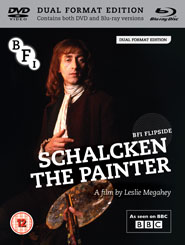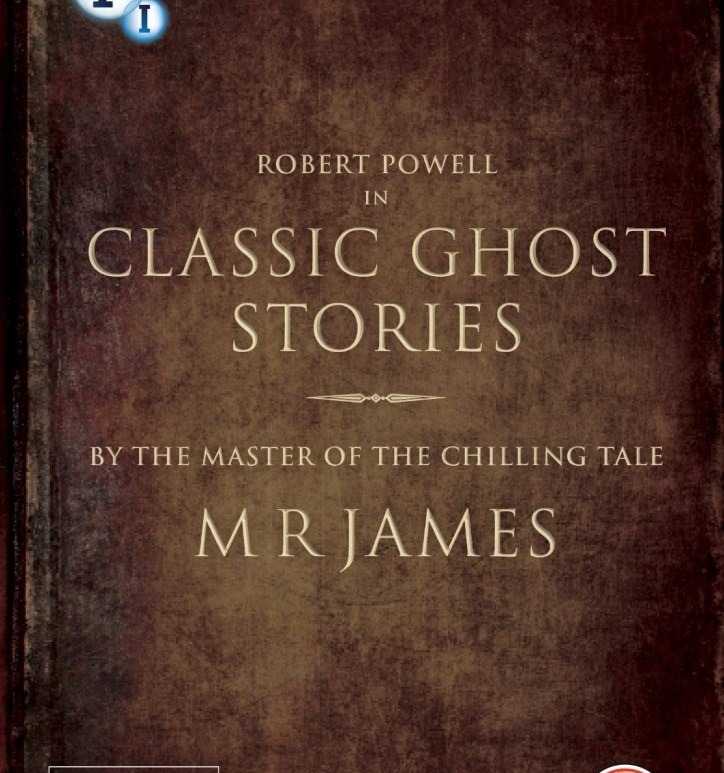
Classic Ghost Stories by M.R James with Robert Powell (BFI).

M.R James’ ghost stories seem almost tailor-made for television and radio.  They’ve taken on so many forms and guises over the years that, like their original forms read by the fireside at Christmas in Cambridge University, they have become a regular, traditional event.  Though their presence has been somewhat thin on the ground of late (though soon to change with the fourth modern adaptation coming … Continue reading Classic Ghost Stories by M.R James with Robert Powell (BFI).

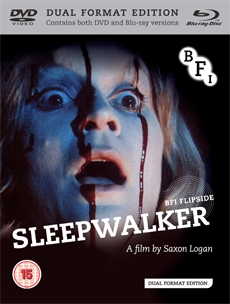
Sleepwalker (1984) – Saxon Logan, BFI Flipside.

The latest release in the BFI Flipside series revels in the social satire of its era with glee. Though of course the main draw of the release will be Saxon Logan’s main feature, Sleepwalker (1984), the release itself is built up to make a whole package of potential double and even triple bills of viewing; some Logan themed, some nocturnal themed.   The main feature simply … Continue reading Sleepwalker (1984) – Saxon Logan, BFI Flipside.

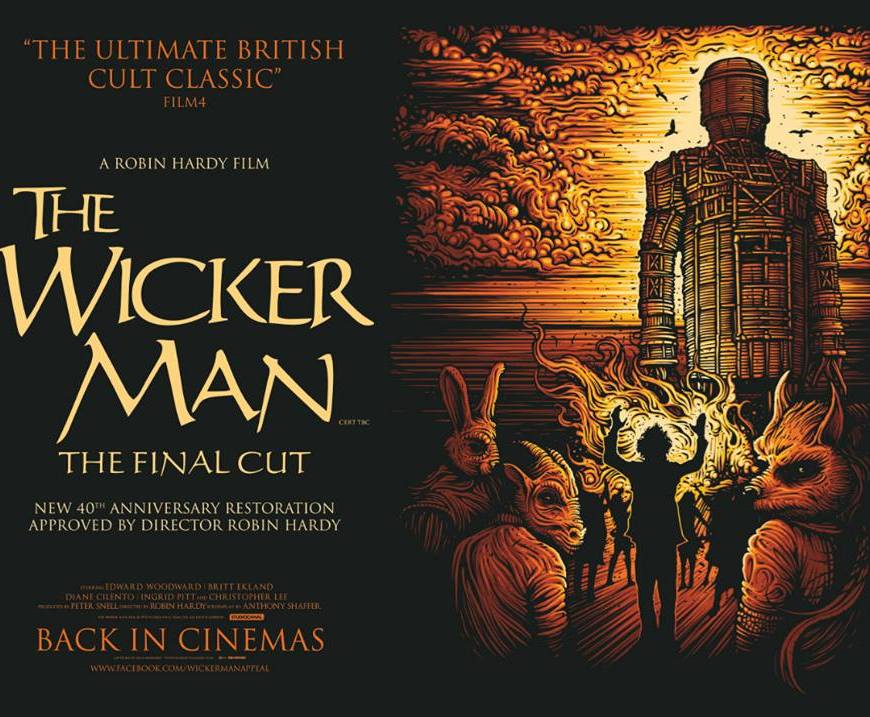
The Wicker Man (1973) – Defining Of The Folk Horror.

Its geography is stark, rugged and eerily inviting, its characters are sickly happy and lying through their teeth and its narrative is immersive and questioning to the point where its finale is deeply affecting and horrifying. It’s a crying shame that viewers of The Wicker Man (1973) will never fully see the film as its director intended. Having been slashed to bits by the studio … Continue reading The Wicker Man (1973) – Defining Of The Folk Horror.

El Topo and The Lamb Lies Down On Broadway (Jodorowsky and Gabriel).

Alejandro Jodorowsky’s El Topo (1970) has rightly earned a place in the pantheon of cult cinema. Watch any number of documentaries or interviews with the man himself and the film will often stand proud as the pioneer of the “Midnight Movie”; a film obviously shown late due to its content but also exuding free reign over all of its creative aspects.  Researching further into the … Continue reading El Topo and The Lamb Lies Down On Broadway (Jodorowsky and Gabriel).

Landscapes of Pasolini (Oedipus Rex, Theorem, Pigsty).

While trailing through the film work of Pier Paolo Pasolini, it becomes clear that the director has an eye for capturing specific moments that manage to visually remain with the viewer.  Whether it’s the floating maid in Theorem (1968), the walking on water in The Gospel According to St. Matthew (1964) or any number of images from Salò (1975), the director is often defined by … Continue reading Landscapes of Pasolini (Oedipus Rex, Theorem, Pigsty).

David Lynch’s Musical Formations of Cinematic Ideas (The Big Dream).

David Lynch has a very clear and obvious interest in music. This interest finds its way into his films via a number of different methods and often build upon the director’s main recurring themes and ideas. What makes David Lynch distinct from other American directors with interests in music such as Martin Scorsese and Woody Allen is that Lynch’s interest has peaked at a point … Continue reading David Lynch’s Musical Formations of Cinematic Ideas (The Big Dream).

Two Years At Sea (Ben Rivers) – Geographical Solitude and Company in Objects.

Cause and effect may not perhaps be the first aspect that comes to mind when considering Ben Rivers’ feature debut Two Years At Sea (2011). Yet, looking at the implications of the lifestyle on show, itself a deliberate effect of causation from working at sea for two years to be able to afford to live a more isolated life, there is a great sense of … Continue reading Two Years At Sea (Ben Rivers) – Geographical Solitude and Company in Objects.

Train to Train – Early Rhythms of Silent Film (Lumière and Keaton)

During the first quarter of film history, film language very quickly cemented itself into forms that would stay that way in mainstream cinema until the middle of the 20th century. Looking back at the surviving imagery of the first era of film (i.e. the silent era), it’s easy to see how these forms quickly solidified and became the norm for the typical and the innovative … Continue reading Train to Train – Early Rhythms of Silent Film (Lumière and Keaton)

Interview with Pat Collins (Silence, 2012).

Pat Collins may perhaps be better known for his engaging documentaries but this year sees the release of his debut feature film in the UK.  Silence is a stunning debut film, full of philosophy, poetry and visual beauty.  The film shows a confidence within the new form as well as an expert use of layering different emotions and textures upon one another.  A full analysis … Continue reading Interview with Pat Collins (Silence, 2012).

Persona (1966) – Consequences of a Silent World (Ingmar Bergman)

This article contains spoilers. Though drenched in visual complexities and sharp, hap-hazard editing, Ingmar Bergman’s Persona (1966) is film that is aurally interesting as it is exhilarating to view.  Its opening segment of film footage from all corners of cinematic life, spliced together to form a montage of passing thoughts and nightmares, is actually a beautifully put together piece of sound editing as well.  This … Continue reading Persona (1966) – Consequences of a Silent World (Ingmar Bergman)