An Ancient Evil: M.R. James and Nigel Kneale.

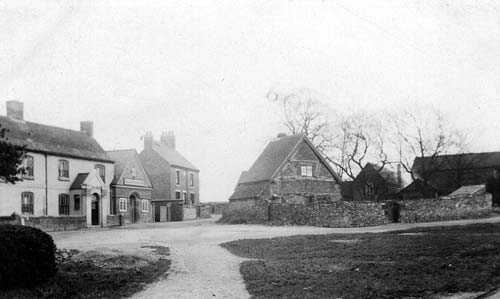
Two writers who could be said to epitomise the ideas of Folk Horror, M.R. James and Nigel Kneale, while addressing these ideals through different media, are writers whose work often crept into the same realm.  This has lead to both of their work having a natural relationship with each other, with one almost being a reincarnation of the other.  Of course, to imply such things … Continue reading An Ancient Evil: M.R. James and Nigel Kneale.

Village Green Repression in Film, Television and Philip Larkin.

Mythological Introduction by Philip Larkin. A white girl lay on the grass With her arms held out for love; her goldbrown hair fell down her face, And her two lips move: See, I am the whitest cloud that strays Through a deep sky: I am your senses’ crossroads, where the four seasons lie. She rose up in the middle of the lawn And spread her … Continue reading Village Green Repression in Film, Television and Philip Larkin.

Robin Redbreast – Play For Today (1970) – James MacTaggart (BFI).

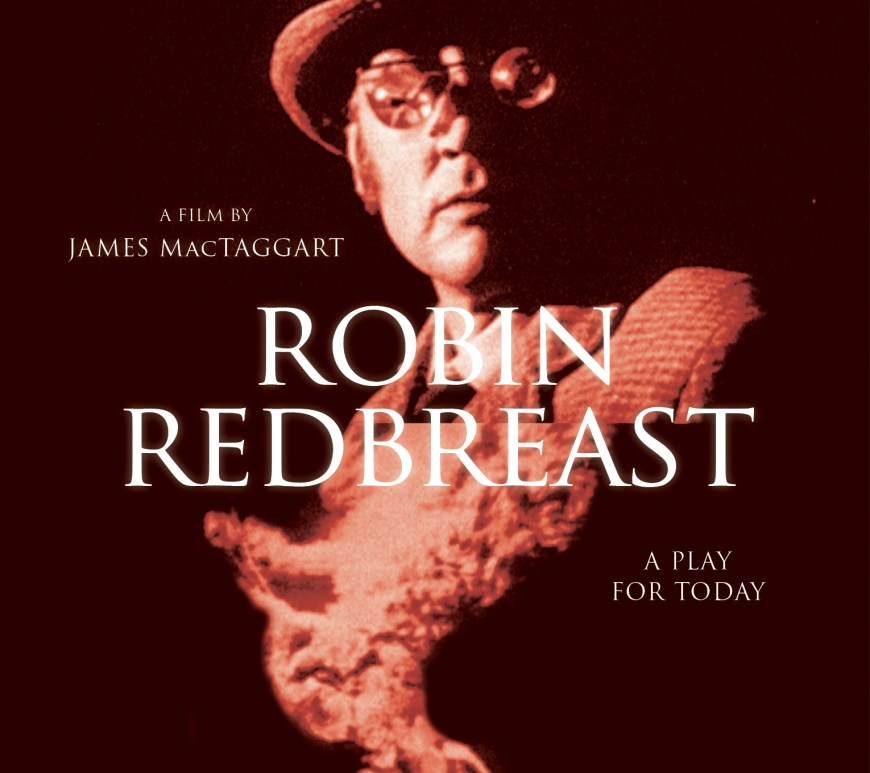
This articles contains minor spoilers. Holding the record at the time for being the only play in the BBC Play For Today series to be repeated, James MacTaggart’s Robin Redbreast has an aptly cult aura surrounding it.  First broadcast in the “spooky” slot (a December time tradition since Dickens’ era) in 1970, it manages to foreshadow a number of interesting movements in film and television … Continue reading Robin Redbreast – Play For Today (1970) – James MacTaggart (BFI).

The Wicker Man (1973) – Defining Of The Folk Horror.

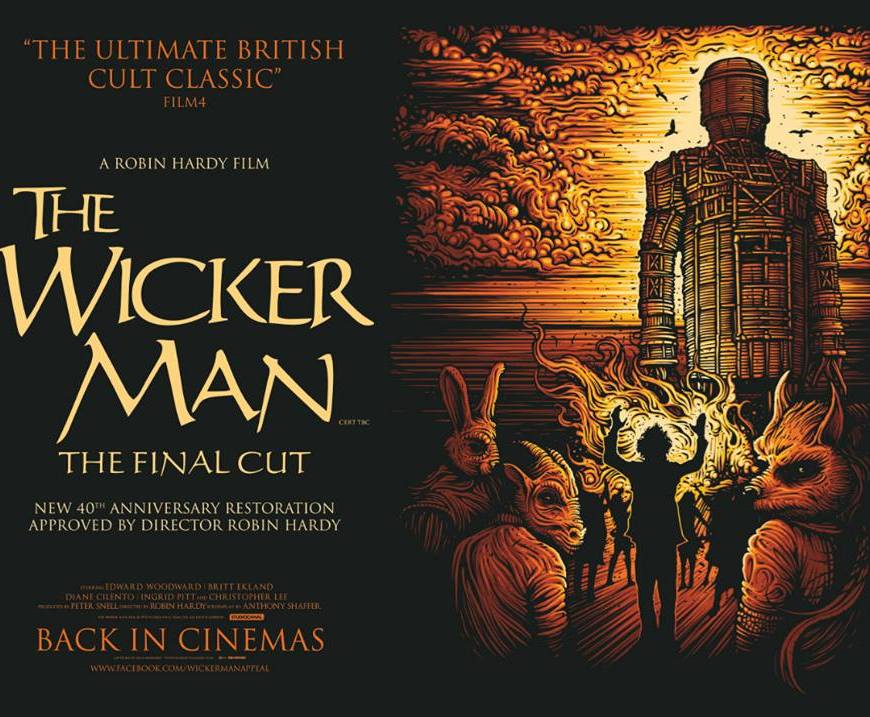
Its geography is stark, rugged and eerily inviting, its characters are sickly happy and lying through their teeth and its narrative is immersive and questioning to the point where its finale is deeply affecting and horrifying. It’s a crying shame that viewers of The Wicker Man (1973) will never fully see the film as its director intended. Having been slashed to bits by the studio … Continue reading The Wicker Man (1973) – Defining Of The Folk Horror.

Landscapes of Pasolini (Oedipus Rex, Theorem, Pigsty).

While trailing through the film work of Pier Paolo Pasolini, it becomes clear that the director has an eye for capturing specific moments that manage to visually remain with the viewer.  Whether it’s the floating maid in Theorem (1968), the walking on water in The Gospel According to St. Matthew (1964) or any number of images from Salò (1975), the director is often defined by … Continue reading Landscapes of Pasolini (Oedipus Rex, Theorem, Pigsty).

Two Years At Sea (Ben Rivers) – Geographical Solitude and Company in Objects.

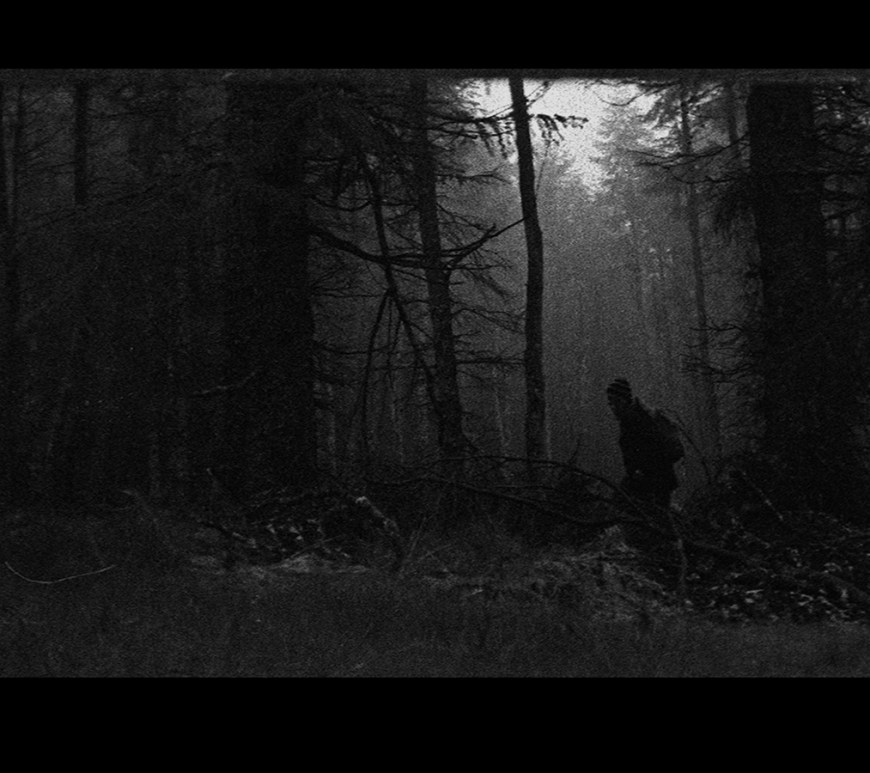
Cause and effect may not perhaps be the first aspect that comes to mind when considering Ben Rivers’ feature debut Two Years At Sea (2011). Yet, looking at the implications of the lifestyle on show, itself a deliberate effect of causation from working at sea for two years to be able to afford to live a more isolated life, there is a great sense of … Continue reading Two Years At Sea (Ben Rivers) – Geographical Solitude and Company in Objects.

Interview with Pat Collins (Silence, 2012).

Pat Collins may perhaps be better known for his engaging documentaries but this year sees the release of his debut feature film in the UK.  Silence is a stunning debut film, full of philosophy, poetry and visual beauty.  The film shows a confidence within the new form as well as an expert use of layering different emotions and textures upon one another.  A full analysis … Continue reading Interview with Pat Collins (Silence, 2012).

Silence (Pat Collins, 2012) – Landscape and Nostalgia.

Nostalgia can manifest in many forms at the cinema.  Sometimes it can be overt, sometimes it can be unconscious but film is most definitely the medium to explore its inner workings.  A number of films have recently used sound, not just in an interesting way, but as a major part of the narrative and character focus whilst touching upon nostalgia.  These range from the superb … Continue reading Silence (Pat Collins, 2012) – Landscape and Nostalgia.

The Early Short Films of David Gladwell.

David Gladwell may be more well known as Lindsay Anderson’s editor on such cinematic masterpieces as If…. (1968) and O Lucky Man! (1973) but his own directorial endeavours are equally worthy of discussion and analysis, especially in their relation to both his editorial work and his own creative trajectories. Whether it is the, very English, visual language of his first four short films or the … Continue reading The Early Short Films of David Gladwell.

Andrei Tarkovsky – Polaroids, Mementos and Time

Some directors are very natural auteurs. Their films always seemingly a product of their own conception which seems unavoidable to visually mistake. Viewing all of Andrei Tarkovsky’s films, this is perhaps clearer to see than in the case of most other directors. His distinctive visual style, which morphs into several similar variations, is instantly recognisable. Dripping with faded lights, distinct textures and elemental forces, his … Continue reading Andrei Tarkovsky – Polaroids, Mementos and Time