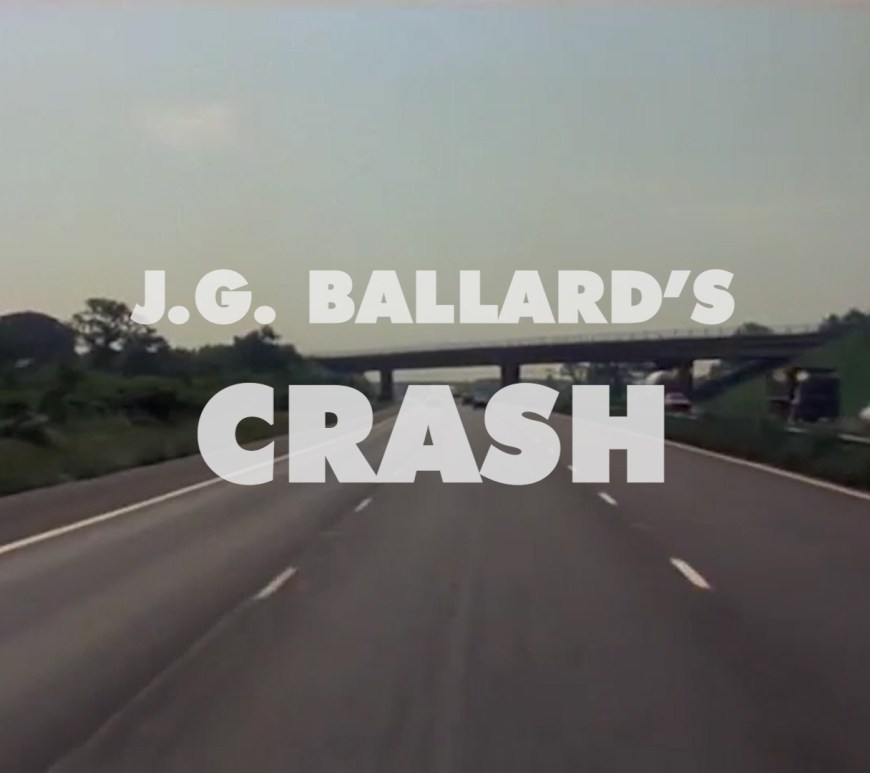
Trailer – J.G. Ballard’s Crash (Thames Television 1974)

Around eight years ago, I made my first “fake trailer”. Partly in response to Ben Wheatley’s (and Amy Jump’s) adaptation of J.G. Ballard’s High-Rise, which I felt somewhat missed the mark, I edited together a “what if” trailer for the book if it had been adapted for BBC television in 1975. The responses to it, along with those to a follow up trailer (looking at … Continue reading Trailer – J.G. Ballard’s Crash (Thames Television 1974)

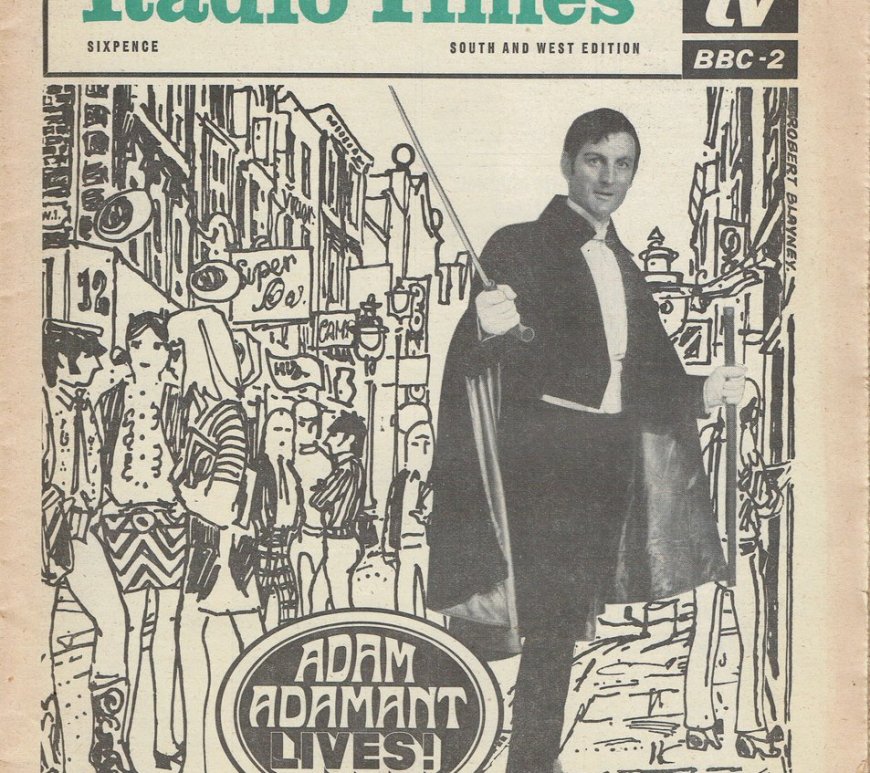
The Kaleidoscopic Past of the Counter-Culture Years

By the time I was growing up in the 1990s, the previous decades of the Post-War years had been heavily codified. The 1950s were very much the 1950s; the 1970s were very much the 1970s, and even the 1980s – the decade I was born in the last year of – were very much the 1980s. The BBC in particular milked this realisation for all … Continue reading The Kaleidoscopic Past of the Counter-Culture Years

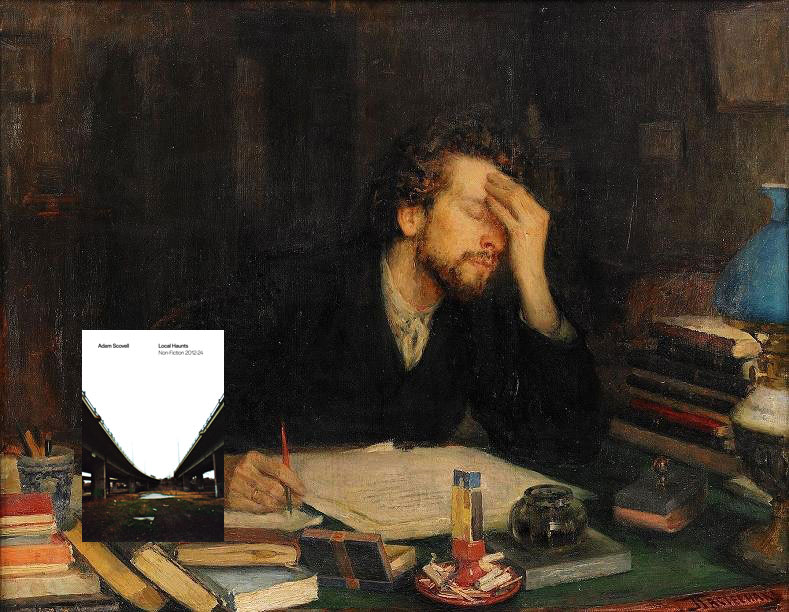
Local Haunts (Influx Press, 2025)

Local Haunts was released at the end of March by Influx Press, and has been on sale for around two months at the time of writing. I’ve resisted talking more about it on here so far, largely because I wanted to see what the general reaction was rather than pre-empting it. Thankfully, after having done a number of events in which the response has been … Continue reading Local Haunts (Influx Press, 2025)

2024 Review

Welcome to this year’s End of Year review; my usual, long-winded run-down of my excessive viewing and reading habits. It’s been an exhausting but rewarding year of films, television and books, and the sheer length of this post should evidence that. One interesting thing to note is how much happier I feel having virtually ignored the majority of post-2010s culture. Such a decision was not … Continue reading 2024 Review

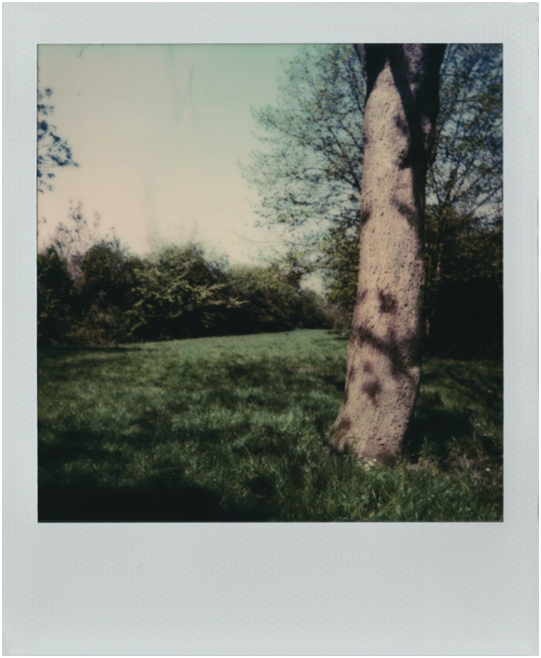
Presence, or Polaroid Ghosts (Part 14)

Part 13 Easy Riders, Cops and Maniacs A man is stood in a pool hall. He’s surveying the green baize landscape as he drinks. Should he bother with the game anymore? The light has a medicinal quality, emanating with an annoying buzz from a long halogen strip above the table, proudly advertising Canada Dry ginger beer. It could be a lonely portrait by Walker Evans … Continue reading Presence, or Polaroid Ghosts (Part 14)

Presence, or Polaroid Ghosts (Part 11)

Part 10 Over time, we become strangers to ourselves in Polaroids. We take them, not to create memories, but to help retain them. Sometimes this is unnecessary. At other times, it is essential if we want to remember moments in our lives. This is an idea realised perfectly in Christopher Nolan’s debut feature, Memento (2000). It is a film that essentially sits on the cusp … Continue reading Presence, or Polaroid Ghosts (Part 11)

Presence, or Polaroid Ghosts (Part 8)

Part 7 Remembering Afterimage ‘At times,’ the Nobel Laureate and novelist Patrick Modiano writes, ‘it seems, our memories act much like Polaroids.’ This interesting thought comes from the semi-autobiographical perspective of a character in his novella Afterimage (1993). It is a narrative filled with strangeness, derived in part from the recollection of memories once forgotten; put to one side, left in the back of a … Continue reading Presence, or Polaroid Ghosts (Part 8)

Presence, or Polaroid Ghosts (Part 7)

Part 6 Time and again, cinema seems drawn to Polaroid photography, often in unusual and tangential ways. Antonioni’s film, even if ultimately about 35mm photography, is not the only one to explore the strangely tangible qualities of space within photography (or the things contained within a photograph beyond the image). When looking at Polaroids, we perceive them spatially. By that I mean we have the … Continue reading Presence, or Polaroid Ghosts (Part 7)

Presence, or Polaroid Ghosts (Part 6)

Part 5 In the Park I often find myself asking a question. ‘What film would I live in if I could?’ It is a question that belies my own rather childish need to escape reality. But, if I could live in a piece of film, it would probably be Michelangelo Antonioni’s celebrated swinging cult classic, Blowup (1966). It is more than a little questionable as … Continue reading Presence, or Polaroid Ghosts (Part 6)

Presence, or Polaroid Ghosts (Part 5)

Part 4 The French philosopher René Descartes believed that his recollections were evidence he was not dreaming. He knew he was not asleep and merely creating the world in his mind’s eye because he was surrounded by things possessing a context that he was aware of personally. ‘But when I perceive things of which I clearly know both the place they come from and that … Continue reading Presence, or Polaroid Ghosts (Part 5)