Presence, or Polaroid Ghosts (Part 9)

Part 8 Souvenirs The past is dangerously addictive. Nostalgia, especially second-hand nostalgia such as mine, often threatens to become an endless placebo in place of living. How alluring the past seems when we convince ourselves of having experienced it for a brief moment through culture and art. The ghost story writer M.R. James lived with this addiction to the past more than most. James famously … Continue reading Presence, or Polaroid Ghosts (Part 9)

Presence, or Polaroid Ghosts (Part 8)

Part 7 Remembering Afterimage ‘At times,’ the Nobel Laureate and novelist Patrick Modiano writes, ‘it seems, our memories act much like Polaroids.’ This interesting thought comes from the semi-autobiographical perspective of a character in his novella Afterimage (1993). It is a narrative filled with strangeness, derived in part from the recollection of memories once forgotten; put to one side, left in the back of a … Continue reading Presence, or Polaroid Ghosts (Part 8)

Presence, or Polaroid Ghosts (Part 7)

Part 6 Time and again, cinema seems drawn to Polaroid photography, often in unusual and tangential ways. Antonioni’s film, even if ultimately about 35mm photography, is not the only one to explore the strangely tangible qualities of space within photography (or the things contained within a photograph beyond the image). When looking at Polaroids, we perceive them spatially. By that I mean we have the … Continue reading Presence, or Polaroid Ghosts (Part 7)

Presence, or Polaroid Ghosts (Part 6)

Part 5 In the Park I often find myself asking a question. ‘What film would I live in if I could?’ It is a question that belies my own rather childish need to escape reality. But, if I could live in a piece of film, it would probably be Michelangelo Antonioni’s celebrated swinging cult classic, Blowup (1966). It is more than a little questionable as … Continue reading Presence, or Polaroid Ghosts (Part 6)

Presence, or Polaroid Ghosts (Part 5)

Part 4 The French philosopher René Descartes believed that his recollections were evidence he was not dreaming. He knew he was not asleep and merely creating the world in his mind’s eye because he was surrounded by things possessing a context that he was aware of personally. ‘But when I perceive things of which I clearly know both the place they come from and that … Continue reading Presence, or Polaroid Ghosts (Part 5)

Presence, or Polaroid Ghosts (Part 4)

Part 3 Journeying Maps A Polaroid is a map of sorts. It covers such a small personal realm within its cartography that the only area it helps to locate is arguably beyond the physical world and within the memory. It shows the way back to the spaces of our past. The image of a Polaroid may fade in comparison to our experiences but it is … Continue reading Presence, or Polaroid Ghosts (Part 4)

Presence, or Polaroid Ghosts (Part 2)

Part 1 Histories Polaroids are shackled to nostalgia. Its aesthetic perfectly embodies the past tense, especially in the cold light of today’s digital world. The presence captured, however, makes even the oldest photos whisper of the living moment as it happened. As an object, they are driven by this contradiction. Being so close to our lives charges these images with supernatural static. But, more importantly, … Continue reading Presence, or Polaroid Ghosts (Part 2)

Presence, or Polaroid Ghosts (Part 1)

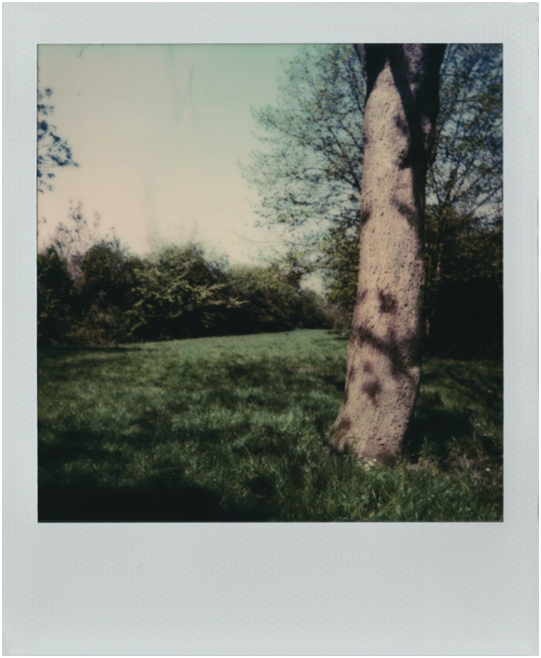
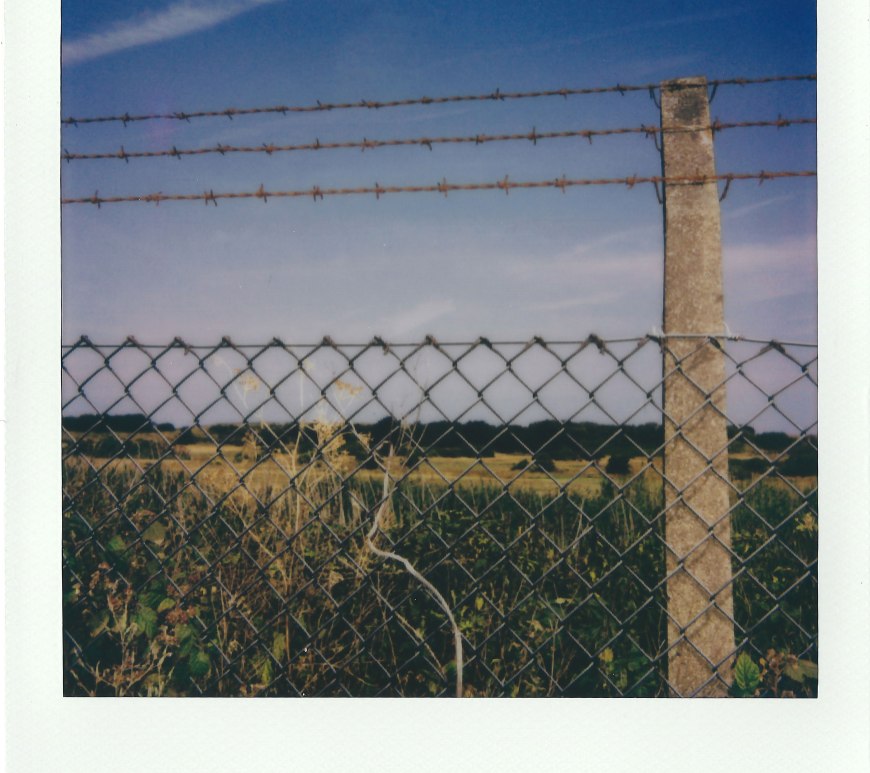
‘There is a spectre inside every photograph.’ – Deborah Levy, The Man Who Saw Everything Haunting I am haunted by Polaroids. After I have taken one, I feel I have bottled something. Under my bed is a box in which I store them. It is sealed tight with a stone atop to keep the spirits locked inside. At night, I swear I sometimes hear the … Continue reading Presence, or Polaroid Ghosts (Part 1)

Responses: Albrecht Dürer’s St. Jerome (1521)

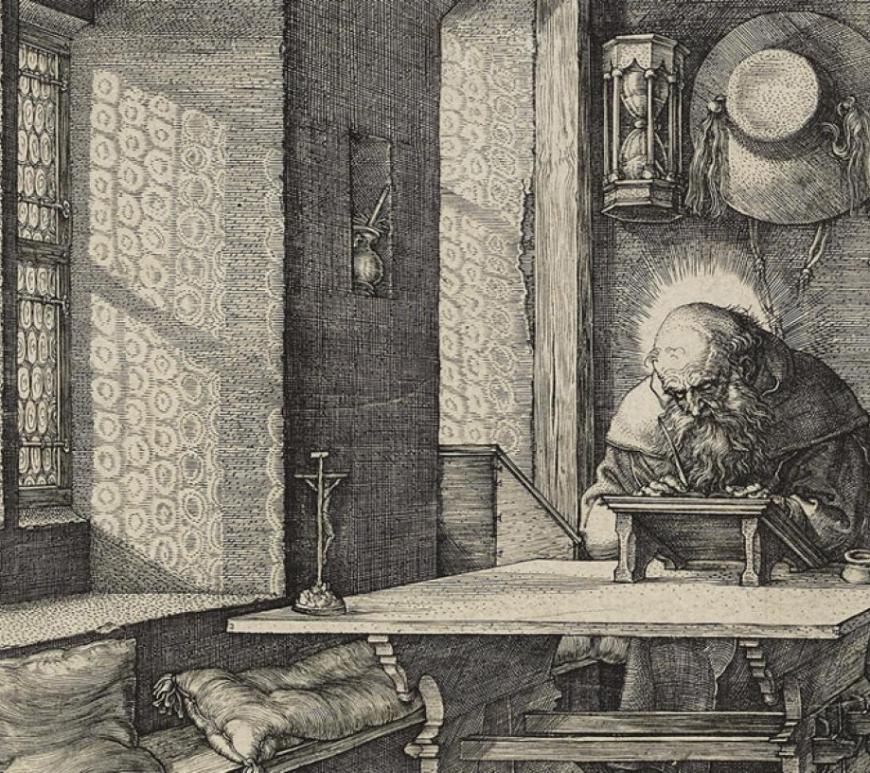
An old man is sat at a desk. His intelligence burns brightly above is head like a white halo as he writes in ink on a raised platform. His room is filled with things; measuring equipment and scientific apparatus, a skull, cushions, a lion, a dog and many books. The light from outside translates the designs of the glass windows onto the adjacent wall while … Continue reading Responses: Albrecht Dürer’s St. Jerome (1521)

Responses: Tacita Dean’s Berlin And The Artist (2012)

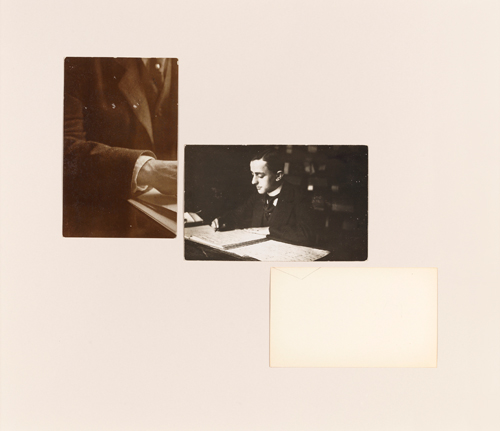
Chance played a huge role in the writing of Robert Walser. I can picture his slow meanderings around towns and valleys, spotting something that fired his brief need to write before getting distracted by something else entirely. I can see him getting excited by the way sunlight reflects off a lake’s water, by the fustiness of a suited man coming out of a bank, by … Continue reading Responses: Tacita Dean’s Berlin And The Artist (2012)