David Lynch’s Musical Formations of Cinematic Ideas (The Big Dream).

David Lynch has a very clear and obvious interest in music. This interest finds its way into his films via a number of different methods and often build upon the director’s main recurring themes and ideas. What makes David Lynch distinct from other American directors with interests in music such as Martin Scorsese and Woody Allen is that Lynch’s interest has peaked at a point … Continue reading David Lynch’s Musical Formations of Cinematic Ideas (The Big Dream).

Distant Voices, Still Lives – Sounds of the Past. (Part 2)

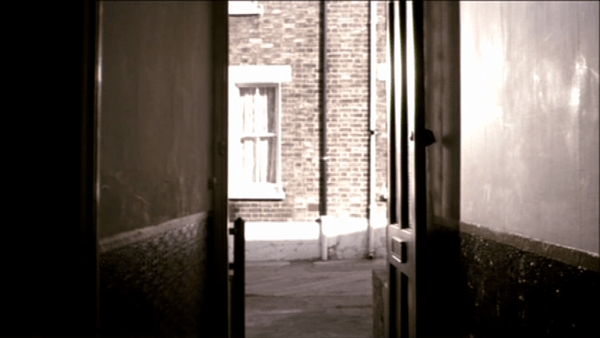
Part 1 Part 2 Part 3 Part 4 Part 5 The Sounds of the Past “To this inexorable, insidious awareness of your own dependence on your past, like an illness that grows even harder to bear, I gave the name “Nostalgia”…” (Tarkovsky, 1986, p.206) One of Distant Voices, Still Lives’ key differences to all that had gone before in the canon of British working class … Continue reading Distant Voices, Still Lives – Sounds of the Past. (Part 2)

Silence (Pat Collins, 2012) – Landscape and Nostalgia.

Nostalgia can manifest in many forms at the cinema.  Sometimes it can be overt, sometimes it can be unconscious but film is most definitely the medium to explore its inner workings.  A number of films have recently used sound, not just in an interesting way, but as a major part of the narrative and character focus whilst touching upon nostalgia.  These range from the superb … Continue reading Silence (Pat Collins, 2012) – Landscape and Nostalgia.

The Problematic Reception of Derek Jarman’s Blue – Part 5 (Home Viewings and Conclusions)

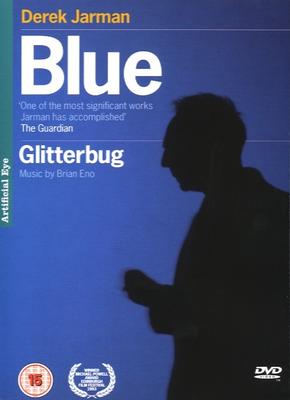
Part 1. Part 2. Part 3. Part 4. Home Viewing of Blue and New Reception Possibilities. “Say you were struck down tomorrow, what would your monument be?” – Dr Mathew Herbert. “Oh nothing, because film disappears, thank God.” – Derek Jarman (1993, p.117) There is an unstated irony within this essay in the fact that this writer has never been able to experience Blue in … Continue reading The Problematic Reception of Derek Jarman’s Blue – Part 5 (Home Viewings and Conclusions)

Persona (1966) – Consequences of a Silent World (Ingmar Bergman)

This article contains spoilers. Though drenched in visual complexities and sharp, hap-hazard editing, Ingmar Bergman’s Persona (1966) is film that is aurally interesting as it is exhilarating to view.  Its opening segment of film footage from all corners of cinematic life, spliced together to form a montage of passing thoughts and nightmares, is actually a beautifully put together piece of sound editing as well.  This … Continue reading Persona (1966) – Consequences of a Silent World (Ingmar Bergman)

Distant Voices, Still Lives – Nostalgia and Hardship Through Sound & Music (Part 1).

Part 1. Part 2. Part 3. Part 4. Working Class Pasts – Nostalgia and Past Hardship Through Sound and Music. “Since the 1970s especially, the tendency has grown for directors to indulge their own musical tastes in scoring a film” (Gorbman, 2006, p.17). Distant Voices, Still Lives (1988) – Differences in Time. Terence Davies’ autobiographical second feature is the last film to be examined.  Unlike … Continue reading Distant Voices, Still Lives – Nostalgia and Hardship Through Sound & Music (Part 1).

The Problematic Reception of Derek Jarman’s Blue – Part 4 (New Technological Contexts).

Part 1 Part 2 Part 3 The Reception of Blue in New Technological Forms and Contexts. “The degree to which the spectator identifies with the diegesis as his/her own hallucination fluctuates from spectator to spectator, from narrative moment to moment, from genre to genre.” (Gorbman, 1987, p.45). It is very hard to experience Blue today in the intended format that Jarman produced it in.  This … Continue reading The Problematic Reception of Derek Jarman’s Blue – Part 4 (New Technological Contexts).

The Loneliness of the Long Distance Runner – Use of Music and Sound In British Working Class Film (Part 4).

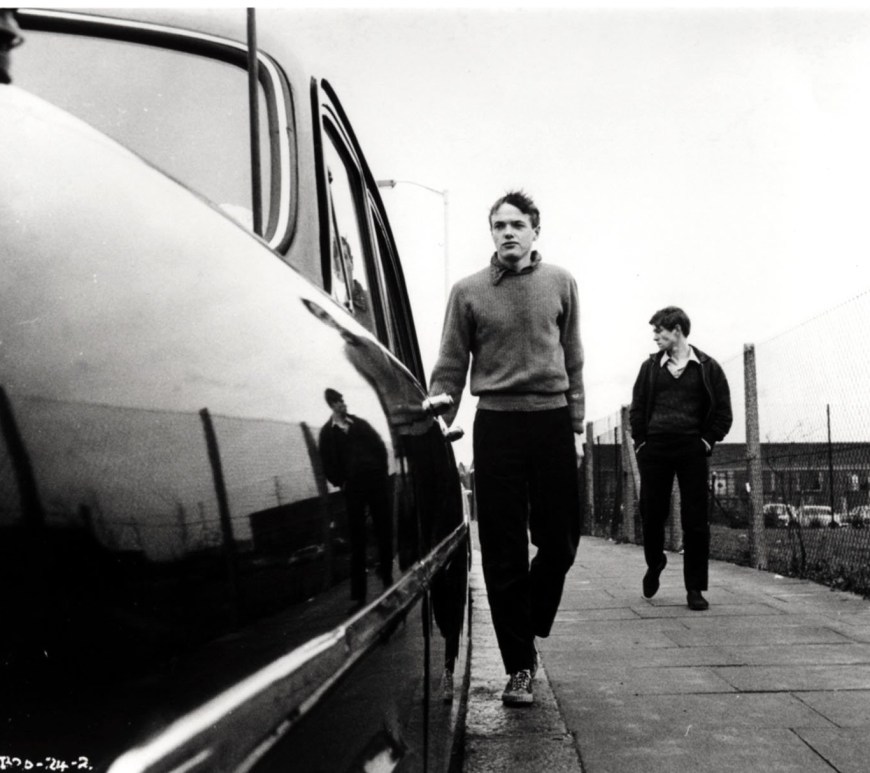
Part 1 Part 2 Part 3 The Loneliness of the Long Distance Runner. The Metaphorical Use of Diegetic Sound and Music. The Loneliness of the Long Distance Runner has several different uses of sound; two of which aren’t musical.  The title perhaps gives a hint that the sound of running feet on a hard ground will play a vital role in the film.  This rhythmic, … Continue reading The Loneliness of the Long Distance Runner – Use of Music and Sound In British Working Class Film (Part 4).

The Problematic Reception of Derek Jarman’s Blue – Part 3 (Cinematic Screenings).

Part 1 Part 2 Blue’s cinematic screening – Readings, Reception and Contradictions. “Whilst homosexuals die, many heterosexuals reach for the remote control and simply turn up the volume.  Does it come in stereo?” (Jarman, 1993, p.138) The screening of Blue in cinemas during its 1993 release date is its most typical form though screenings were rare and often film festival based rather than through a … Continue reading The Problematic Reception of Derek Jarman’s Blue – Part 3 (Cinematic Screenings).

South Korean Film Scores and Ease of Distribution – Part 5 (Blades of Blood and Conclusions)

Part 1 Part 2 Part 3 Part 4 Blades of Blood (2010) – Joon-Ik Lee Joon-ik Lee’s 2010 film Blades of Blood shares a number of similarities with both the previously mentioned examples. The film is a modern, violent period picture based on a graphic novel. It is stylistically similar to Oldboy, especially within its colour palate though rarely recreates the standard set by Park. … Continue reading South Korean Film Scores and Ease of Distribution – Part 5 (Blades of Blood and Conclusions)