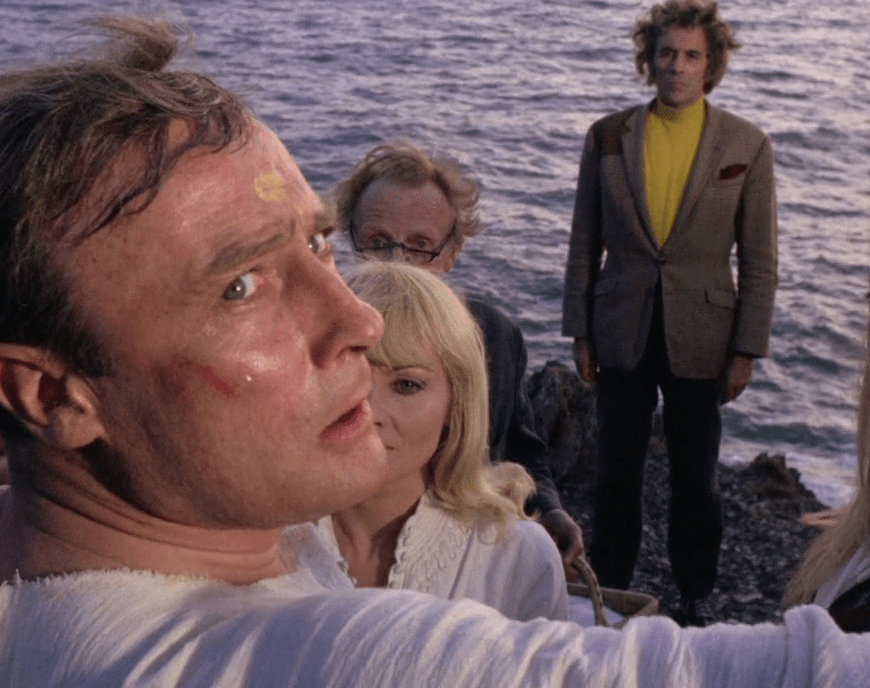
The Music of Folk Horror – Part 4 (The Wicker Man’s Narrative Functionality).

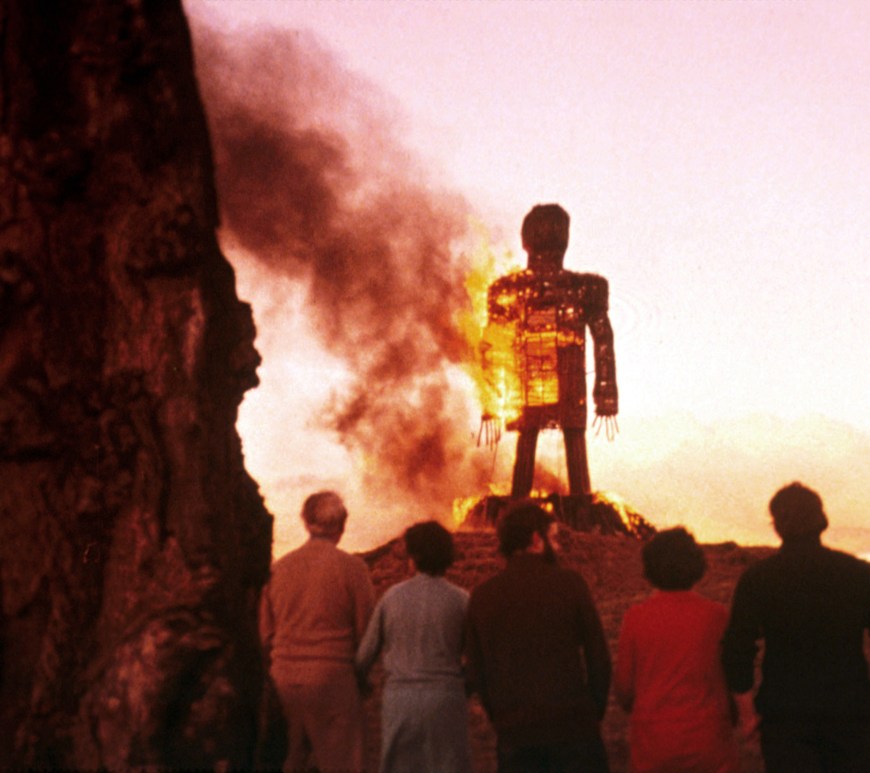
Part 1. Part 2. Part 3. Narrative Functionality. The music of The Wicker Man, while having few boundaries in terms of the effect of its various functions on its narrative content, is split into several different types.  For this section, the specific type of music to be looked at is the folk song; a form that makes several appearance in the film with original compositions … Continue reading The Music of Folk Horror – Part 4 (The Wicker Man’s Narrative Functionality).

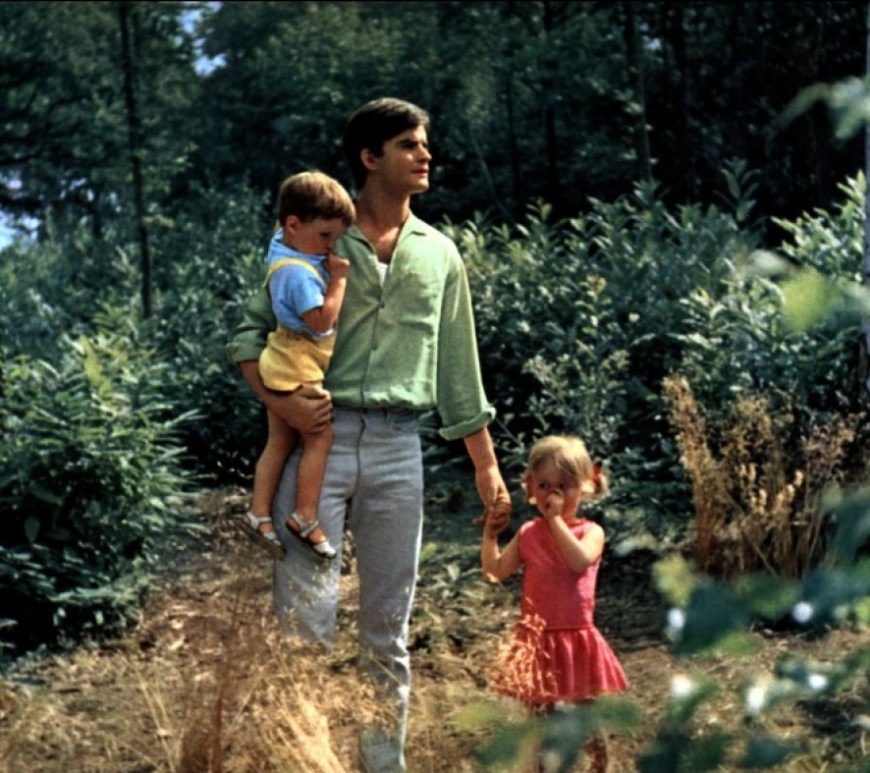
Mozart in Le Bonheur (1965) – Agnès Varda.

It must have come as a political shock to see a film in 1965 highlight, with such casual brutality, the privilege of the male patriarch.  Agnès Varda’s third feature, Le Bonheur, is such a contradiction in its conveyance of a happiness, ignorant of morality, that its shock is rarely diminished.  The film is a colourful, seasonal evocation of a very unusual ménage à trios which … Continue reading Mozart in Le Bonheur (1965) – Agnès Varda.

The Music of Folk Horror – Part 3 (The Wicker Man’s Folk Aesthetics).

Part 1. Part 2. Tradition Through Folk Aesthetics in the Music of The Wicker Man (1973). The first case study film for this essay is Robin Hardy’s 1973 film, The Wicker Man.  Though it is the latest of the films to be looked at, it has the most complex relationship with its music, formed entirely of its own accord rather than on folk horror practices … Continue reading The Music of Folk Horror – Part 3 (The Wicker Man’s Folk Aesthetics).

The Music of Folk Horror – Part 1 (Sub-Genre Theories).

The Sounds of Sacrifice: The Music of British Folk Horror Films. Introduction. In the late 1960s and the early 1970s, a small group of horror films made in Britain set themselves apart from the rest of the genre, becoming an aptly cult phenomena now acknowledged under the banner of folk horror.  As a newly recognised sub-genre, it can be difficult to assess though, as new … Continue reading The Music of Folk Horror – Part 1 (Sub-Genre Theories).

The Music of If…. (1968, Lindsay Anderson).

Lindsay Anderson’s If…. (1968) has so many obvious visual qualities that it can sometimes be easy to overlook its highly original and thematically motivated use of music.  Anderson’s films are littered with all sorts of aural qualities though often tended to be more overt in his trilogy of Mick Travis films, the other two instalments being O’Lucky Man (1973) and Britannia Hospital (1982).  If…., however, … Continue reading The Music of If…. (1968, Lindsay Anderson).

Ligeti’s Atmosphères as a Musical Foreshadowing of Kubrick’s 2001- Part 3 (Musical Narrative)

Part 1. Part 2. 2001: Narrative and Musical Parallels. “Ultimately, 2001 is a film that suspends that coordination of the human body, and thus human nature, in such conditions- even as it suspends our final judgments about human nature in its open-ended conclusion about our future development.” Decker – (2007, p.101). One of the biggest omens that a piece of music is given preference in … Continue reading Ligeti’s Atmosphères as a Musical Foreshadowing of Kubrick’s 2001- Part 3 (Musical Narrative)

Elemental Chaos and Eternal Return in Scriabin and Andrei Tarkovsky – Part 2 (Chaos)

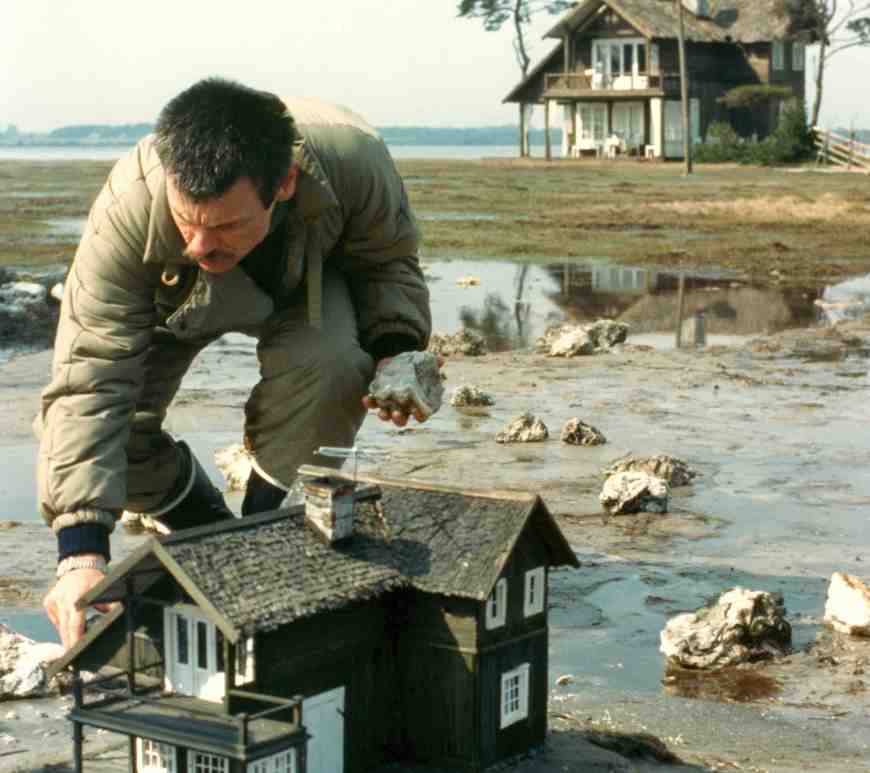
Part 1. Elemental Chaos. “The Mountains, Fields, Meadows, Forest, and Wilderness of the Preparatory Act text symbolize the mineral kingdom and natural kingdoms of the Earth, the first three “Rounds” of the Wheel of Cosmic life.” (1998, p.303) – Stephen Morris. It is not revolutions and upheavals That clear the road to new and better days, But revelations, lavishness and torments Of someone’s soul, inspired … Continue reading Elemental Chaos and Eternal Return in Scriabin and Andrei Tarkovsky – Part 2 (Chaos)

Ligeti’s Atmosphères as a Musical Foreshadowing of Kubrick’s 2001- Part 1 (Introduction)

Ligeti’s Atmosphères as a Musical Foreshadowing of Stanley Kubrick’s 2001: A Space Odyssey. Introduction. “First in Cologne in 1957 and later during my long stay in Vienna in the ’60s, I gradually evolved a musical style in which I abandoned structures conceived in terms of bars, melodies, lines and conventional forms.  In this respect my first two orchestral works, Apparitions and Atmosphères, are the most … Continue reading Ligeti’s Atmosphères as a Musical Foreshadowing of Kubrick’s 2001- Part 1 (Introduction)

Peeping Tom (Michael Powell,1960) – Aural Perspectives of Murder.

In spite of its very energetic reappraisal and various analyses, Michael Powell’s career destroying masterpiece, Peeing Tom (1960), is a film whose musical eccentricities and sound design contain hidden depths. For a film that appears on the surface to be almost excessively Freudian, this was normal yet, when looking at some of the detailed reappraisals and even some of the high-end re-evaluations of its narrative … Continue reading Peeping Tom (Michael Powell,1960) – Aural Perspectives of Murder.

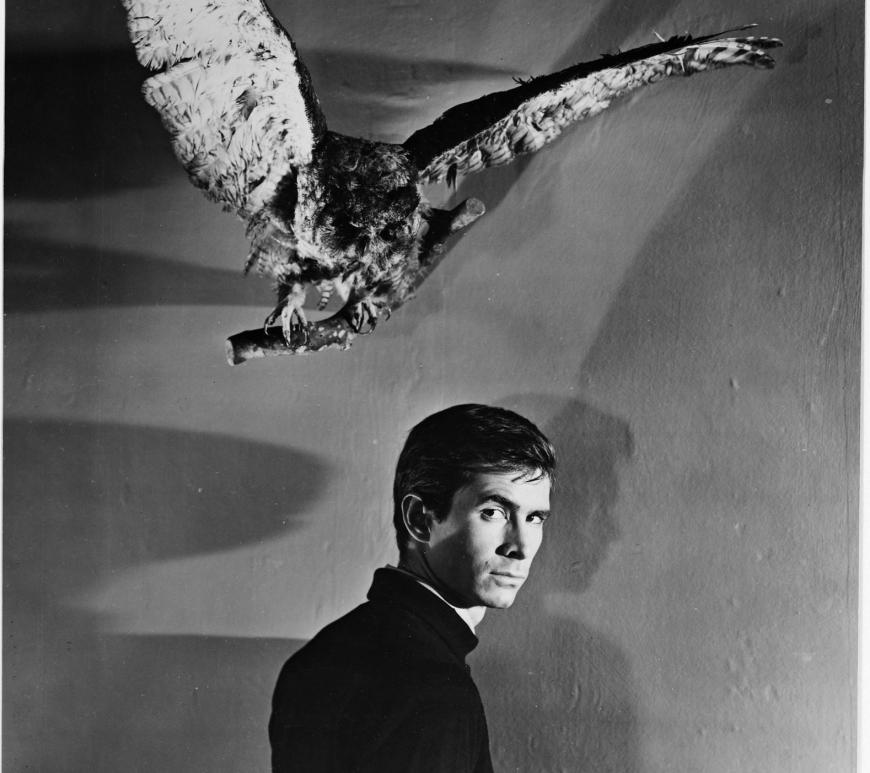
Analysis of Sound and Music in Alfred Hitchcock’s Psycho (1960) – Part 4 (Conclusions)

Part 1. Part 2. Part 3.  Combining the Readings: Similarities, Contradictions and Cross-Over. “It’s as if the film were pinpointing the very essence of the unfilmable: the entwined couple, monstrous, the two-backed beast of the primal scene, the impossible couple of body and voice.” – Michel Chion (1999, p.149). While Murphy and Fenimore examine and address different points and issues, their resulting essays not only … Continue reading Analysis of Sound and Music in Alfred Hitchcock’s Psycho (1960) – Part 4 (Conclusions)