Elemental Chaos and Eternal Return in Scriabin and Andrei Tarkovsky – Part 1 (Introduction)

Elemental Chaos and Nietzsche’s Eternal Return in the Music of Alexander Scriabin and the Films of Andrei Tarkovsky. Introduction “It is as natural to die as to be born; and to a little infant, perhaps, the one is as painful as the other.” (1625/2002, p.344) – Francis Bacon. The cyclic nature of life and the process of destruction and rejuvenation has been a subject of … Continue reading Elemental Chaos and Eternal Return in Scriabin and Andrei Tarkovsky – Part 1 (Introduction)

The Seventh Continent (Michael Haneke) and the Freudian Death Drive – Part 1.

Introduction Michael Haneke’s debut feature set the tone for the majority of his interests that would be explored over the next few decades.  The Seventh Continent (1989), though part of the Glaciation Trilogy, stands on its own for questioning a very specific and brutal form of philosophy; that of Freud’s Death Drive principles.  Though Haneke would address philosophical issues in a lot of his films (this … Continue reading The Seventh Continent (Michael Haneke) and the Freudian Death Drive – Part 1.

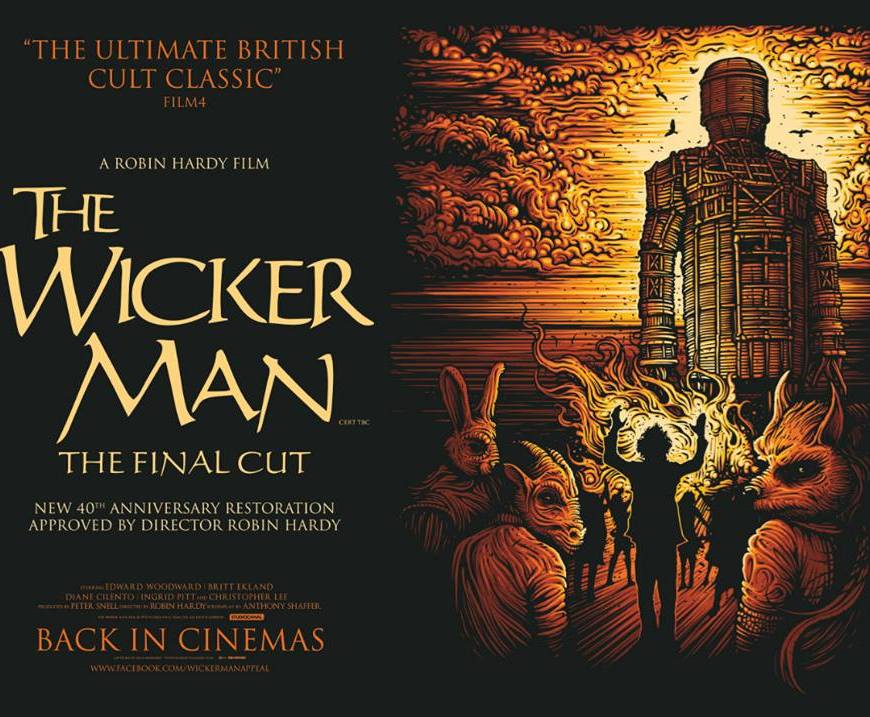
The Wicker Man (1973) – Defining Of The Folk Horror.

Its geography is stark, rugged and eerily inviting, its characters are sickly happy and lying through their teeth and its narrative is immersive and questioning to the point where its finale is deeply affecting and horrifying. It’s a crying shame that viewers of The Wicker Man (1973) will never fully see the film as its director intended. Having been slashed to bits by the studio … Continue reading The Wicker Man (1973) – Defining Of The Folk Horror.

El Topo and The Lamb Lies Down On Broadway (Jodorowsky and Gabriel).

Alejandro Jodorowsky’s El Topo (1970) has rightly earned a place in the pantheon of cult cinema. Watch any number of documentaries or interviews with the man himself and the film will often stand proud as the pioneer of the “Midnight Movie”; a film obviously shown late due to its content but also exuding free reign over all of its creative aspects.  Researching further into the … Continue reading El Topo and The Lamb Lies Down On Broadway (Jodorowsky and Gabriel).

Landscapes of Pasolini (Oedipus Rex, Theorem, Pigsty).

While trailing through the film work of Pier Paolo Pasolini, it becomes clear that the director has an eye for capturing specific moments that manage to visually remain with the viewer.  Whether it’s the floating maid in Theorem (1968), the walking on water in The Gospel According to St. Matthew (1964) or any number of images from Salò (1975), the director is often defined by … Continue reading Landscapes of Pasolini (Oedipus Rex, Theorem, Pigsty).

Like Someone In Love (2013) – Visual and Emotional Reflections.

This article contains spoilers. For a film named after a jazz standard, Abbas Kiarostami’s Like Someone In Love (2012) plays very little with the notion or question of music and sound. Recalling the film only brings to mind one scene where music is used as a narrative ploy while the rest of it is more occupied with something more visually typical. This perhaps begs a … Continue reading Like Someone In Love (2013) – Visual and Emotional Reflections.

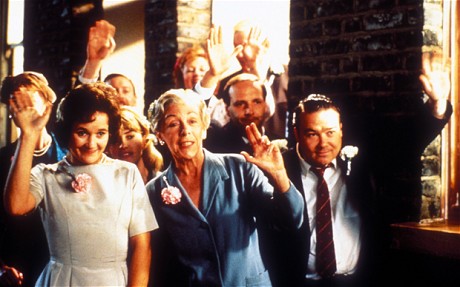
Distant Voices, Still Lives (Part 4) – Communal Singing and Domestic Abuse.

Part 1. Part 2. Part 3. Part 4. Part 5. Part 6. Part 7. Communal Singing of Popular Music. “Song lyrics threaten to offset the aesthetic balance between music and narrative cinematic representation. The common solution taken by the standard feature film is not to declare songs off limits – for they can give pleasure of their own – but to defer significant action and … Continue reading Distant Voices, Still Lives (Part 4) – Communal Singing and Domestic Abuse.

Two Years At Sea (Ben Rivers) – Geographical Solitude and Company in Objects.

Cause and effect may not perhaps be the first aspect that comes to mind when considering Ben Rivers’ feature debut Two Years At Sea (2011). Yet, looking at the implications of the lifestyle on show, itself a deliberate effect of causation from working at sea for two years to be able to afford to live a more isolated life, there is a great sense of … Continue reading Two Years At Sea (Ben Rivers) – Geographical Solitude and Company in Objects.

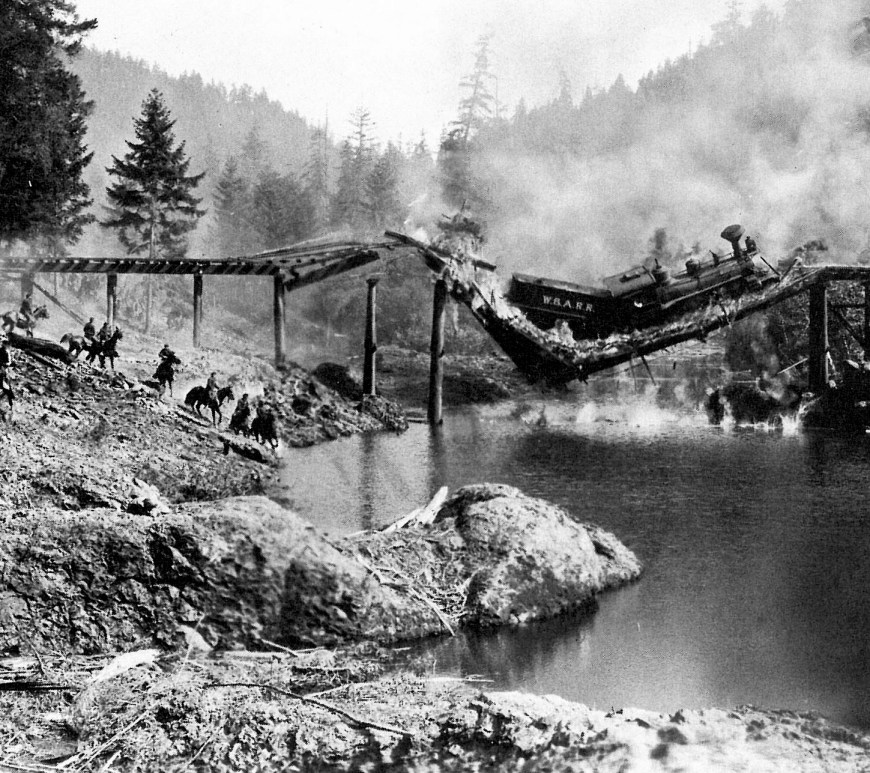
Train to Train – Early Rhythms of Silent Film (Lumière and Keaton)

During the first quarter of film history, film language very quickly cemented itself into forms that would stay that way in mainstream cinema until the middle of the 20th century. Looking back at the surviving imagery of the first era of film (i.e. the silent era), it’s easy to see how these forms quickly solidified and became the norm for the typical and the innovative … Continue reading Train to Train – Early Rhythms of Silent Film (Lumière and Keaton)

Distant Voices, Still Lives – Sounds of the Past. (Part 2)

Part 1 Part 2 Part 3 Part 4 Part 5 The Sounds of the Past “To this inexorable, insidious awareness of your own dependence on your past, like an illness that grows even harder to bear, I gave the name “Nostalgia”…” (Tarkovsky, 1986, p.206) One of Distant Voices, Still Lives’ key differences to all that had gone before in the canon of British working class … Continue reading Distant Voices, Still Lives – Sounds of the Past. (Part 2)