Deep End (1970) and the Musical Emphasising of Narrative (Jerzy Skolimowski).

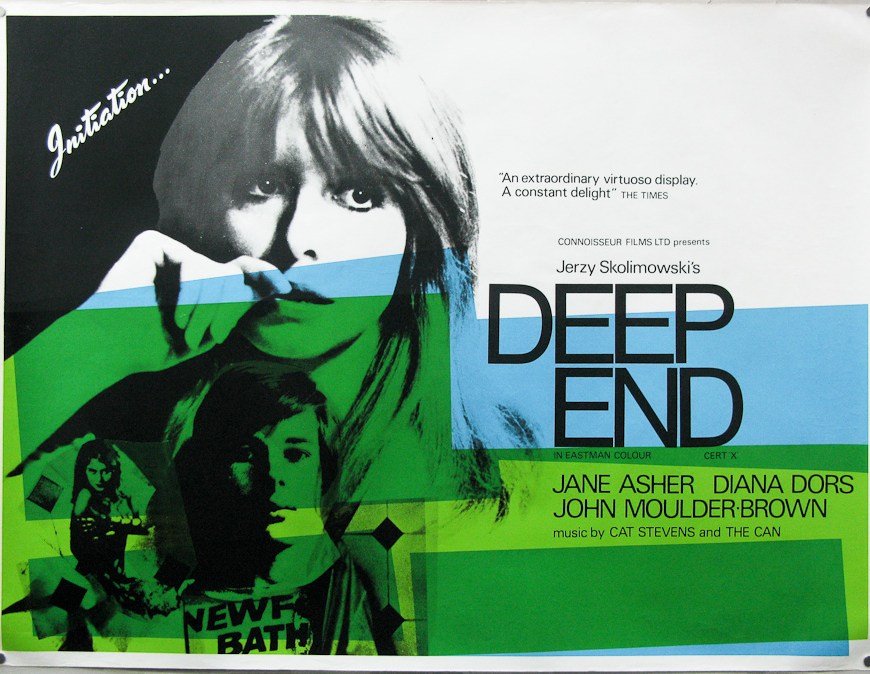
This article contains spoilers. There are many aspects of distraction within Jerzy Skolimowski’s 1970 film, Deep End.  Its highly sexualised, sometimes seedy narrative, its vast array of colours and its crisp, sharp direction are only a handful of its hyper-active eccentricities.  Even David Lynch, a long-time pessimist about colour cinema, is on record as a fan of Deep End‘s array of powerful colours, and styles.  … Continue reading Deep End (1970) and the Musical Emphasising of Narrative (Jerzy Skolimowski).

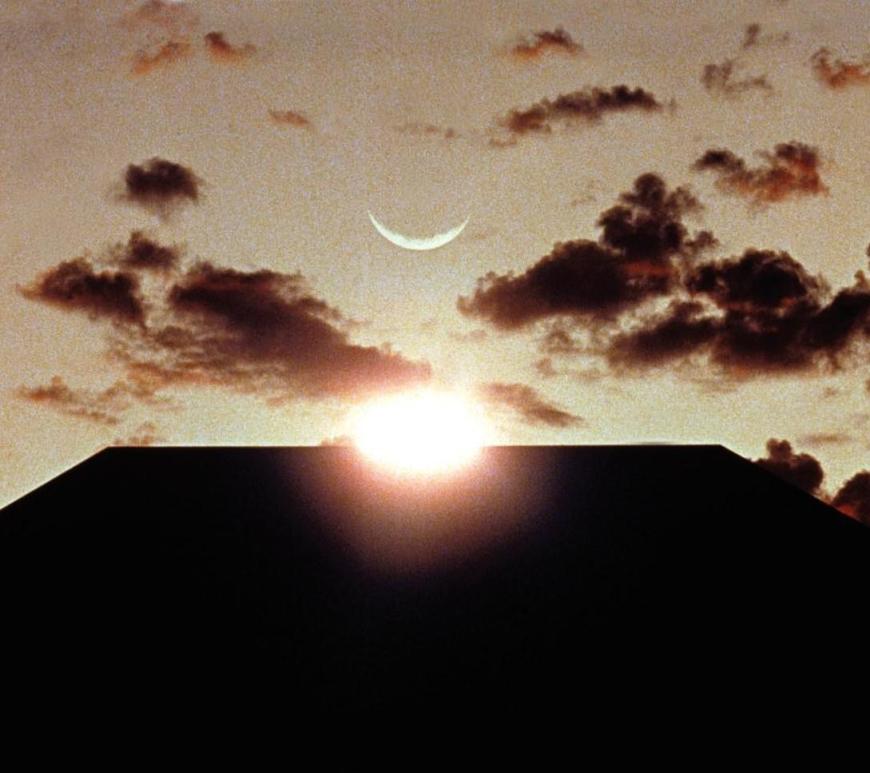
Nietzsche and 2001: A Space Odyssey (1968)

At this moment in time, I’m currently between two relatively heavy audio-visual essays.  The first (which is now finished and will be going online in segments from the end of the month) is about Andrei Tarkovsky’s film, The Sacrifice (1986) and how it has parallel aims with that of the Russian composer Scriabin and his unfinished work, Mysterium.  The second is looking at Stanley Kubrick’s … Continue reading Nietzsche and 2001: A Space Odyssey (1968)

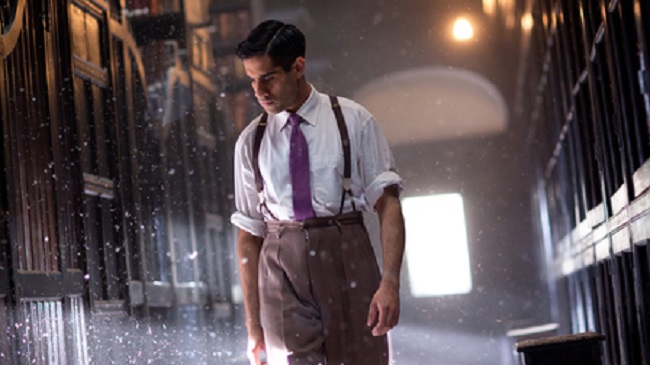
The Tractate Middoth – Mark Gatiss (BBC Ghost Story at Christmas).

This article contains minor spoilers. It has taken a while for the traditional BBC ghost story to make a fully formed return in the 21st century.  This is surprising considering the popularity of the return of other genre television traditions from Doctor Who to Battlestar Galactica, but the singular ghost story at Christmas has taken some time to get right.  Before this recent M.R. James … Continue reading The Tractate Middoth – Mark Gatiss (BBC Ghost Story at Christmas).

Music Video – Four Hills (John McGrath)

Making a video for a song without vocals has been an interesting and ultimately rewarding experience.  Without the ties to vocals that often mean music videos scream of publicity, making a video for guitarist John McGrath has given a freedom I’ll probably never enjoy again for other music videos.  McGrath’s music is at once refreshing; a mixture of percussive guitar and electronic delays; consider a … Continue reading Music Video – Four Hills (John McGrath)

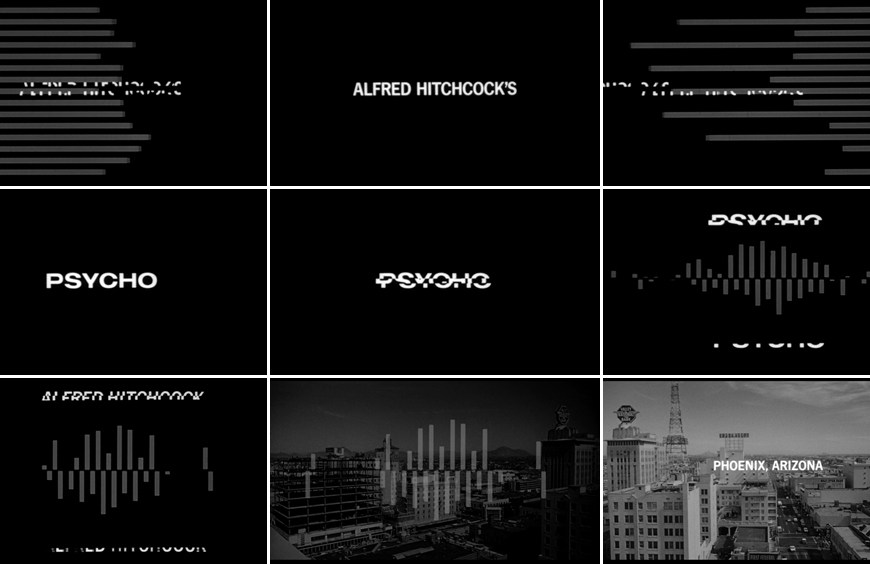
Analysis of Sound and Music in Alfred Hitchcock’s Psycho (1960) – Part 2 (An Audiovisual Foreshadowing)

Part 1. Emphasis on Visual Cues in Scott Murphy’s “An Audiovisual Foreshadowing in Psycho“. “We can grasp in effect something which, already in nature, appropriates the gaze to the function to which it may be put in the symbolic relation in man.” – Jacques Lacan (1977, p.105). Scott Murphy’s “An Audiovisual Foreshadowing in Psycho” is already an interesting proposition in the context of its original … Continue reading Analysis of Sound and Music in Alfred Hitchcock’s Psycho (1960) – Part 2 (An Audiovisual Foreshadowing)

Eroticism in the Music of Béla Bartók – Part 3 (The Modernist Jungle)

Part 1. Part 2. On the other hand, The Miraculous Mandarin presents a set of characters who are, by contrast, in the aesthetic stage; satisfied with the quick, disposable type of pleasures and unconcerned with future development.  Carlisle states that ” The aesthetic mode of existence is characterized by the pursuit of personal satisfaction.  The aesthete lives for the pleasures of the moment, and tends … Continue reading Eroticism in the Music of Béla Bartók – Part 3 (The Modernist Jungle)

An Ancient Evil: M.R. James and Nigel Kneale.

Two writers who could be said to epitomise the ideas of Folk Horror, M.R. James and Nigel Kneale, while addressing these ideals through different media, are writers whose work often crept into the same realm.  This has lead to both of their work having a natural relationship with each other, with one almost being a reincarnation of the other.  Of course, to imply such things … Continue reading An Ancient Evil: M.R. James and Nigel Kneale.

Tenebrae – Dario Argento (1982) – Arrow DVD SteelBook.

The excessive nature of the 1980s made it a perfect realm for an equally excessive horror cinema. While simplifying the decade to its trivial sound bites of bright, electronic yuppyism may be too all encompassing as a genuine historical analysis, this summation of criteria is perfect when discussing the decade’s cinema.  Cinema is so often the most uncomfortable reflective tool on society and yet this … Continue reading Tenebrae – Dario Argento (1982) – Arrow DVD SteelBook.

Analysis of Sound and Music in Alfred Hitchcock’s Psycho (1960) – Part 1

Sound and Music in Alfred Hitchcock’s Psycho and its Different Readings. Introduction. “If Psycho had been intended as a serious picture, it would have been shown as a clinical case with no mystery or suspense.  The material would have been used as the documentation of the case history.  We’ve already mentioned that total plausibility and authenticity merely add up to a documentary.” – Alfred Hitchcock … Continue reading Analysis of Sound and Music in Alfred Hitchcock’s Psycho (1960) – Part 1

Eroticism in the Music of Béla Bartók – Part 2 (Post-Wagnerian).

Part 1. Bartók as a Post-Wagnerian Composer and The Confronting of Eroticism in The Miraculous Mandarin. “Thus, at first, there came a weariness of the productions of the Romantic Period, and then, as a consequence of this weariness, a search for points of departure which represented the greatest possible contrast to those of the Romantic mode of expression.” – Bartók (1976, p.331) In the context … Continue reading Eroticism in the Music of Béla Bartók – Part 2 (Post-Wagnerian).