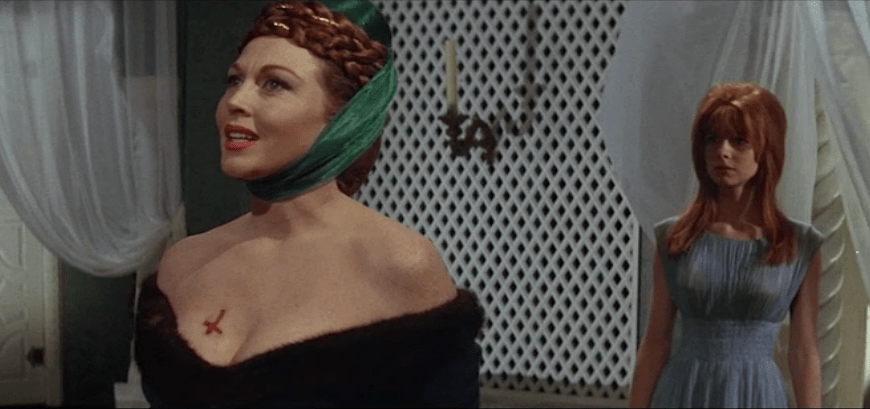
The Masque of the Red Death (1964) – Kierkegaard’s Aesthetic Phase and Inverted Freudian Pleasure Principle (Part 2).

Part 1. The Levels of the Aesthetic Stage Through Castle Rooms and Colour. Corman’s beautiful excess of colour in the film has already been mentioned but colour plays a vital role within the film’s narrative too.  Its narrative focus however does not chime well with the Kierkegaard reading when considering the unevenness and ambiguity as to the death creatures and their colours at the end … Continue reading The Masque of the Red Death (1964) – Kierkegaard’s Aesthetic Phase and Inverted Freudian Pleasure Principle (Part 2).
The Masque of the Red Death (Roger Corman, 1964) – Kierkegaard’s Aesthetic Phase and Inverted Freudian Pleasure Principle (Part 1).

Roger Corman may be better known for pulpy B-movies but his work adapting Edgar Allen Poe for the big screen is uncharacteristically layered and has a depth that far outstrips films of a far more serious ilk.  Almost all his Poe adaptations (excluding the fun but overall light The Raven) take Poe’s original structure for stories and adds questioning elements to them, largely built around … Continue reading The Masque of the Red Death (Roger Corman, 1964) – Kierkegaard’s Aesthetic Phase and Inverted Freudian Pleasure Principle (Part 1).

Cry Of The Banshee – Gordon Hessler (1970)

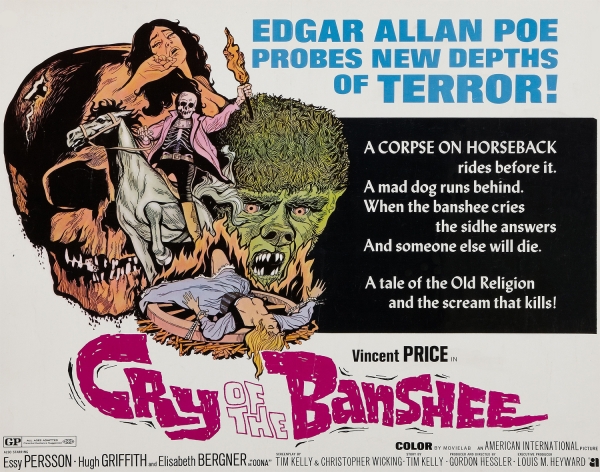
Cry of the Banshee (1970) makes no qualms as to what its aims are.  Looking at its promotional poster, it would be natural to associate it with Roger Corman’s Poe films; it’s emblazoned with Edgar Allen Poe references, its main star is Vincent Price and its design is a technocolour nightmare.  The film itself is about as far from Corman’s dreamlike fantasies as possible in … Continue reading Cry Of The Banshee – Gordon Hessler (1970)